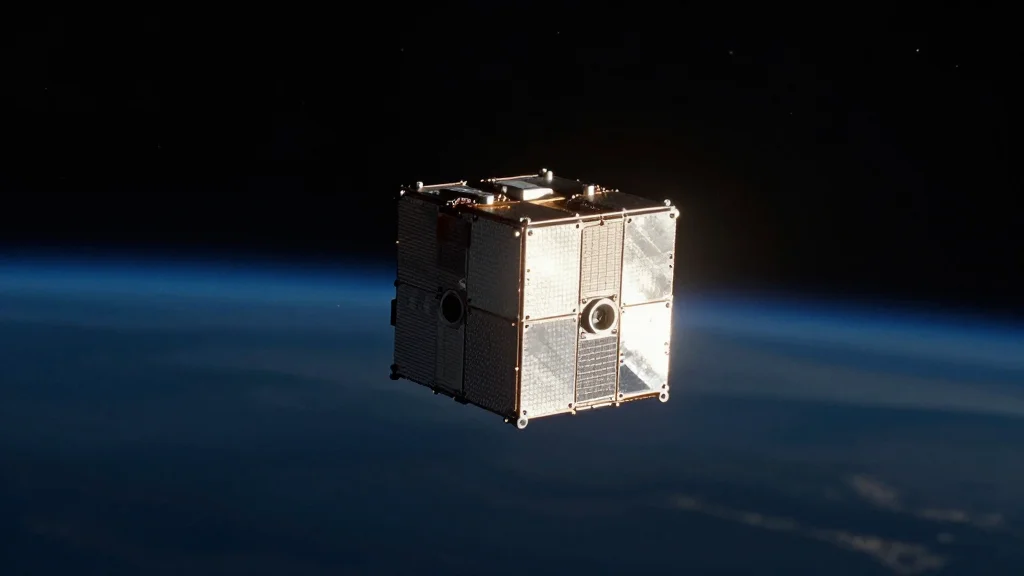
NASA Launches Six CubeSats on SpaceX Rideshare to Boost Space‑weather Forecasting and Tech Demos


Why It Matters
The launch demonstrates how low‑cost CubeSat missions can deliver high‑impact science and technology validation without the expense of dedicated launch vehicles. By improving space‑weather forecasting, the AEPEX mission helps protect critical infrastructure such as power grids and satellite communications. The magnetic‑field CubeSats will sharpen the World Magnetic Model, directly benefiting navigation systems used by billions of devices worldwide. Moreover, successful testing of rapid‑deorbit technologies addresses the growing concern over orbital debris, a key regulatory and sustainability issue for the burgeoning commercial space sector. These missions also illustrate a shift toward collaborative, rideshare‑centric development pipelines. NASA’s use of the VADR contract and the Transporter‑16 manifest shows how government agencies can harness commercial launch cadence to accelerate research, reduce risk, and foster a pipeline of talent from academia to industry. The outcomes will likely influence funding decisions for future CubeSat initiatives and could spur additional private investment in small‑satellite technologies.
Key Takeaways
- •Six CubeSats launched on March 30 via SpaceX Transporter‑16 from Vandenberg SFB
- •AEPEX will study energetic particle impacts on the upper atmosphere to improve space‑weather forecasts
- •Three MagQuest CubeSats will refine the World Magnetic Model used in navigation and security
- •TechEdSat‑23 tests a radiation sensor, NOAA data‑collection radio, and an exo‑brake for rapid deorbit
- •R5‑S10 demonstrates close‑proximity flight techniques for future on‑orbit servicing
Pulse Analysis
NASA’s latest rideshare deployment marks a strategic pivot toward modular, low‑cost experimentation that could reshape the economics of space research. Historically, CubeSat missions were limited by launch availability and high per‑kilogram costs. By embedding six distinct payloads in a single Falcon 9 ride, NASA not only maximizes the scientific return per launch but also validates a procurement model that other agencies and commercial operators are likely to emulate. The VADR contract, which streamlines acquisition for venture‑class missions, reduces administrative overhead and accelerates timelines, a competitive advantage as the market races to field constellations for Earth observation, communications and in‑space logistics.
From a technology standpoint, the exo‑brake experiment on TechEdSat‑23 could become a game‑changer for debris mitigation. Current deorbit strategies rely on passive drag or costly propulsion; an active, lightweight brake offers a scalable solution for the thousands of small satellites expected to populate low‑Earth orbit in the next decade. If the test proves viable, regulatory bodies such as the FCC and international space agencies may incorporate it into future licensing requirements, creating a new niche for firms specializing in deorbit hardware.
Finally, the educational impact cannot be overstated. The CubeSat Launch Initiative continues to provide hands‑on experience to students and early‑career engineers, seeding the talent pipeline essential for sustaining the SpaceTech boom. As these graduates transition into industry, they bring with them proven design practices and a culture of rapid iteration that could accelerate the commercialization of next‑generation satellite technologies. In sum, the launch is less a singular event than a catalyst for a more agile, collaborative, and sustainable space ecosystem.
NASA launches six CubeSats on SpaceX rideshare to boost space‑weather forecasting and tech demos
Comments
Want to join the conversation?
Loading comments...