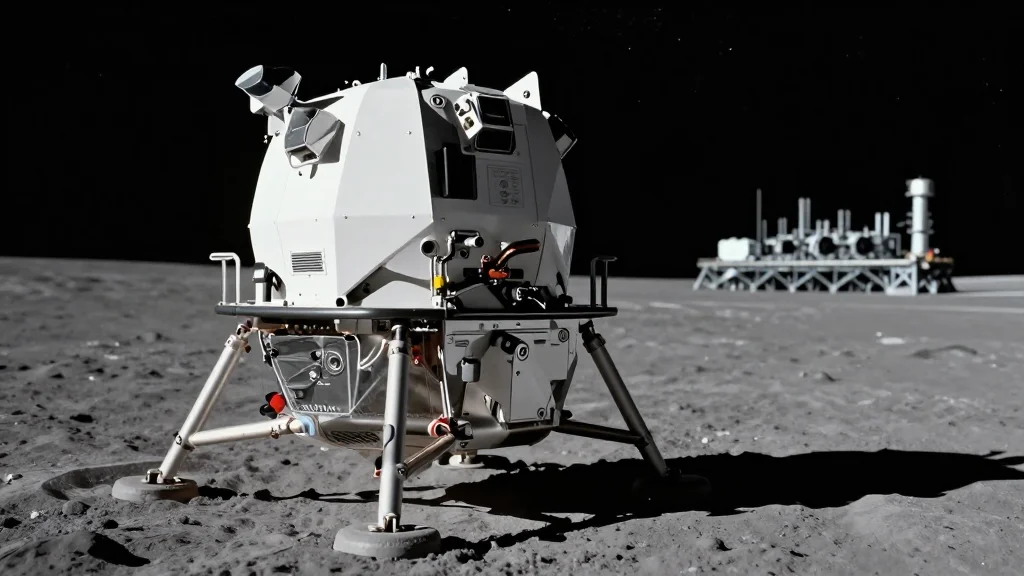
NASA Lifts CLPS Contract Ceiling to $4.2 B, Paving Way for Monthly Lunar Lander Production

Companies Mentioned


Why It Matters
The CLPS contract expansion marks the first time the U.S. government has explicitly funded a shift from custom spacecraft to a production‑line model for lunar landers. That change could dramatically reduce the cost per kilogram delivered to the Moon, making the economics of a permanent lunar outpost more viable. It also forces the commercial space sector to adopt manufacturing practices that have only been seen in the launch market, potentially spurring a new wave of investment in supply‑chain resilience and standardization. Beyond the Moon, the industrialization of small‑body landers could create a template for rapid, repeatable missions to other planetary bodies, such as Mars moons Phobos and Deimos or asteroid mining ventures. The ability to mass‑produce reliable landers would lower entry barriers for a broader set of customers, from scientific institutions to private resource extractors, accelerating the overall pace of deep‑space exploration.
Key Takeaways
- •NASA raised CLPS contract ceiling from $2.6 B to $4.2 B, a 61% increase.
- •Targeted flight rate climbs to nine landings in 2027 and ten in 2028.
- •Current task orders total under $2 B; original ceiling would have been exhausted by 2028.
- •Industry leaders stress need for standardized, build‑to‑print production lines.
- •CLPS 2.0 competition is underway, with a sources‑sought notice issued in January.
Pulse Analysis
NASA’s decision to inflate the CLPS ceiling is a strategic bet on industrialization as the fastest path to a sustainable lunar presence. Historically, the agency has relied on bespoke spacecraft for its exploratory missions, a model that works for low‑frequency, high‑risk flights but is financially inefficient at scale. By forcing providers to adopt a build‑to‑print approach, NASA is essentially importing the mass‑production mindset that lowered launch costs after the advent of reusable rockets. The key difference here is that lander manufacturing involves more complex integration of payloads, thermal control and surface‑interaction systems, making the standardization challenge steeper.
From a market perspective, the move could accelerate consolidation among lunar service providers. Companies that have already invested in modular designs—Blue Origin, Intuitive Machines, and others—are positioned to capture early contracts, while smaller firms may need to partner or specialize in niche payload services. Supply‑chain bottlenecks, especially for high‑performance propulsion and avionics, will likely become the new competitive frontier. Firms that secure long‑term component agreements or develop in‑house capabilities will gain a decisive edge.
Looking ahead, the success of the CLPS expansion will be judged by NASA’s ability to award and execute multiple task orders under the new ceiling before the CLPS 2.0 vehicle is fully defined. If the production‑line model delivers on schedule and cost, it could set a precedent for other government programs—such as the upcoming Mars Sample Return and lunar gateway logistics—prompting a broader shift toward repeatable, low‑cost spacecraft manufacturing across the space sector.
NASA lifts CLPS contract ceiling to $4.2 B, paving way for monthly lunar lander production
Comments
Want to join the conversation?
Loading comments...