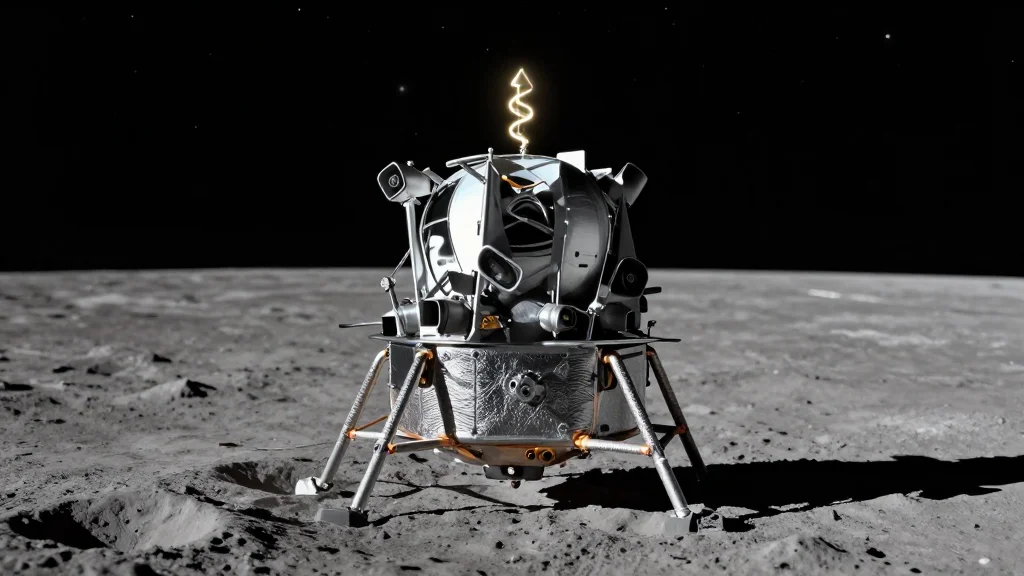
NASA Lifts CLPS Contract Ceiling to $4.2 Billion, Adding $1.6 Billion for Lunar Deliveries

Companies Mentioned

Why It Matters
The CLPS ceiling increase deepens the commercial foundation of NASA’s Artemis program, reducing reliance on traditional government‑built spacecraft and accelerating the development of lunar infrastructure. By allocating an extra $1.6 billion, NASA not only expands the number of robotic missions but also creates a larger market for private firms to test and mature technologies that could be repurposed for cislunar and Martian logistics. This shift could lower the cost of future deep‑space endeavors and accelerate the emergence of a lunar economy centered on resource extraction, communications, and in‑situ manufacturing. Moreover, the expanded budget sends a clear signal to investors and policymakers that the United States is committed to a sustained commercial presence on the Moon. The increased funding may attract additional venture capital to lunar‑focused startups, spur new partnerships, and encourage the development of reusable lunar landers and surface habitats, all of which are critical for long‑term human settlement.
Key Takeaways
- •NASA raises CLPS contract ceiling from $2.6 billion to $4.2 billion, adding $1.6 billion.
- •Thirteen companies, including SpaceX and Blue Origin, are eligible for CLPS task orders.
- •More than 50 lunar payloads have been manifested under CLPS since 2018.
- •The increase supports Artemis robotic precursor missions and prepares for CLPS 2.0.
- •Analysts view the boost as confidence in commercial lunar services despite early setbacks.
Pulse Analysis
NASA’s decision to lift the CLPS ceiling reflects a strategic pivot toward a market‑driven lunar supply chain. Historically, NASA’s lunar missions were built and operated by the agency itself, a model that proved costly and slow. By contrast, the CLPS framework treats lunar delivery as a service, allowing private firms to iterate faster and compete on price. The $1.6 billion infusion is likely to catalyze a wave of new contracts, prompting firms to invest in reusable lander architectures and modular payload interfaces that can serve multiple missions.
From a competitive standpoint, the expanded budget intensifies the rivalry among the current thirteen contractors while also lowering the barrier for newcomers. Companies that can demonstrate lower‑cost, higher‑reliability landers will capture a larger share of task orders, potentially reshaping the hierarchy of U.S. space providers. SpaceX’s Starship, for example, could become a dominant delivery vehicle if it meets NASA’s safety and performance criteria, while smaller firms like Intuitive Machines may carve out niches in specialized scientific payloads.
Looking ahead, the CLPS 2.0 phase could transform the program from a series of discrete missions into a continuous logistics network, supporting not only scientific research but also commercial activities such as mining and manufacturing. If the expanded funding successfully accelerates technology maturation, the United States could establish a sustainable lunar foothold well before other nations, giving it a decisive advantage in the emerging space economy.
NASA lifts CLPS contract ceiling to $4.2 billion, adding $1.6 billion for lunar deliveries
Comments
Want to join the conversation?
Loading comments...