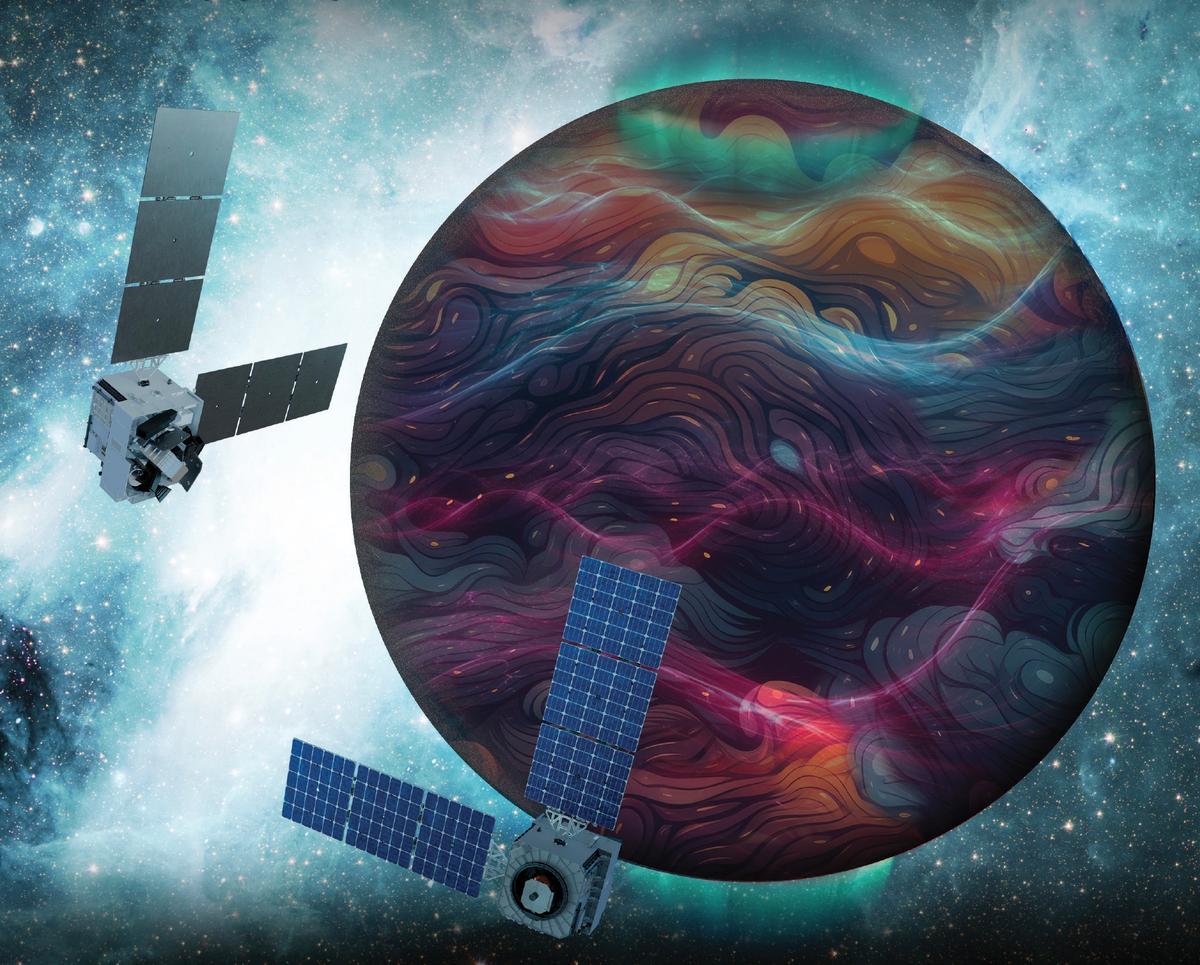
NASA Mission to Study Space Weather Impacts of Earth’s Atmosphere
Why It Matters
Improved space‑weather predictions will reduce disruptions to critical navigation, communications and astronaut safety, reinforcing the United States’ leadership in heliophysics and satellite resilience.
Key Takeaways
- •DAPHNE enters Phase B, planning twin‑satellite design
- •Mission will measure thermospheric winds, temperature, composition
- •Goal: improve space‑weather forecasts for GPS, LEO satellites, astronauts
- •Funding capped at $250 million; launch no earlier than 2029
Pulse Analysis
Space weather—disturbances driven by solar activity—can scramble GPS signals, degrade satellite performance and expose astronauts to heightened radiation. As commercial constellations proliferate and deep‑space missions resume, the need for precise, real‑time forecasting has never been greater. NASA’s DAPHNE mission tackles this challenge by probing the thin thermospheric layer where Earth’s neutral atmosphere transitions into ionized plasma, a region that directly modulates the propagation of radio waves and satellite drag.
DAPHNE’s innovative twin‑satellite architecture will deliver coordinated, multi‑point observations of neutral winds, temperature gradients and atmospheric composition. By correlating these lower‑atmospheric inputs with ionospheric responses, scientists can refine models that predict how solar storms ripple through the upper atmosphere. The data will feed into operational forecasting tools used by the Department of Defense, aviation authorities and commercial operators, helping to safeguard GPS timing, mitigate orbital decay for low‑Earth‑orbit satellites, and plan safer EVA windows for astronauts venturing beyond Earth’s magnetic shield.
Beyond immediate operational benefits, DAPHNE reinforces NASA’s broader heliophysics strategy and its role as a space‑weather‑ready nation. The $250 million, launch‑no‑earlier‑than‑2029 program dovetails with other solar‑terrestrial probes, creating a distributed sensor network across the solar system. Successful validation could unlock new funding pathways, accelerate the integration of atmospheric data into next‑generation navigation systems, and cement U.S. leadership in a domain critical to both national security and the burgeoning commercial space economy.
NASA Mission to Study Space Weather Impacts of Earth’s Atmosphere
Comments
Want to join the conversation?
Loading comments...