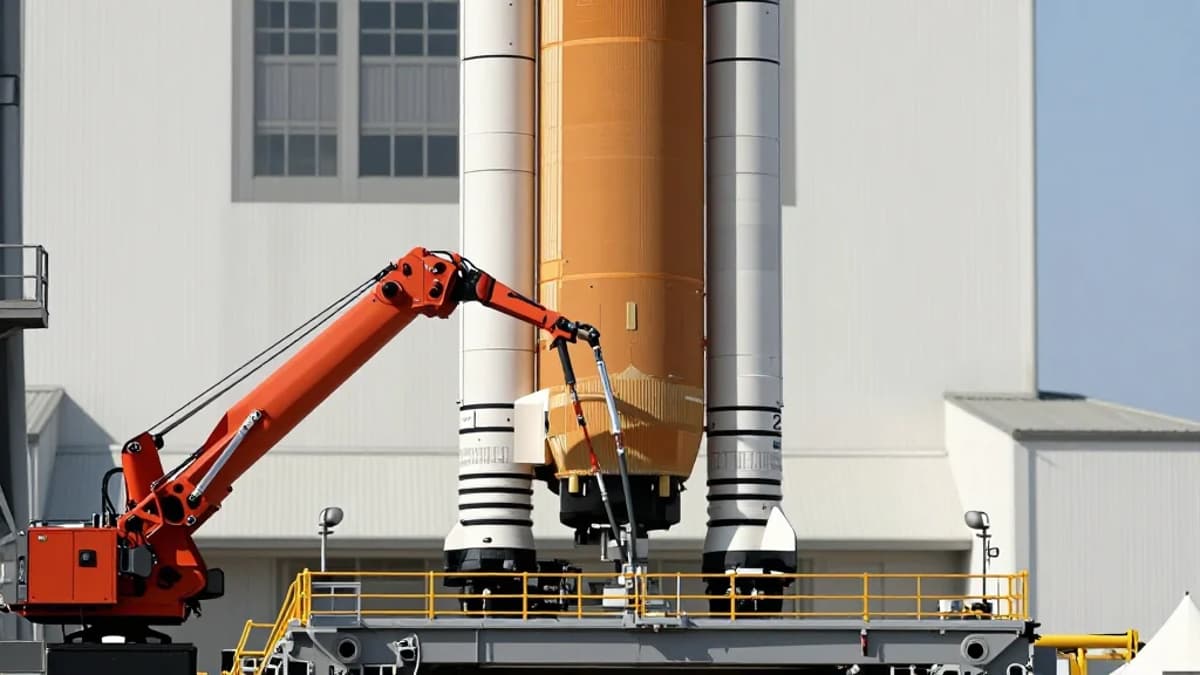
NASA Moves Its Artemis II Moon Rocket Off the Launch Pad for More Repairs
•February 25, 2026
0
Why It Matters
The delay reshapes NASA’s Artemis schedule, affecting budget allocations, commercial partner timelines, and the United States’ strategic position in the emerging lunar economy.
Key Takeaways
- •SLS rocket returned to VAB for helium system repairs.
- •Launch delayed from March to at least April 2026.
- •Prior hydrogen leak issue already pushed schedule back a month.
- •Crew quarantine canceled; astronauts attended State of the Union.
- •Delay impacts NASA budget and commercial lunar partnership timelines.
Pulse Analysis
The Artemis II mission represents the first crewed flight of NASA’s new Space Launch System, a cornerstone of the agency’s plan to return humans to the Moon and eventually reach Mars. After a month of successful integration on the launch pad, engineers discovered a fault in the rocket’s helium pressurization system, a critical component that maintains fuel tank pressure during ascent. Rather than risk a launch with an unresolved anomaly, NASA opted for a controlled rollback to the Vehicle Assembly Building, where specialized teams can conduct thorough diagnostics and repairs without the time pressures of a launch countdown.
Technical setbacks are not new to the Artemis program; earlier this year, hydrogen fuel leaks forced a one‑month postponement, highlighting the complex interplay of cryogenic propellants and massive structural loads. The helium issue underscores the challenges of scaling up launch vehicle technology that has not flown in decades. By moving the rocket back to the hangar, NASA gains the opportunity to validate the pressurization system through ground‑based testing, ensuring compliance with stringent safety standards before re‑qualifying the vehicle for flight.
Beyond the engineering realm, the delay carries significant strategic implications. A later launch compresses the timeline for subsequent Artemis missions, potentially affecting commercial contracts with partners like SpaceX and Blue Origin that are counting on a steady cadence of lunar launches. Budgetary pressures may intensify as NASA seeks to absorb additional costs while maintaining political support for the program. Moreover, the postponement gives rival spacefaring nations additional time to advance their own lunar initiatives, sharpening the competitive landscape for lunar resources and scientific leadership. The Artemis II setback thus reverberates through technical, financial, and geopolitical dimensions of the emerging lunar economy.
NASA moves its Artemis II moon rocket off the launch pad for more repairs
0
Comments
Want to join the conversation?
Loading comments...