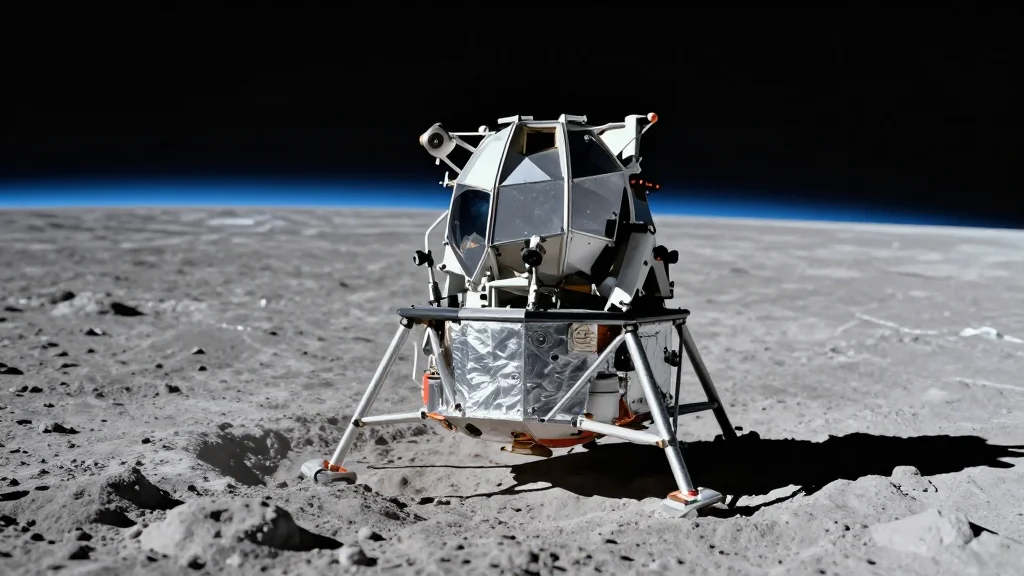
NASA Outlines New Program of Unmanned Missions to Moon
Why It Matters
By front‑loading unmanned deliveries, NASA seeks to reduce risk and cost for Artemis crewed landings while establishing a strategic U.S. presence at the lunar south pole. The schedule also signals a shift toward commercial‑led deep‑space exploration, reshaping the lunar market.
Key Takeaways
- •NASA targets 25 lunar landings by 2029, emphasizing private partners.
- •Blue Origin receives $188 M for two rovers, plus future Mark‑2 lander.
- •Moonfall hopper mission will map base perimeter with four drones in 2028.
- •Artemis‑4 crew will benefit from pre‑positioned rovers ahead of landing.
- •NASA aims to secure U.S. claim at south pole despite treaty constraints.
Pulse Analysis
The newly announced lunar roadmap marks the most ambitious U.S. effort since the Apollo era, but it differs fundamentally in execution. Rather than building its own landers, NASA is contracting a suite of commercial providers—Blue Origin, Astrobotic, Intuitive Machines, and Firefly—to deliver payloads, rovers, and even autonomous hoppers. This "private‑first" model aims to accelerate technology maturation, spread development risk, and lower overall program costs, echoing the successful commercial crew partnership that now ferries astronauts to the International Space Station.
Strategically, the schedule is calibrated to support Artemis‑4, slated for a crewed landing in 2028. By pre‑positioning rovers such as Astrolab’s Viper and Lunar Outpost’s assets ahead of the crew, NASA hopes to provide immediate surface mobility, scientific capability, and habitat construction tools. The inclusion of the Moonfall hopper mission—four drone‑like landers that will scout and outline a 100‑square‑mile base area—adds a novel reconnaissance layer, potentially speeding up site selection and infrastructure deployment.
Beyond engineering, the plan carries geopolitical weight. By establishing a tangible U.S. footprint at the south pole, NASA is effectively asserting a claim in a region rich in water ice, despite the Outer Space Treaty’s prohibition on sovereign claims. This assertive posture could shape future lunar governance and commercial exploitation, prompting other spacefaring nations to accelerate their own lunar initiatives. The program’s success will hinge on private partners meeting tight timelines, but if realized, it could redefine how nations approach off‑world settlement.
NASA outlines new program of unmanned missions to Moon
Comments
Want to join the conversation?
Loading comments...