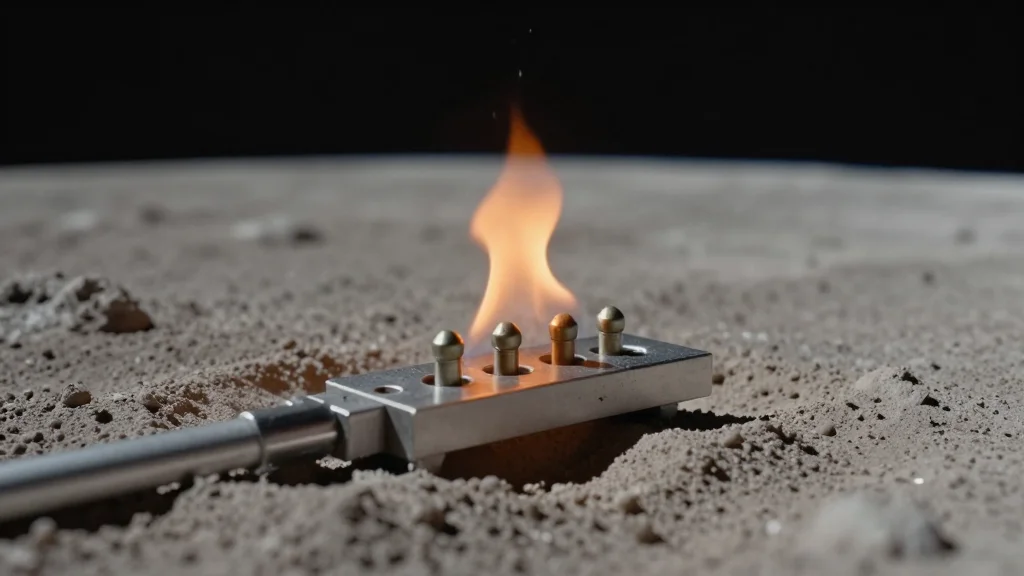
NASA Plans First Controlled Fire Test on Moon to Probe Lunar Flammability

Companies Mentioned
Why It Matters
Understanding fire behavior in lunar gravity is critical for the safety of future crewed outposts. A fire in a sealed habitat could be catastrophic, and current Earth‑based standards may not provide adequate protection. The FM2 experiment will generate the first empirical data on how reduced gravity and potential oxygen‑rich environments interact, informing design choices for habitats, suits, and in‑situ manufacturing processes. Beyond crew safety, the findings could affect commercial lunar activities, such as mining and construction, where combustible materials and processes are common. Reliable flammability data will enable regulators and industry players to develop robust safety protocols, reducing liability and accelerating investment in lunar infrastructure.
Key Takeaways
- •NASA's FM2 experiment will launch in late 2026 to burn four solid‑fuel samples on the Moon.
- •The study challenges the six‑inch NASA‑STD‑6001B flame test, which was designed for Earth gravity.
- •Researchers warn that materials marginally non‑flammable on Earth may become flammable in 1/6‑g.
- •Data will be captured with cameras, radiometers and oxygen sensors to benchmark lunar fire behavior.
- •Results could prompt revisions to material standards for Artemis habitats and future Mars missions.
Pulse Analysis
NASA’s decision to conduct a fire test on the Moon reflects a maturing approach to risk mitigation as the agency transitions from short‑duration visits to permanent outposts. Historically, fire safety in space has been addressed through microgravity experiments aboard the ISS and sub‑orbital flights, but those platforms cannot replicate the sustained partial‑gravity environment of a lunar base. By moving the test to the surface, NASA gains a realistic assessment of how flame spread, heat transfer, and debris ejection behave over longer periods, which is essential for designing fire‑suppression systems that can operate autonomously.
The FM2 experiment also signals a broader industry trend: commercial partners and international agencies are increasingly demanding data that de‑risk lunar infrastructure. As private companies plan to deliver habitats, power systems and ISRU equipment, they will rely on NASA‑validated standards to certify their hardware. The experiment’s outcomes could therefore become a reference point for the entire lunar ecosystem, shaping procurement contracts and insurance models. Moreover, the knowledge gained may accelerate the development of fire‑resistant composites and coatings tailored for low‑gravity environments, creating new market opportunities for materials manufacturers.
In the longer term, the FM2 data set will likely feed into computational fluid dynamics models that simulate fire scenarios across the Moon and Mars. Such models are indispensable for mission planners who must balance habitat mass, life‑support capacity, and safety margins. By establishing a baseline, NASA not only safeguards its own Artemis crews but also provides a foundation for the broader SpaceTech community to build safer, more resilient extraterrestrial habitats.
NASA Plans First Controlled Fire Test on Moon to Probe Lunar Flammability
Comments
Want to join the conversation?
Loading comments...