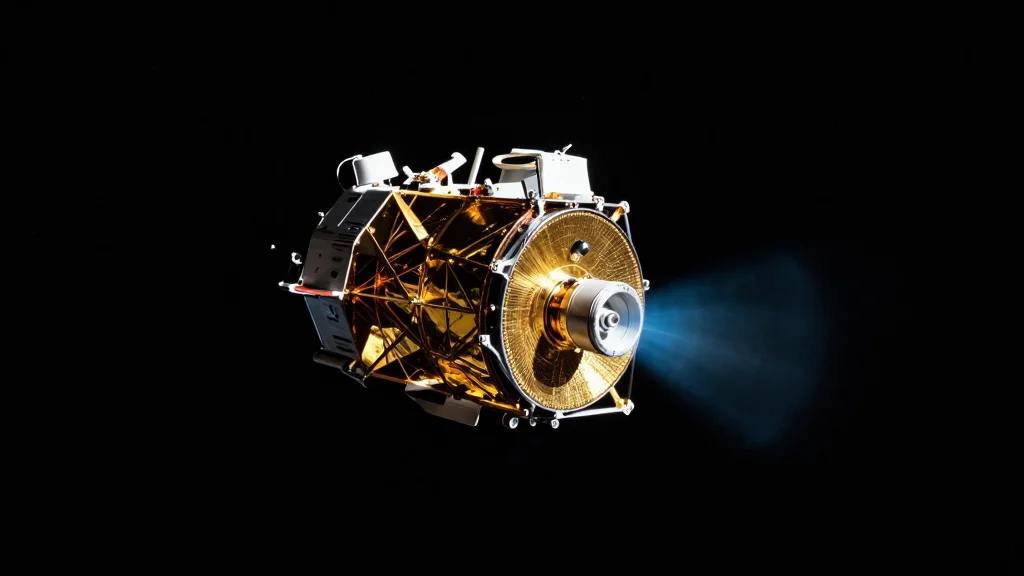
NASA Powers Down Voyager 1’s LECP Instrument to Extend Mission

Why It Matters
Voyager 1’s continued operation provides a unique, real‑time laboratory for studying the interstellar medium, a region that cannot be accessed by any other spacecraft. The data from its remaining instruments inform models of cosmic ray propagation, magnetic field structures, and plasma waves, all of which are essential for understanding the broader galaxy and protecting future deep‑space missions from radiation hazards. The power‑management strategies being tested now—especially the “Big Bang” re‑engineering—could set a precedent for extending the life of other long‑duration probes that rely on RTGs, such as the upcoming Europa Clipper and future missions to the outer planets. Demonstrating that a 50‑year‑old spacecraft can still be kept alive through clever engineering underscores the value of designing missions with long‑term adaptability in mind.
Key Takeaways
- •NASA shut down Voyager 1’s Low‑Energy Charged Particles (LECP) instrument on April 17, 2026.
- •The probe’s RTG loses ~4 watts of power per year; the shutdown buys about one year of operational life.
- •Voyager 1 is now >15 billion miles (24 billion km) from Earth, with a 23‑hour signal round‑trip.
- •Two instruments remain active: a plasma wave sensor and a magnetometer.
- •NASA’s “Big Bang” power‑saving plan will be tested on Voyager 2 before a possible rollout to Voyager 1.
Pulse Analysis
Voyager 1’s longevity has always been a testament to both engineering foresight and the willingness of mission teams to adapt to dwindling resources. The recent LECP shutdown illustrates a pragmatic shift from pure science collection to mission preservation, a trade‑off that will become increasingly common as NASA’s deep‑space fleet ages. By prioritizing core instruments that provide the most scientifically unique data, NASA maximizes the return on a decades‑old investment while acknowledging the hard limits of RTG power.
The “Big Bang” concept represents a bold, systems‑level approach that could redefine how agencies manage power‑constrained spacecraft. Rather than incremental tweaks, the plan proposes a coordinated swap of multiple subsystems, effectively rebooting the probe’s power budget in one fell swoop. If successful, this could extend Voyager 1’s operational window well beyond the current one‑year estimate, offering a longer baseline for interstellar measurements and reinforcing the case for designing future probes with modular, upgradable power architectures.
Strategically, keeping Voyager 1 alive serves more than scientific curiosity; it maintains a symbolic presence at the frontier of human exploration. The probe’s data continue to feed models that protect astronauts on future missions to Mars and beyond, where exposure to cosmic radiation is a critical risk. Moreover, the public’s fascination with Voyager fuels support for space programs, making each additional year of operation a valuable outreach asset. In an era of tightening budgets, the ability to stretch the life of legacy missions through clever engineering could become a cornerstone of NASA’s long‑term exploration strategy.
NASA Powers Down Voyager 1’s LECP Instrument to Extend Mission
Comments
Want to join the conversation?
Loading comments...