NASA Psyche Team Fixes Cold‑Gas Thruster Issue Days Before Launch

Companies Mentioned

NASA
Why It Matters
The Psyche thruster incident illustrates the thin margin for error in deep‑space missions, where a single component can jeopardize multi‑billion‑dollar investments. It also demonstrates that strong team dynamics and clear communication can mitigate technical risk, a lesson that extends beyond NASA to commercial launch providers and international partners. As the space sector accelerates toward more ambitious targets—such as crewed Mars missions and asteroid mining—the ability to resolve hardware issues quickly without sacrificing schedule will become a decisive competitive advantage. Furthermore, the episode may influence future procurement and testing standards. Agencies might demand more extensive environmental testing for propulsion subsystems or require built‑in software contingencies that can be activated in flight. The broader industry could see a shift toward modular designs that allow rapid reconfiguration when anomalies arise, reducing the likelihood of costly launch delays.
Key Takeaways
- •NASA fixed a cold‑gas thruster anomaly 12 days before Psyche’s launch, averting risk to a $1.2 billion mission.
- •Principal Investigator Lindy Elkins‑Tanton highlighted a trust‑based, collaborative response that kept the schedule intact.
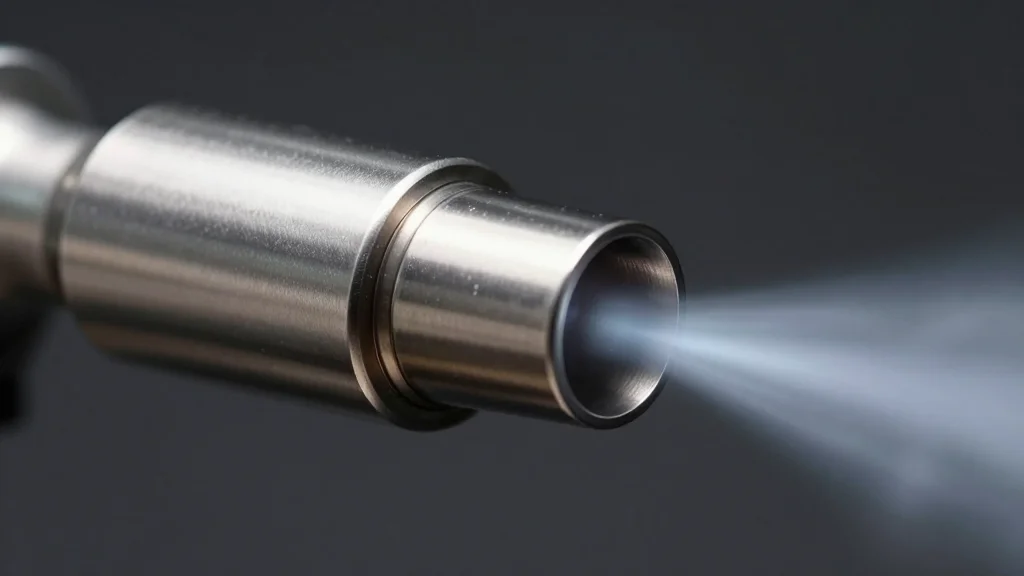
- •The thruster issue stemmed from a valve that failed to open fully at low temperatures; a software pulse‑width modulation fix was implemented.
- •Psyche now proceeds on a six‑year cruise, aiming to reach asteroid 16 Psyche in 2029 for a two‑year science campaign.
- •The incident underscores the importance of rapid problem‑solving and may shape future testing and redundancy standards for deep‑space hardware.
Pulse Analysis
The Psyche cold‑gas thruster episode is a textbook case of how human factors can be as decisive as engineering prowess in spaceflight. While the hardware glitch was technically solvable, the mission’s ability to avoid a launch slip hinged on a culture of psychological safety and rapid decision‑making. In an industry where schedule overruns can cost tens of millions per day, the Psyche team’s approach offers a template for integrating soft‑skill training into technical curricula.
Historically, NASA has weathered similar last‑minute challenges—think of the Apollo 13 oxygen tank failure or the Mars 2020 rover’s software hiccup. Each time, the agency’s success has rested on a blend of redundancy, rigorous testing, and a command structure that empowers engineers to act swiftly. Psyche’s experience reinforces that model but also suggests a shift: as missions become more reliant on miniaturized propulsion and attitude control systems, software‑centric mitigations may increasingly replace costly hardware redesigns.
Looking forward, commercial players such as SpaceX and Blue Origin are likely to watch Psyche’s resolution closely. The ability to diagnose and patch a critical subsystem on the ground, within a narrow launch window, could become a differentiator in a market where launch cadence is a key selling point. Moreover, the lessons captured in Elkins‑Tanton’s forthcoming book may seep into corporate leadership programs, embedding aerospace‑grade crisis management into broader business practice. In short, the Psyche thruster fix not only saved a mission but also provided a playbook for the next generation of interplanetary explorers.
NASA Psyche Team Fixes Cold‑Gas Thruster Issue Days Before Launch
Comments
Want to join the conversation?
Loading comments...