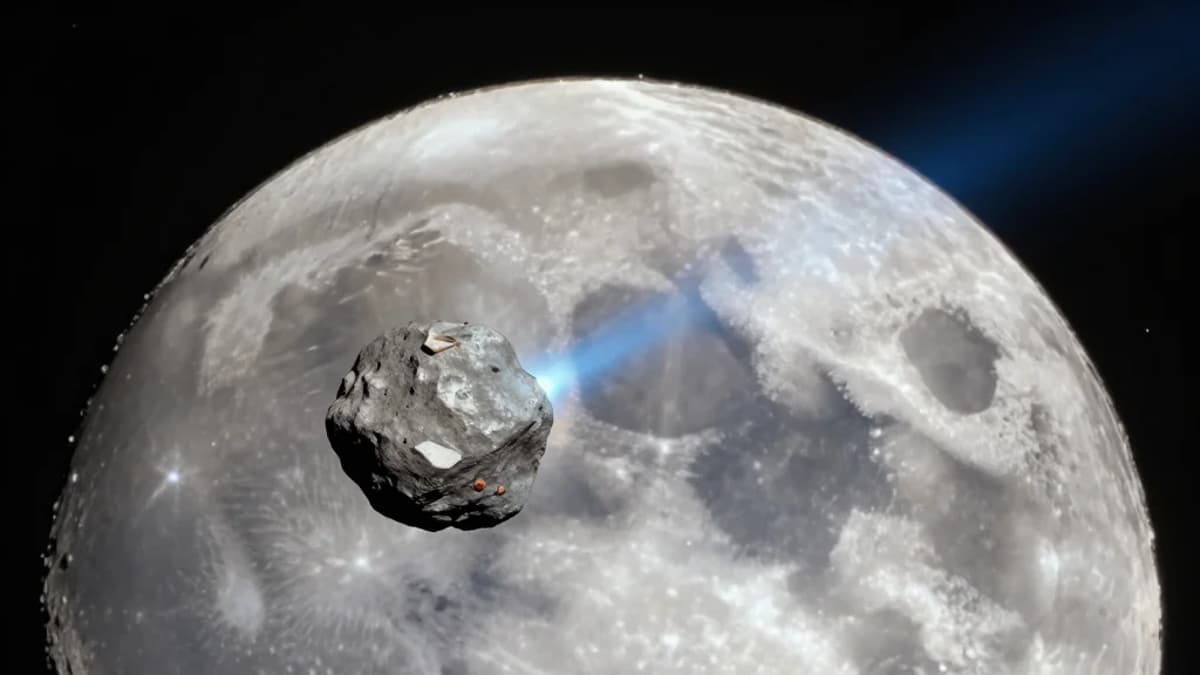
NASA Rules Out Asteroid Smashup on the Moon in 2032
•March 6, 2026
0
Why It Matters
Eliminating a lunar impact scenario sharpens planetary‑defense priorities and reassures stakeholders about near‑Earth object risks. It also underscores the value of advanced telescopes for accurate threat assessment.
Key Takeaways
- •JWST observations eliminate lunar impact risk.
- •2024 YR4 will miss moon by 13,200 miles.
- •Initial impact probability was 4.3% in 2025.
- •Asteroid size ~200 feet, would create 1.2‑mile crater.
- •Past predictions like Apophis were later ruled out.
Pulse Analysis
Accurate tracking of near‑Earth objects (NEOs) has become a cornerstone of modern planetary defense, and the recent JWST measurements of asteroid 2024 YR4 illustrate this progress. By capturing high‑resolution infrared data, JWST refined the asteroid’s trajectory, turning a previously uncertain 4.3% lunar‑impact chance into a definitive miss. This level of precision reduces false alarms, allowing agencies to allocate resources toward genuine threats and to communicate clearer risk assessments to the public and policymakers.
The lunar impact scenario sparked interest not only among scientists but also among space enthusiasts who imagined a spectacular crater and potential meteor showers on Earth. While a 200‑foot rock would have carved a 1.2‑mile depression, the absence of such an event eliminates concerns about debris altering the Moon’s environment or creating observable phenomena. The episode also highlights how early predictions, like those for asteroid Apophis, can evolve dramatically with better data, reinforcing the need for continuous observation campaigns.
Looking ahead, the 2024 YR4 case reinforces the importance of sustained funding for telescopic assets and international collaboration in NEO monitoring. Agencies such as NASA, ESA, and private partners will likely expand joint observation networks to close observational gaps, especially for faint objects that become visible only intermittently. As detection capabilities improve, the industry can expect more rapid rule‑outs of low‑probability impacts, strengthening confidence in planetary‑defense strategies and supporting long‑term space safety initiatives.
NASA rules out asteroid smashup on the moon in 2032
0
Comments
Want to join the conversation?
Loading comments...