NASA Sees Industry Opportunity in Proposed Budget Cuts
Why It Matters
Shifting more mission support to private providers could offset deep funding cuts while accelerating U.S. leadership in lunar and deep‑space initiatives. The move also signals a broader industry‑government partnership model that may reshape the economics of space exploration.
Key Takeaways
- •NASA budget cut 23% to $18.8 billion for FY2027
- •Agency plans to shift launch and ops to commercial providers
- •$624 million earmarked for lunar base amid China competition
- •$3 billion allocated to build a commercial low‑Earth‑orbit economy
- •Commercial services expected to lower costs of science missions
Pulse Analysis
The FY 2027 budget proposal forces NASA to confront a steep 23% reduction, prompting the agency to double‑down on commercial partnerships that have already proven vital for Artemis I and II. By outsourcing launch and operational services, NASA aims to preserve core research and exploration programs while leveraging the competitive pricing and rapid innovation of the private sector. This strategy reflects a broader policy shift toward a "commercial services model," where the government focuses on high‑risk, high‑reward research and leaves routine tasks to industry.
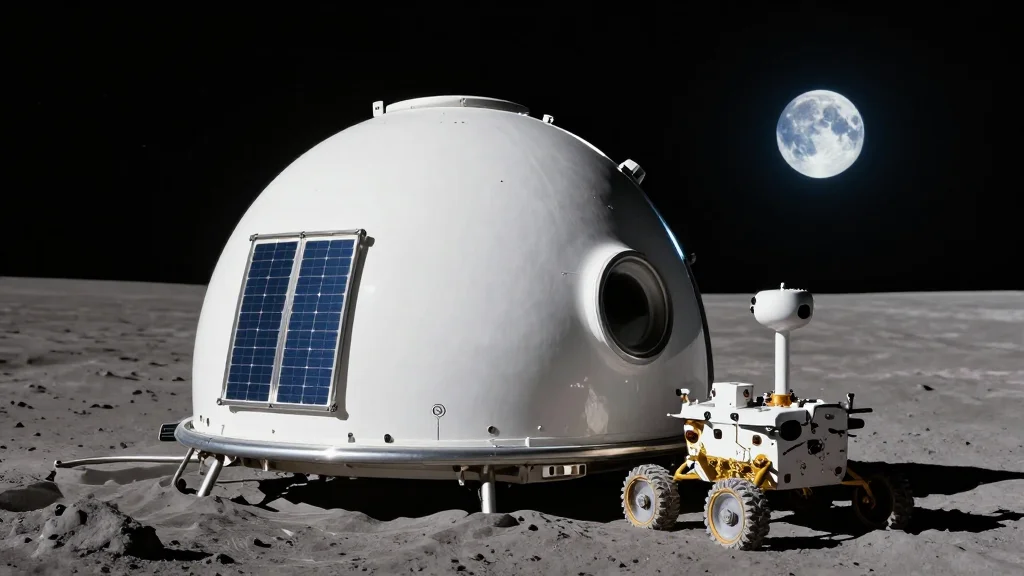
A key driver behind the budget reallocation is the race to establish a lunar foothold before China. The $624 million dedicated to a moon base underscores the urgency, as Isaacman warned that the timing gap could shrink to months. By collaborating with commercial firms on landers, rovers, power and communications, NASA hopes to accelerate construction, reduce costs, and maintain a strategic advantage. The partnership also serves as a proving ground for technologies—such as nuclear propulsion—that will be essential for future crewed missions to Mars.
Beyond the Moon, the $3 billion set aside for a commercial low‑Earth‑orbit (LEO) economy signals confidence that standardized satellite buses and constellations can deliver affordable science platforms. This influx of private‑sector capability could free up federal funds for flagship projects like the Nancy Grace Roman Space Telescope and the Dragonfly mission to Titan. As AI‑driven data analysis and commercial launch services mature, the overall cost structure of space science is poised to shrink, offering a more sustainable path for long‑term U.S. leadership in space exploration.
NASA Sees Industry Opportunity in Proposed Budget Cuts
Comments
Want to join the conversation?
Loading comments...