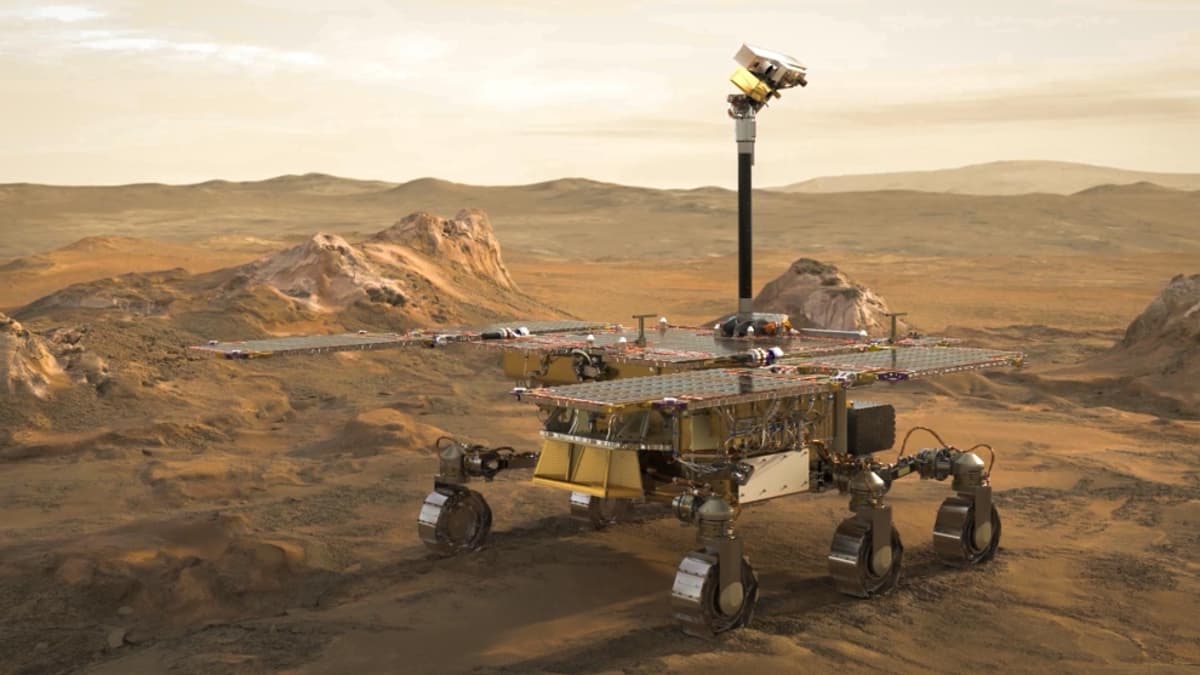
NASA Selects Falcon Heavy to Launch ESA Mars Rover Mission Despite Budget Threat
Companies Mentioned
Why It Matters
The decision ties a high‑profile Mars sample‑return mission to a U.S. launch provider while exposing it to severe budget cuts that could derail international collaboration and delay critical planetary science research.
Key Takeaways
- •Falcon Heavy selected to launch ESA's Rosalind Franklin rover in 2028
- •NASA will provide descent engines, RHUs, electronics, and a mass spectrometer
- •Launch contract valued at $175.7 million, comparable to prior Falcon Heavy missions
- •FY2027 budget proposal threatens ROSA funding, risking mission cancellation
Pulse Analysis
SpaceX’s Falcon Heavy has been tapped by NASA to loft ESA’s Rosalind Franklin rover, the first European mission designed to drill beneath the Martian surface and return samples. The partnership, formalized through the ROSA (Rosalind Franklin Support and Augmentation) project, extends beyond launch services: NASA will furnish critical hardware such as descent‑stage braking engines, radioisotope heater units that keep the rover warm, and a suite of scientific electronics. At $175.7 million, the contract mirrors costs of earlier Falcon Heavy launches, underscoring the vehicle’s reliability for deep‑space payloads.
The excitement surrounding the rover is tempered by a stark fiscal reality. NASA’s FY2027 budget request excludes any allocation for ROSA, aligning with a broader proposal to cancel more than 50 science missions. Lawmakers from both parties have signaled strong opposition, with a bipartisan group of senators urging a $9 billion science budget—nearly 25 percent above the prior year’s level. If the funding gap persists, the rover could join a growing list of canceled planetary initiatives, eroding the United States’ leadership in solar‑system exploration and jeopardizing the scientific return of a mission poised to search for past life on Mars.
Beyond the immediate financial stakes, the Falcon Heavy selection and ROSA controversy highlight the delicate balance of U.S.–European space cooperation. After ESA severed ties with Russia, NASA’s contributions became essential, linking the mission’s success to American launch capability. Continued collaboration could set a precedent for future joint ventures, reinforcing a commercial launch ecosystem while ensuring that ambitious Mars objectives remain on track. Conversely, a funding shortfall may push ESA to seek alternative partners or delay its sample‑return timeline, reshaping the competitive landscape of interplanetary exploration.
NASA selects Falcon Heavy to launch ESA Mars rover mission despite budget threat
Comments
Want to join the conversation?
Loading comments...