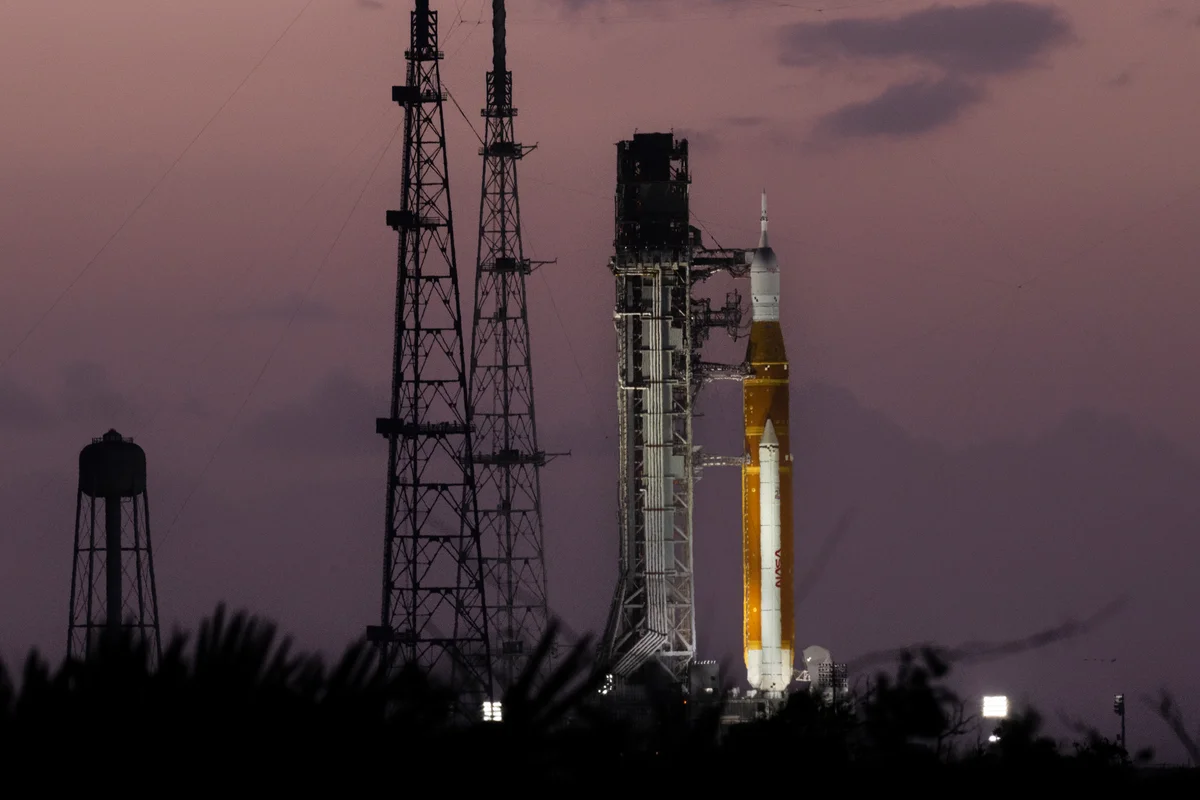
NASA Outlines Preliminary Artemis III Mission Plans
Why It Matters
Artemis III serves as a high‑risk rehearsal that validates NASA’s new partnership model and hardware before the first crewed lunar landing on Artemis IV, de‑risking both schedule and cost.
Key Takeaways
- •Artemis III tests Orion docking with SpaceX Starship and Blue Origin landers
- •NASA will use a non‑propulsive “spacer” instead of an upper stage
- •Four astronauts will spend longer aboard Orion than Artemis II
- •Mission will evaluate upgraded heat shield for flexible Earth re‑entry
- •NASA seeks CubeSat and communications solutions from industry partners
Pulse Analysis
The Artemis program’s shift toward commercial collaboration marks a watershed for U.S. deep‑space exploration. By pairing NASA’s Orion capsule with SpaceX’s Starship and Blue Origin’s Blue Moon lander pathfinders, Artemis III creates a shared‑risk environment that accelerates technology maturation while spreading development costs across multiple private firms. This approach mirrors the successful low‑Earth‑orbit partnerships of the Commercial Crew Program, but extends the model to the more demanding realm of lunar‑orbit operations, setting a new benchmark for public‑private synergy.
Technically, Artemis III introduces several first‑of‑its‑kind elements. The SLS launch vehicle will forego its traditional cryogenic upper stage, employing a mass‑equivalent “spacer” that preserves interface geometry without providing thrust. This allows Orion to reach low Earth orbit and rely on its European‑built service module for orbital insertion and circularization. Once in orbit, the crew will conduct extended life‑support tests, perform the inaugural docking of Orion with commercial lander test articles, and validate an upgraded heat‑shield designed for more flexible re‑entry trajectories—capabilities essential for future lunar surface missions.
Strategically, the mission is a risk‑reduction rehearsal for Artemis IV, the first crewed landing at the Moon’s South Pole. Successful docking and communications demonstrations will inform the operational playbook for lunar surface rendezvous, habitation modules, and surface science payloads. Moreover, NASA’s open call for industry solutions—ranging from CubeSat deployments to enhanced ground‑link technologies—signals a broader invitation for commercial innovation, potentially unlocking new revenue streams and cementing the United States’ leadership in the emerging lunar economy and the longer‑term goal of crewed Mars exploration.
NASA Outlines Preliminary Artemis III Mission Plans
Comments
Want to join the conversation?
Loading comments...