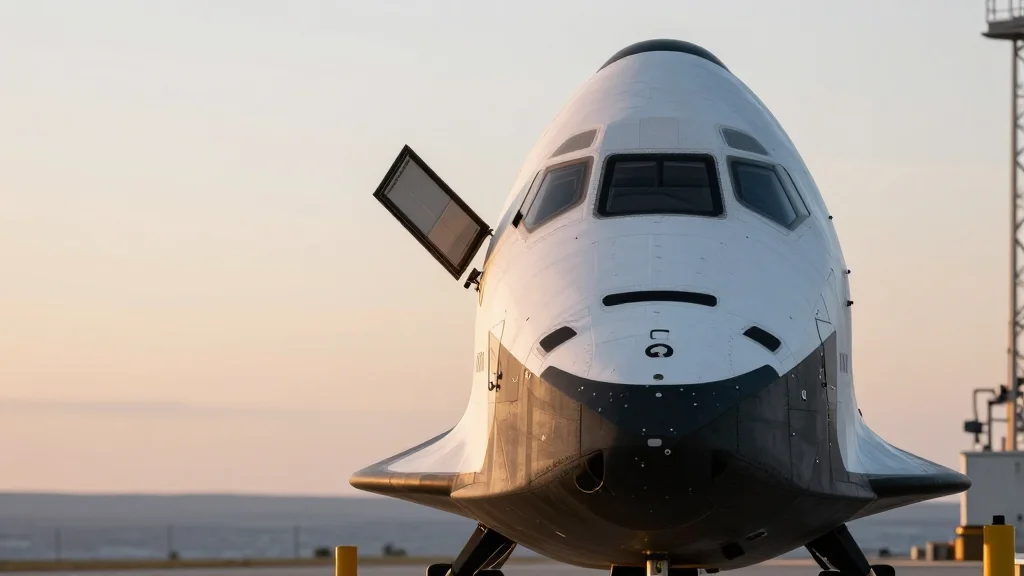
NASA Shares SpaceX Crew-13 Assignments for Space Station Mission
Companies Mentioned
Why It Matters
Accelerating the launch date boosts the cadence of U.S. crew rotations, reinforcing commercial crew reliability and keeping the ISS fully staffed for critical research. The mission’s science and technology demonstrations directly advance the Artemis program and long-duration human exploration.
Key Takeaways
- •Crew-13 launches mid‑September, marking NASA’s 13th SpaceX crew rotation.
- •Jessica Watkins becomes first NASA astronaut to fly twice on a Dragon.
- •First spaceflights for Luke Delaney, Joshua Kutryk, and Sergey Teteryatnikov.
- •Mission supports ISS research and Artemis‑Moon/Mars preparation.
Pulse Analysis
The SpaceX Crew‑13 flight represents the latest milestone in NASA’s Commercial Crew Program, a partnership that has restored U.S. launch capability after decades of reliance on Russian Soyuz vehicles. By moving the launch window forward from November to mid‑September, NASA aims to increase the frequency of crewed missions, a critical step toward maintaining a continuous human presence on the International Space Station. Regular rotations not only keep the station fully staffed for ongoing research but also provide valuable data on the operational reliability of the Dragon spacecraft and the Falcon 9 launch system.
The four‑person roster blends experience and fresh perspective. Veteran astronaut Jessica Watkins returns as commander, becoming the first NASA astronaut to launch twice on a Dragon, while pilot Luke Delaney makes his inaugural flight after a distinguished career as a naval test pilot. Joining them are Canada’s Joshua Kutryk and Russia’s Sergey Teteryatnikov, both on their first orbital missions, underscoring the multinational nature of ISS operations. Their combined backgrounds in geology, aerospace engineering, and naval systems broaden the mission’s capability to conduct complex science and technology demonstrations.
During its stay on the ISS, Crew‑13 will execute a suite of experiments ranging from microgravity materials research to biomedical studies that inform long‑duration travel to the Moon and Mars. The payloads also include technology demonstrators designed to validate autonomous navigation, in‑space manufacturing, and life‑support upgrades—key components of NASA’s Artemis lunar gateway architecture. By delivering new knowledge and proven hardware, the mission strengthens commercial low‑Earth‑orbit opportunities and lays groundwork for the next generation of deep‑space exploration.
NASA Shares SpaceX Crew-13 Assignments for Space Station Mission
Comments
Want to join the conversation?
Loading comments...