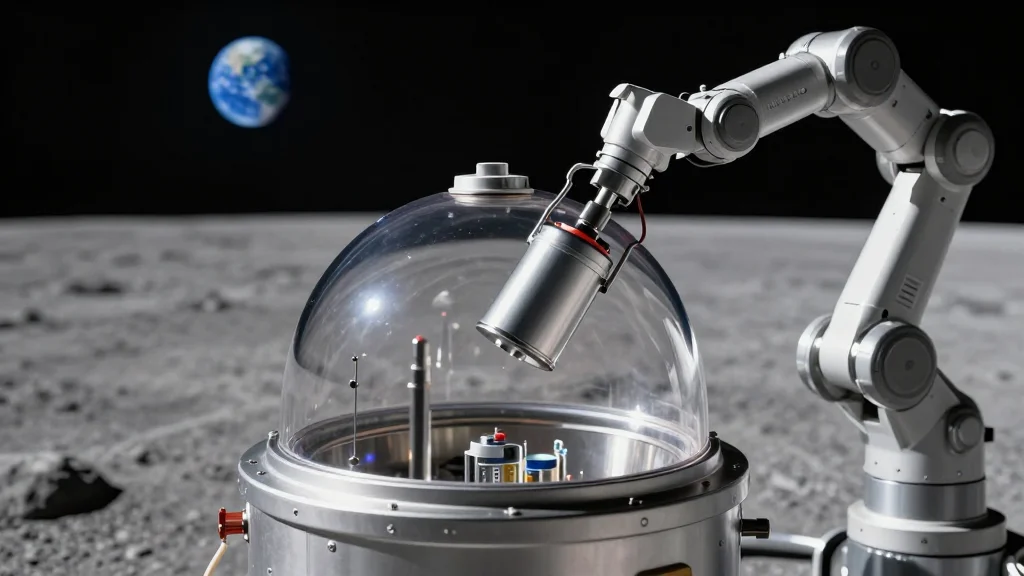
NASA Should Build a Biocontainment Facility on the Moon to Protect Earth, Researchers Advise
Companies Mentioned

NASA
Why It Matters
A lunar quarantine would close a critical gap in planetary protection, safeguarding ecosystems and public health as space sample returns become more frequent. It also sets a precedent for international biosafety standards in an increasingly crowded space environment.
Key Takeaways
- •Lunar quarantine would intercept extraterrestrial samples before Earth arrival
- •Robotic handling reduces human exposure risk in lunar biocontainment
- •Invasive species history underscores need for planetary protection
- •Growing space traffic heightens biosafety urgency
- •Moon could serve as first line of biological defense
Pulse Analysis
Planetary protection has traditionally relied on Earth‑based clean rooms and high‑containment labs to process lunar and Martian samples. However, those facilities were designed for known terrestrial pathogens and lack the capacity to contain truly unknown extraterrestrial organisms. A dedicated lunar biocontainment complex would shift the containment boundary to the Moon’s surface, allowing scientists to isolate, characterize, and, if necessary, neutralize alien microbes before any material ever touches Earth’s biosphere. By integrating advanced robotics and remote laboratories, such an outpost could operate continuously without endangering crew members.
The proposal draws a direct parallel to the ecological lessons learned from invasive species that have reshaped continents and economies. History shows that once an alien organism establishes a foothold, eradication becomes exponentially more costly and often impossible. Applying that caution to space‑borne life, the authors stress that even microscopic, non‑pathogenic organisms could disrupt Earth’s microbial equilibrium, affect agriculture, or trigger novel diseases. A lunar quarantine would act as a firewall, providing a controlled environment where containment protocols can be rigorously tested and refined before any potential release.
Beyond scientific safety, the concept aligns with the geopolitical race to dominate lunar infrastructure. Private firms and national agencies are already planning habitats, mining operations, and research stations, creating a crowded regulatory landscape. Establishing a biocontainment facility could become a cornerstone of international agreements, similar to the Outer Space Treaty, and may attract funding from both government budgets and commercial stakeholders seeking liability protection. As the cadence of sample‑return missions accelerates, the Moon‑based quarantine could set a new global standard for responsible exploration and preserve Earth’s ecological integrity.
NASA should build a biocontainment facility on the moon to protect Earth, researchers advise
Comments
Want to join the conversation?
Loading comments...