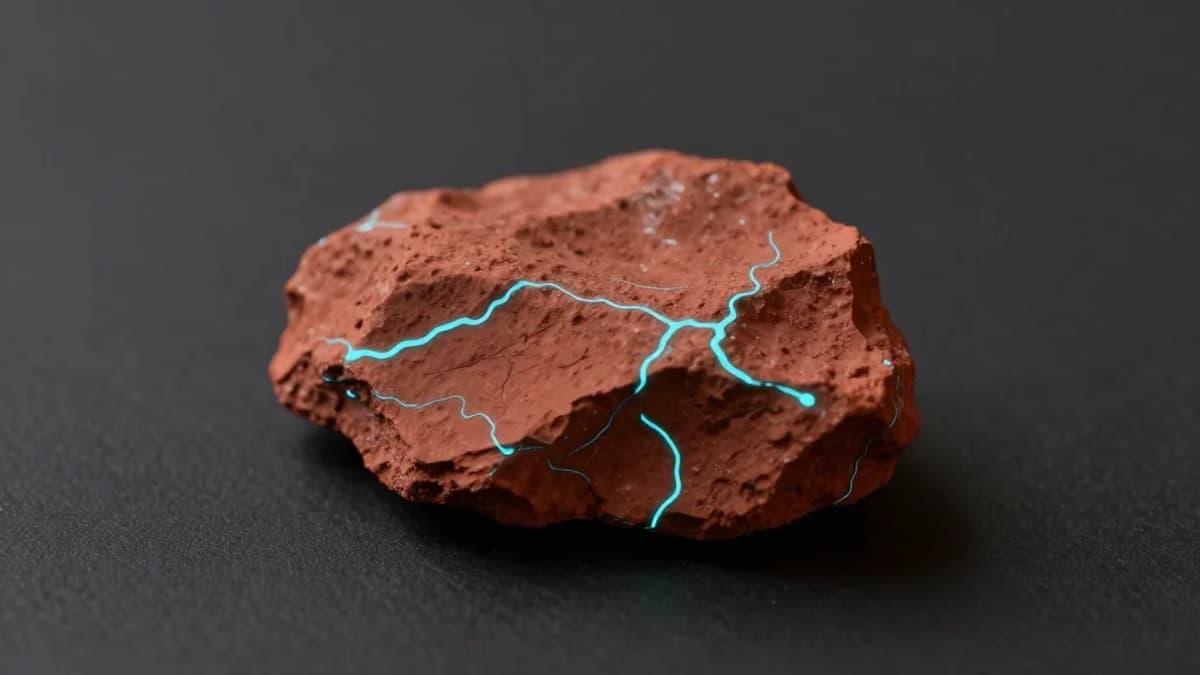
NASA Study: Non-Biologic Processes Don't Fully Explain Mars Organics
•February 8, 2026
0
Why It Matters
If the organics cannot be explained by known abiotic sources, the findings revive the prospect of ancient Martian life, influencing future astrobiology missions and funding priorities.
Key Takeaways
- •Curiosity detected decane, undecane, dodecane on Mars.
- •Non‑biotic sources insufficient to explain observed organic levels.
- •Modeling suggests pre‑exposure organics exceed meteoritic input.
- •Study supports hypothesis of possible biological origin.
- •Further research needed on organic degradation rates.
Pulse Analysis
The detection of medium‑chain hydrocarbons such as decane, undecane and dodecane by Curiosity sparked intense debate because, on Earth, these molecules are typically linked to biological fatty‑acid breakdown. Their presence in Gale Crater’s mudstone provides the most complex organic signature yet recovered from the Red Planet, raising the stakes for any claim of past life. By situating these findings within the broader context of Martian geochemistry, scientists can better differentiate between indigenous organics and contaminants delivered by meteorites or formed through high‑temperature processes.
To address this ambiguity, the research team employed a multi‑pronged approach: laboratory irradiation of Mars‑analog rocks to simulate 80 million years of cosmic exposure, quantitative modeling of organic loss rates, and direct comparison with Curiosity’s in‑situ measurements. The results indicate that the surviving organic inventory after such prolonged radiation would be far lower than what the rover actually measured, implying that the original concentration must have been substantially higher. Known abiotic pathways—such as meteoritic influx or Fischer‑Tropsch‑type synthesis—cannot generate the required pre‑exposure quantities, leaving a biological origin as a plausible, though not proven, explanation.
The study reshapes the strategic roadmap for upcoming missions like ESA’s Rosalind Franklin rover and NASA’s Mars Sample Return campaign. By highlighting gaps in our understanding of organic preservation under Martian conditions, it underscores the need for instruments capable of measuring degradation kinetics and isotopic signatures directly on the surface. As the scientific community refines models of organic stability, the prospect of confirming ancient Martian biosignatures becomes more tangible, potentially redefining humanity’s view of life beyond Earth.
NASA Study: Non-biologic Processes Don't Fully Explain Mars Organics
0
Comments
Want to join the conversation?
Loading comments...