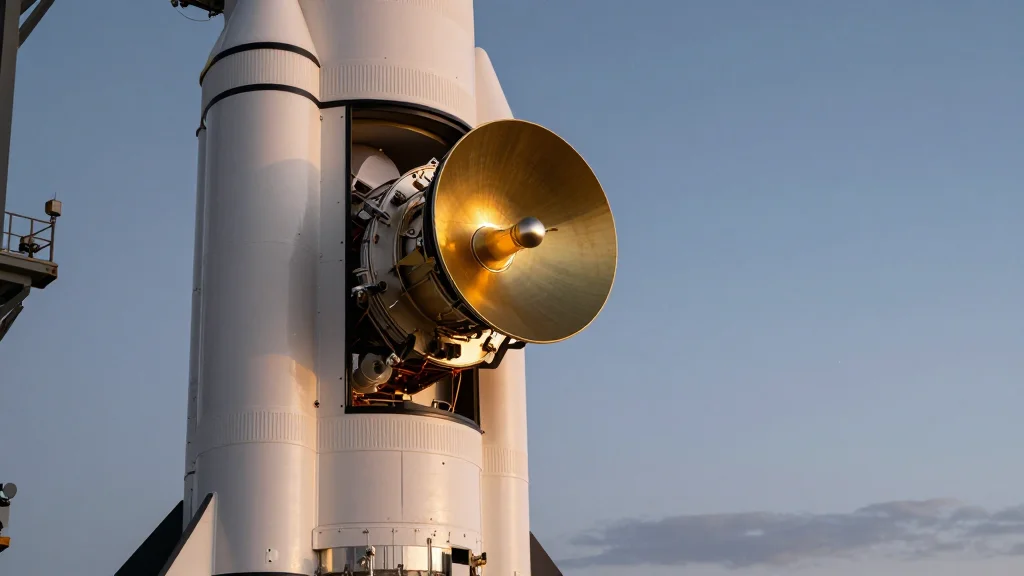
NASA Targets Early September for Roman Space Telescope Launch
Companies Mentioned
Why It Matters
An earlier launch accelerates access to unprecedented infrared data, giving astronomers a powerful new tool to probe dark energy, exoplanets and the early universe, while demonstrating the efficiency of NASA‑SpaceX partnerships.
Key Takeaways
- •Launch slated for early September 2026 on SpaceX Falcon Heavy
- •Mission will collect 20,000 terabytes of infrared sky data
- •Expected to discover 100,000 exoplanets and billions of stars
- •Accelerated schedule showcases public‑private partnership efficiency
- •Primary five‑year mission enables unprecedented cosmology research
Pulse Analysis
The Roman Space Telescope’s shift to an early‑September 2026 launch marks a significant milestone for NASA’s astrophysics portfolio. By moving the flight date up by several months, the agency not only meets its internal deadline but also frees up launch windows for other high‑priority missions on the Falcon Heavy schedule. The decision reflects confidence in the spacecraft’s integration progress at Goddard and the reliability of SpaceX’s heavy‑lift capabilities, reinforcing the growing reliance on commercial launch services for government science programs.
Roman’s scientific payload is designed to capture the widest infrared view ever achieved from space, delivering crisp images across a field of view ten times larger than the Hubble Space Telescope’s. Over five years, the observatory will amass a 20,000‑terabyte data trove, supporting investigations into dark energy, dark matter, and the formation of galaxies. The mission’s projected catalog of 100,000 exoplanets and billions of stars will provide a statistical foundation for next‑generation astrophysical models, while the sheer volume of data will drive advances in machine‑learning techniques for astronomical analysis.
Beyond its scientific promise, Roman exemplifies how public investment, institutional expertise, and private enterprise can compress development timelines without compromising ambition. The accelerated schedule showcases a successful partnership model that could be replicated for future flagship missions, potentially lowering costs and increasing launch cadence. Moreover, the massive data archive will become a commercial asset, enabling private firms to develop analytics platforms, visualization tools, and downstream services for academia, industry, and the public, thereby expanding the economic ecosystem around space science.
NASA Targets Early September for Roman Space Telescope Launch
Comments
Want to join the conversation?
Loading comments...