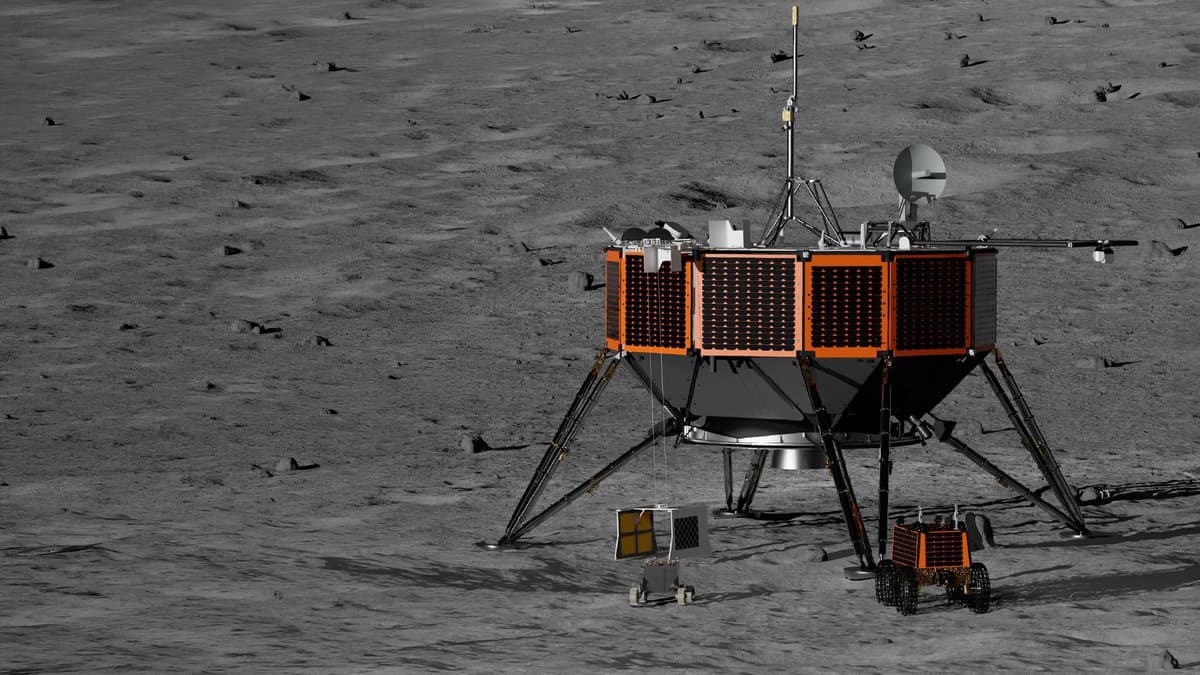
NASA to Increase Value of CLPS Contract to Support Surge of Lunar Lander Missions
Companies Mentioned

Why It Matters
The contract increase underpins NASA’s Moon Base strategy, accelerating the supply chain and creating a near‑term market for commercial lunar landers. It also pressures industry to standardize hardware, which could lower costs and enable sustained lunar operations.
Key Takeaways
- •NASA raises CLCL contract ceiling to $4.2 billion for lunar landers
- •Target of monthly landings implies 9 missions in 2027, 10 in 2028
- •Firefly, Blue Origin, Astrobotic scaling facilities to meet higher demand
- •NASA expects standardized, build‑to‑print landers for rapid cadence
Pulse Analysis
NASA’s decision to lift the CLPS contract ceiling to $4.2 billion marks a decisive shift from a modest, experimental program to a high‑tempo lunar logistics network. The agency’s "Ignition" roadmap envisions a permanent Moon Base, and the surge in robotic landings is intended to deliver scientific payloads, habitat components, and in‑situ resource‑utilization experiments well before crewed missions resume. By earmarking additional funds now, NASA reduces the risk of budget bottlenecks later, ensuring that the procurement pipeline can keep pace with its aggressive schedule.
Commercial partners are responding with rapid capacity expansions. Firefly Aerospace has added clean‑room space to support up to eight landers simultaneously, while Blue Origin’s 190,000‑square‑foot Lunar Plant 1 is already tooling up for multiple Mark 1 units. Astrobotic and Intuitive Machines echo the same sentiment, emphasizing supply‑chain resilience and the need for more standardized, build‑to‑print designs. This industrial momentum not only shortens development cycles but also drives down per‑mission costs, a critical factor as NASA targets a near‑monthly launch cadence.
The broader implications extend beyond NASA’s own objectives. A reliable, high‑frequency lunar delivery service could catalyze a nascent lunar economy, attracting private investors to develop mining, manufacturing, and tourism ventures. Moreover, the CLPS 2.0 follow‑on contract, slated for post‑2028, will likely embed lessons learned from this accelerated phase, shaping the long‑term architecture of U.S. lunar exploration and reinforcing America’s leadership in deep‑space commercialization.
NASA to increase value of CLPS contract to support surge of lunar lander missions
Comments
Want to join the conversation?
Loading comments...