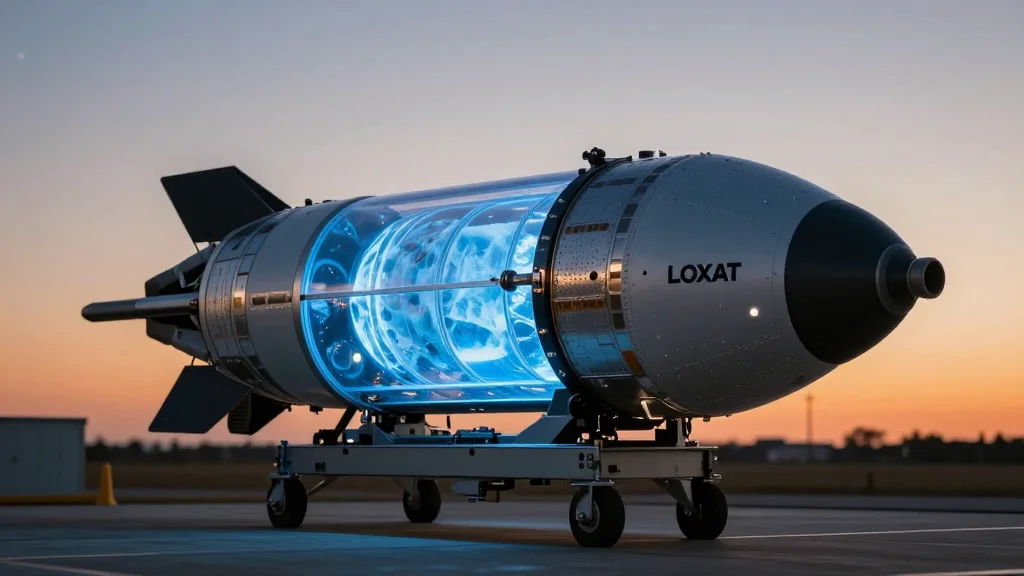
NASA to Launch LOXSAT Satellite to Test First In‑Space Cryogenic Fuel Depot

Companies Mentioned


Why It Matters
LOXSAT tackles the most stubborn obstacle to sustained deep‑space exploration: the inability to store and transfer cryogenic propellants in orbit. By proving that liquid oxygen can be kept cold and moved between vehicles without significant boil‑off, NASA paves the way for a reusable refueling infrastructure that could dramatically lower the cost and complexity of Moon and Mars missions. The technology also opens commercial opportunities for satellite operators seeking to extend mission lifetimes or reposition assets using in‑space refueling. Beyond cost savings, an operational orbital depot would increase mission flexibility, allowing spacecraft to launch on smaller rockets, carry larger payloads, or adjust trajectories mid‑flight. This capability could be a decisive factor in achieving NASA’s Artemis goal of a sustainable lunar presence by 2030 and in laying the groundwork for crewed missions to Mars within the next decade.
Key Takeaways
- •NASA's LOXSAT will launch after July 17, 2026 on a Rocket Lab Electron from New Zealand.
- •The nine‑month mission will test 11 cryogenic‑fuel management components, including lossless liquid oxygen storage and transfer.
- •Eta Space, selected under NASA's Tipping Point program, is the primary industry partner for the payload.
- •Successful demonstration could reduce deep‑space mission costs by up to 30 % through in‑orbit refueling.
- •Results expected early 2027 will guide future orbital depot designs for Artemis and Mars exploration.
Pulse Analysis
LOXSAT represents a watershed moment for the SpaceTech ecosystem, shifting the focus from one‑off propulsion breakthroughs to systemic infrastructure. Historically, NASA’s in‑space technology demos have been siloed—think of the Orion service module or the Lunar Gateway. By integrating a commercial launch provider (Rocket Lab) and a startup (Eta Space) into a mission that directly addresses mission economics, the agency is effectively de‑risking an entire supply chain. This collaborative model could accelerate private investment, as investors now have a clearer path to revenue from cryogenic‑fluid services.
The competitive landscape is also evolving. SpaceX’s Starship and Blue Origin’s Blue Moon both depend on cryogenic propellants, yet neither has demonstrated in‑orbit refueling. If LOXSAT validates the technology, both companies may need to adapt their architectures or partner with firms that can supply depot services. Meanwhile, Rocket Lab’s Photon platform gains credibility as a versatile bus for government and commercial payloads, potentially expanding its market share beyond small‑sat launches.
Looking forward, the next logical step will be a larger‑scale depot demonstrator, perhaps leveraging the same Electron‑Photon combination but with higher propellant volumes. Success could trigger a cascade of contracts from NASA, the Department of Defense, and commercial players seeking to launch deep‑space missions without the prohibitive mass penalties of carrying all fuel from Earth. In short, LOXSAT could be the catalyst that transforms orbital refueling from a theoretical concept into a commercial reality, reshaping the economics of humanity’s next great leap into the solar system.
NASA to Launch LOXSAT Satellite to Test First In‑Space Cryogenic Fuel Depot
Comments
Want to join the conversation?
Loading comments...