NASA to Preview Katalyst Mission to Boost Swift Spacecraft’s Orbit
Companies Mentioned
Why It Matters
Extending Swift’s operational window preserves a unique high‑energy astrophysics platform while proving U.S. on‑orbit servicing technology, a prerequisite for more ambitious deep‑space missions and commercial satellite refurbishment.
Key Takeaways
- •LINK will launch on Pegasus XL from Kwajalein in June 2026.
- •Mission aims to raise Swift’s orbit after 21 years in LEO.
- •Successful boost demonstrates U.S. on‑orbit servicing capability for future missions.
- •Swift’s extended life supports gamma‑ray burst observations and rapid response astronomy.
- •NASA awarded Katalyst a contract in September 2025 for the boost mission.
Pulse Analysis
The Neil Gehrels Swift Observatory, launched in 2004, has become a workhorse for detecting gamma‑ray bursts and other transient high‑energy events. After two decades in low‑Earth orbit, increased solar activity has accelerated orbital decay, threatening the telescope’s ability to remain above the atmosphere. Rather than allowing a routine re‑entry, NASA has opted to extend Swift’s mission, preserving its rapid‑response capability that feeds critical alerts to larger observatories worldwide.
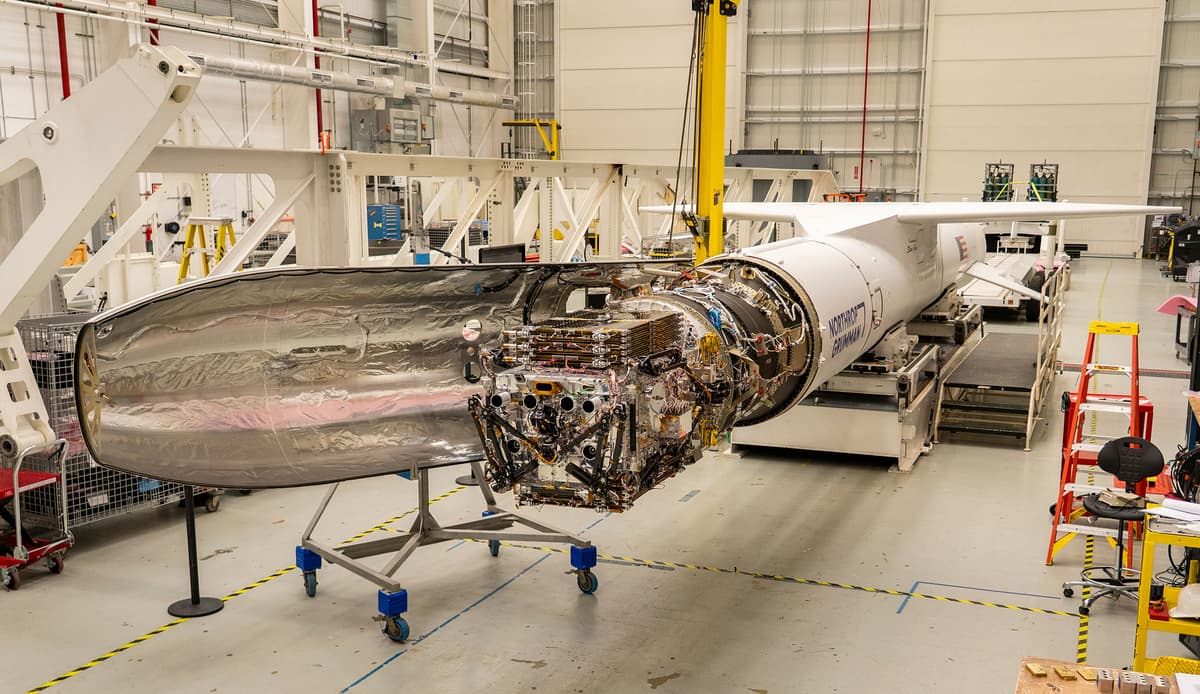
Enter Katalyst Space’s LINK, a compact robotic servicing spacecraft designed to autonomously rendezvous with Swift and perform a propulsive boost. Housed inside a Pegasus XL launch vehicle, LINK will be released from Kwajalein Atoll and navigate to the aging observatory, attaching to its service port and firing its thrusters to raise the orbit. This mission not only adds years to Swift’s scientific output but also serves as a technology demonstrator for on‑orbit servicing—a capability long envisioned but rarely executed in the United States.
The broader implications reach beyond a single telescope. Demonstrating reliable, crew‑free satellite refurbishment opens pathways for extending the life of commercial communications satellites, reducing space debris, and enabling more complex deep‑space missions that rely on in‑situ upgrades. NASA’s partnership with Katalyst signals a shift toward leveraging commercial innovation to maintain strategic assets, aligning with the agency’s goal of fostering a sustainable, service‑oriented space economy. Success could accelerate policy support and investment in a new generation of robotic servicers, reshaping how the industry approaches satellite longevity and mission resilience.
NASA to Preview Katalyst Mission to Boost Swift Spacecraft’s Orbit
Comments
Want to join the conversation?
Loading comments...