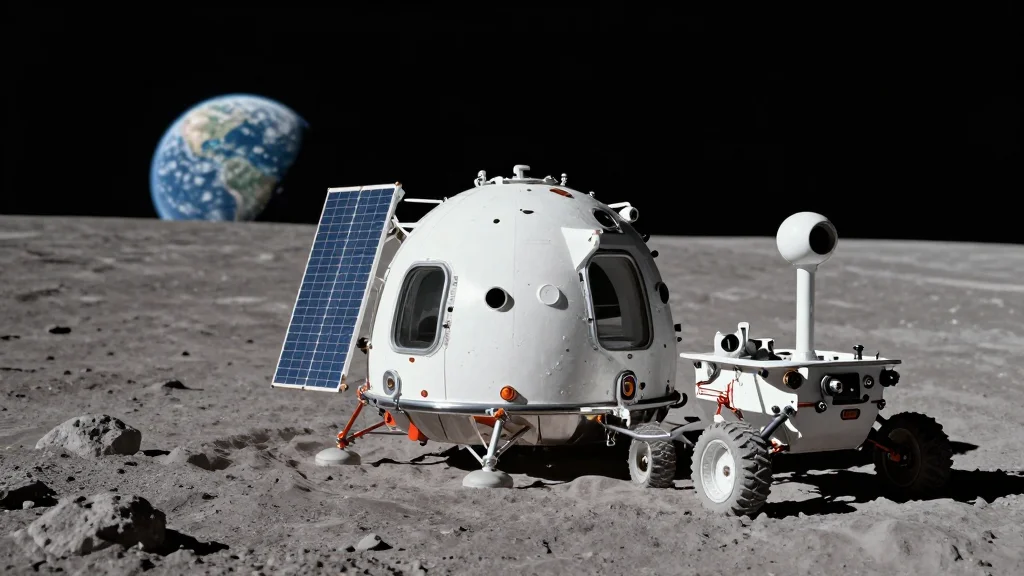
NASA Unveils $30 B Artemis Moon Base Plan Targeting 2039 Surface Operations

Companies Mentioned


Why It Matters
The Artemis moon‑base plan represents the most comprehensive, government‑backed effort to turn the Moon into a permanent human habitat. By committing $30 billion and a clear launch cadence, NASA aims to lock in U.S. leadership on lunar standards, which will cascade into commercial markets for in‑situ resource utilization, power generation and communications. A successful outpost could catalyze a cislunar economy worth $127 billion by 2050, according to PwC, and provide a testbed for technologies needed for Mars. At the same time, the plan intensifies the strategic rivalry with China’s ILRS. The competing architectures—Artemis’s open‑ecosystem model versus China‑Russia’s state‑driven station—could bifurcate lunar governance into two standards, affecting everything from docking interfaces to property‑rights regimes. The outcome will shape the legal and commercial framework for future lunar mining, tourism and scientific research, making the 2039 target a pivotal inflection point for the entire SpaceTech sector.
Key Takeaways
- •NASA’s Artemis moon‑base roadmap costs $30 billion over 11 years.
- •Plan calls for 79 launches, 73 landers, 4 habitat modules and a 20‑kilowatt nuclear reactor.
- •First crewed landing slated for 2028; six‑month crew rotations begin by 2032.
- •Permanent, nuclear‑powered outpost targeted for surface operations by 2039.
- •Geopolitical competition: U.S. Artemis Accords vs. China‑Russia ILRS, with private firms like SpaceX and Blue Origin as key partners.
Pulse Analysis
NASA’s Artemis moon‑base agenda is a high‑stakes gamble that blends engineering ambition with geopolitical signaling. Historically, lunar programs have floundered when political will waned—Apollo’s abrupt end after 1972 is a cautionary tale. By anchoring the plan to a concrete budget and a phased launch schedule, NASA is attempting to avoid the “mission‑or‑program” trap that plagued the Space Shuttle era. The inclusion of a nuclear reactor is a bold move; it sidesteps the chronic power‑supply issue that has limited previous lunar habitats, but it also introduces regulatory and safety hurdles that could delay the 2039 timeline.
Commercial involvement is the linchpin of the plan’s feasibility. SpaceX’s Starship, with its promised low‑cost lift, could deliver the bulk of the habitat mass, while Blue Origin’s lunar lander and NASA’s CLPS contracts diversify risk. However, the private sector’s appetite hinges on a clear revenue path beyond government contracts. The projected $127 billion lunar market by 2050 offers a compelling narrative, yet the near‑term cash flow remains uncertain. Companies will likely push for early commercial rights—such as in‑situ resource extraction—forcing NASA to balance open‑ecosystem principles with national security concerns.
Finally, the geopolitical dimension cannot be ignored. China’s ILRS is advancing on a parallel track, and the Moon is rapidly becoming a contested commons. If the U.S. fails to achieve a functional outpost by 2039, it risks ceding standard‑setting authority to Beijing, which could lock in Chinese‑centric docking ports, communication protocols and legal frameworks. Conversely, a successful Artemis outpost would cement U.S. influence over lunar governance, attract allied investment, and create a de‑facto market for lunar services. The next six months—particularly the outcomes of Starship’s test flight and VIPER’s south‑pole landing—will be the first litmus test of whether NASA’s grand vision can translate into operational reality.
NASA Unveils $30 B Artemis Moon Base Plan Targeting 2039 Surface Operations
Comments
Want to join the conversation?
Loading comments...