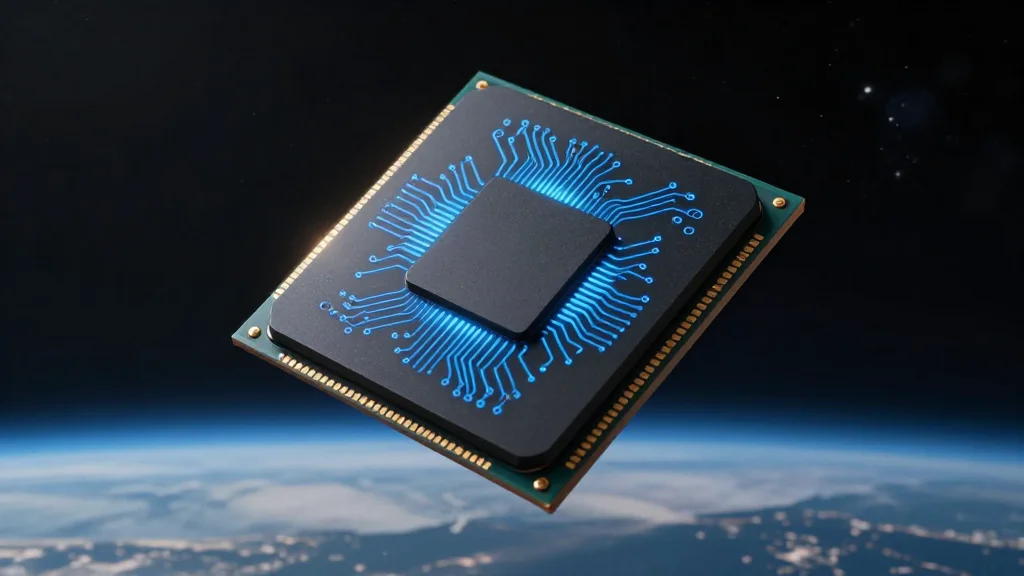
NASA Unveils HPSC Processor Delivering up to 500× Performance Boost for Spacecraft

Companies Mentioned

Why It Matters
The HPSC processor addresses a long‑standing bottleneck in spaceflight: the gap between the modest, radiation‑hardened CPUs that have powered missions for decades and the powerful, low‑power chips found in consumer devices. By delivering orders‑of‑magnitude more compute in a radiation‑tolerant form factor, NASA enables spacecraft to process sensor data, run AI models and make critical decisions without waiting for Earth‑based instructions. This shift could dramatically shorten mission timelines, lower data‑downlink costs and open new science opportunities that were previously infeasible due to onboard processing limits. Beyond NASA, the chip sets a benchmark for the broader SpaceTech ecosystem. Commercial satellite operators, lunar lander startups and defense payload developers stand to benefit from a ready‑made high‑performance processor that meets the stringent reliability standards of space. The partnership with Microchip also signals a growing trend of public‑private collaboration to commercialize advanced aerospace hardware, potentially spurring a new market segment for radiation‑hard AI accelerators.
Key Takeaways
- •NASA’s HPSC chip delivers >100× current processor performance, up to 500× in early tests
- •Developed with Microchip Technology under NASA’s Game Changing Development program
- •Fits in the palm of a hand, integrating CPU, memory, networking and specialized compute blocks
- •Aims to enable autonomous AI, real‑time image processing and rapid data handling on future missions
- •Targeted for integration on Artemis lunar landers, Europa Clipper and a 2028 demo mission
Pulse Analysis
The unveiling of the HPSC processor marks a pivotal moment in the evolution of spaceflight computing. Historically, mission designers have accepted slower, radiation‑hardened CPUs as a trade‑off for reliability, limiting on‑board autonomy. The performance envelope promised by HPSC—potentially 500 times faster—redefines that calculus, allowing mission architects to embed sophisticated AI pipelines directly on spacecraft. This could reduce the need for extensive ground‑segment infrastructure and lower operational costs, especially for constellations of small satellites that currently offload processing to terrestrial data centers.
From a market perspective, the chip could catalyze a wave of new commercial offerings. Companies that have been waiting for a space‑qualified AI accelerator now have a reference design to build upon, potentially accelerating the development of autonomous navigation kits for CubeSats and lunar landers. Moreover, the collaboration with Microchip signals that semiconductor manufacturers are willing to invest in niche, high‑reliability processes, which may lower unit costs over time as production scales. Competitors such as AMD and Intel, which have explored radiation‑hard variants, will likely feel pressure to match or exceed the HPSC’s performance metrics.
Looking ahead, the real test will be how quickly the processor moves from laboratory validation to flight heritage. Successful integration on a high‑profile mission like Artemis would provide the credibility needed for broader adoption across both government and commercial programs. If NASA can demonstrate that the HPSC maintains its performance under the rigors of deep‑space radiation and thermal extremes, it could become the de‑facto standard for next‑generation autonomous spacecraft, reshaping the economics and capabilities of space exploration for the next decade.
NASA unveils HPSC processor delivering up to 500× performance boost for spacecraft
Comments
Want to join the conversation?
Loading comments...