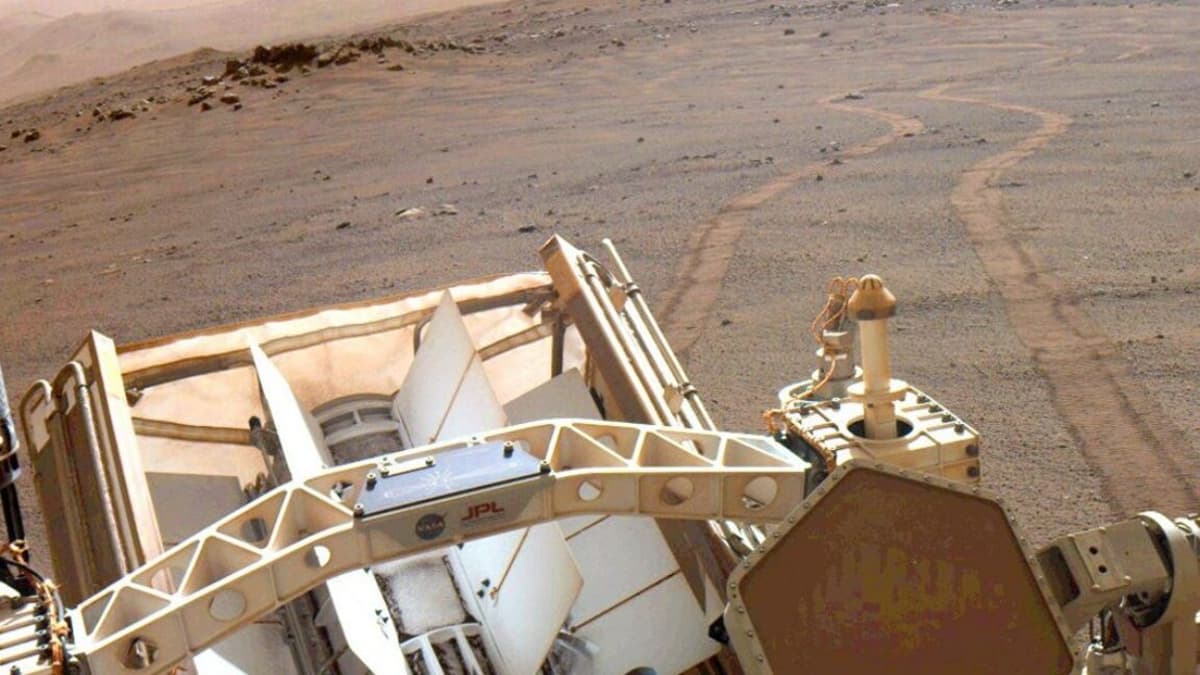
NASA Will Soon Find Out if the Perseverance Rover Can Really Persevere on Mars
•December 18, 2025
0
Companies Mentioned


Why It Matters
The rover’s longevity preserves NASA’s chance to retrieve Martian rocks, while MSR delays risk ceding the historic first‑sample return to China’s Tianwen‑3 mission.
Key Takeaways
- •Perseverance health excellent, operational through 2031
- •Sample return mission delayed, likely 2030s launch
- •Rover tested for 100 km drive to rendezvous site
- •33 sample tubes collected; six remain open
- •China’s Tianwen‑3 may return samples before NASA
Pulse Analysis
NASA’s Mars Sample Return effort has become a fiscal flashpoint, with the original architecture costing roughly $11 billion and facing repeated postponements. Early expectations of a 2026‑2028 launch have slipped as Congress and successive administrations wrestle with budget priorities. Commercial proposals from SpaceX, Blue Origin, Lockheed Martin, and Rocket Lab have yet to coalesce into a viable path, leaving the program in a budgetary stalemate while rival nations, notably China, accelerate their own sample‑return timelines.
Against this backdrop, Perseverance has emerged as a workhorse far beyond its design envelope. The rover’s plutonium‑powered systems remain fully functional, and recent testing has certified its rotary actuator and brakes for a cumulative 100 km traverse—roughly the width of Lake Michigan. This capability is critical for a potential rendezvous with a yet‑to‑be‑built lander, ensuring the rover can shuttle its 33 sealed sample tubes and still explore Jezero’s rim for additional high‑value targets through at least 2031. The ongoing collection of open tubes provides flexibility to replace or augment samples as new discoveries arise.
The strategic implications are profound. If NASA’s MSR remains delayed, China’s Tianwen‑3 could achieve the first Mars‑to‑Earth sample return as early as 2031, reshaping scientific leadership on the Red Planet. Meanwhile, the agency is evaluating commercial‑service models akin to ISS cargo flights, potentially leveraging private launchers to reduce costs and risk. The new NASA administrator, Jared Isaacman, will need to balance fiscal realities, international competition, and the scientific imperative to retrieve Perseverance’s cache, a decision that will define the next decade of planetary exploration.
NASA will soon find out if the Perseverance rover can really persevere on Mars
0
Comments
Want to join the conversation?
Loading comments...