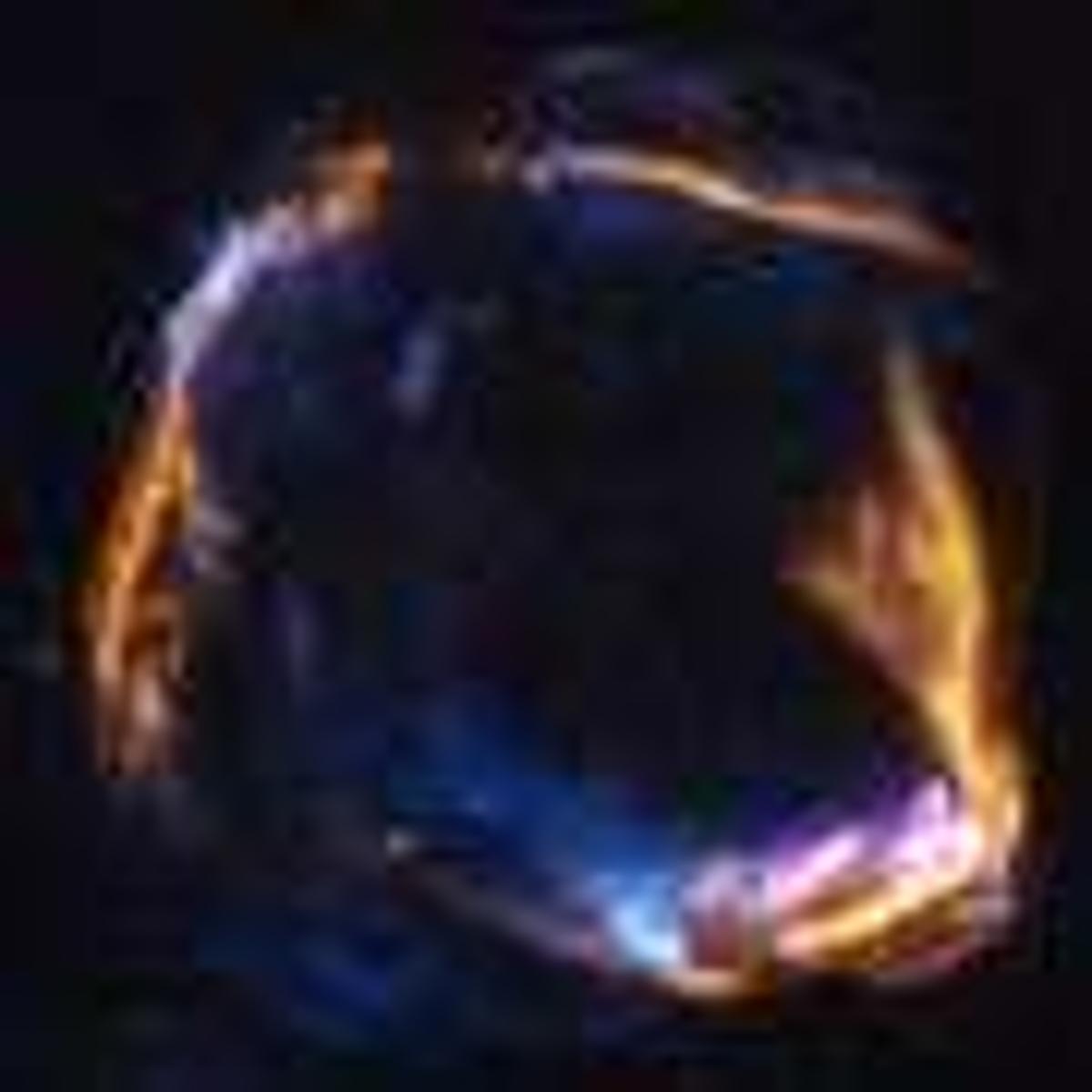
NASA X-Ray Mission Gets Fresh Look at 2,000-Year-Old Supernova
Why It Matters
The result sharpens models of how supernovae interact with surrounding interstellar material, a key factor in cosmic‑ray production and galactic evolution. It also demonstrates the value of X‑ray polarimetry for probing extreme astrophysical shocks.
Key Takeaways
- •IXPE captures polarized X‑ray emission from RCW 86 rim.
- •Data shows reflected‑shock at cavity boundary halting expansion.
- •Combined with Chandra, XMM‑Newton for multi‑energy view.
- •Cavity explains RCW 86’s irregular shape and rapid growth.
- •Findings refine supernova remnant evolution models.
Pulse Analysis
The Imaging X‑ray Polarimetry Explorer (IXPE) marks a milestone for space‑based polarimetry, a technique that measures the orientation of X‑ray photons. Launched in 2021, IXPE’s suite of detectors can discern subtle polarization signatures that traditional X‑ray telescopes miss, offering fresh insight into magnetic fields and particle acceleration in extreme environments. By targeting RCW 86, the mission extends its scientific reach beyond bright point sources to complex, extended remnants, showcasing the versatility of modern astrophysical instrumentation.
RCW 86, the glowing shell of a supernova that exploded roughly 2,000 years ago, has long puzzled astronomers with its asymmetric shape and unexpectedly fast expansion. Earlier Chandra observations identified a low‑density cavity surrounding the blast, suggesting the shock wave raced through a rarefied medium before striking denser walls. IXPE’s new polarimetric map of the outer rim captures the reflected‑shock region where the expansion stalls, confirming theoretical predictions about shock‑cavity interactions. When merged with Chandra’s high‑resolution imaging and XMM‑Newton’s broad‑band spectroscopy, the composite image delivers a three‑dimensional portrait of energy distribution, temperature gradients, and magnetic field alignment.
Beyond the immediate scientific payoff, the RCW 86 study illustrates how coordinated multi‑mission data can accelerate discovery in high‑energy astrophysics. Polarization measurements help refine models of cosmic‑ray acceleration, informing both fundamental physics and space‑weather forecasting. The success also validates the investment in specialized payloads like IXPE, encouraging future missions to incorporate polarimetry as a standard capability. As data archives grow, analysts and AI‑driven tools will extract deeper patterns, driving innovation across aerospace, data science, and even commercial sectors that rely on advanced imaging technologies.
NASA X-ray mission gets fresh look at 2,000-year-old supernova
Comments
Want to join the conversation?
Loading comments...