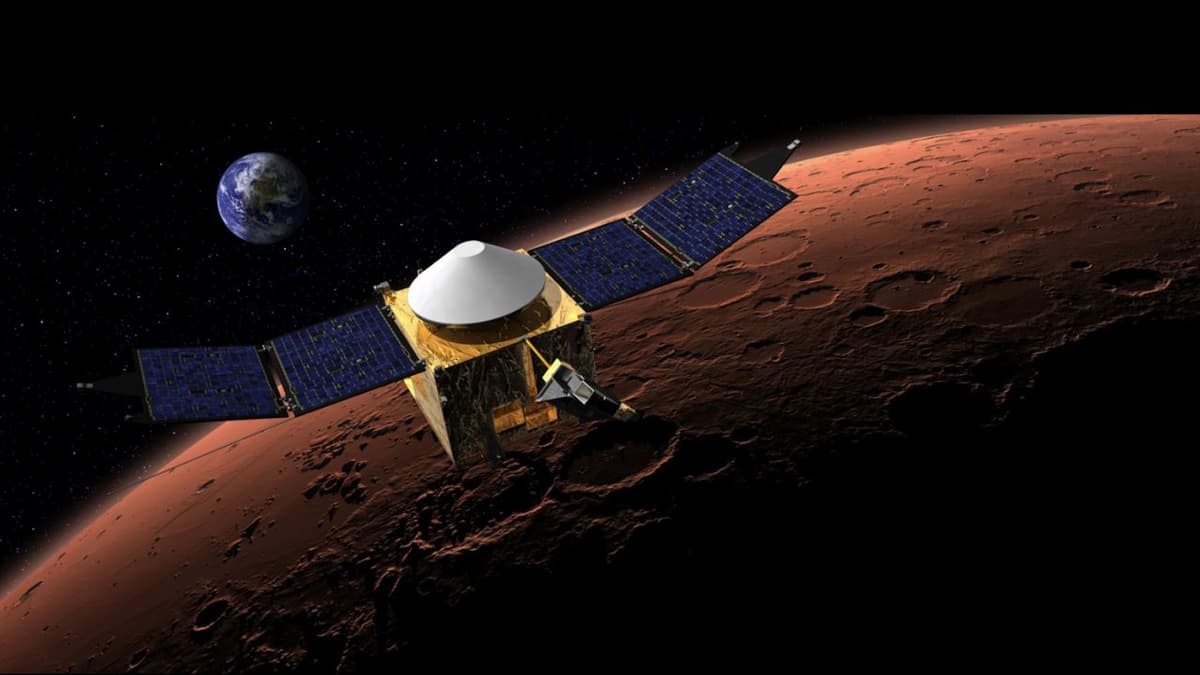
NASA's Dead Mars Orbiter MAVEN Will Crash Into the Red Planet in the Next 100 Years. It's Not the only Probe in the Mars Morgue
Why It Matters
MAVEN’s loss marks the end of a flagship atmospheric study that reshaped our understanding of planetary habitability, and highlights the need for systematic end‑of‑life planning for increasingly crowded Mars orbit.
Key Takeaways
- •MAVEN declared dead after 12 years studying Mars atmosphere.
- •Orbiter will stay in orbit 50‑100 years before atmospheric decay.
- •Mars orbital graveyard now contains roughly a dozen inactive spacecraft.
- •Only six orbiters and two rovers remain operational around Mars.
- •MAVEN showed solar wind stripped Mars’ atmosphere 4.2‑3.7 billion years ago.
Pulse Analysis
MAVEN’s decade‑plus tenure transformed how scientists view Mars’ climate evolution. Launched in 2013, the orbiter measured atmospheric loss rates, pinpointed the role of solar wind, and supplied critical context for the planet’s transition from a warm, wet world to today’s arid desert. Its unexpected radio silence in December 2023 forced NASA to declare the mission over, but the spacecraft’s final orbit mirrors the original disposal plan: a passive graveyard trajectory that will linger for half a century before burning up in the thin Martian atmosphere.
The growing inventory of dead spacecraft around Mars underscores a new challenge for interplanetary operations. With roughly a dozen defunct orbiters sharing similar altitudes, the risk of accidental collisions—whether with each other, Phobos, or Deimos—has risen. NASA and international partners now track these objects more closely, employing orbital decay models to predict re‑entry windows and avoid interference with active missions like the Mars Reconnaissance Orbiter and the Perseverance rover. The situation mirrors Earth’s low‑Earth‑orbit debris concerns, prompting discussions about active debris removal or end‑of‑mission de‑orbit burns for future probes.
Looking ahead, MAVEN’s scientific legacy will inform the design of next‑generation atmospheric explorers and shape planetary‑protection policies. Understanding how solar wind erodes atmospheres is vital for assessing habitability on exoplanets and for planning human missions that must contend with radiation and thin air. Moreover, the experience of managing a crowded Mars orbital environment will drive stricter guidelines on spacecraft end‑of‑life disposal, ensuring that the expanding fleet of orbiters can coexist without jeopardizing scientific return or the safety of future crewed landings.
NASA's dead Mars orbiter MAVEN will crash into the Red Planet in the next 100 years. It's not the only probe in the Mars morgue
Comments
Want to join the conversation?
Loading comments...