NASA's INCUS Mission on Road to Launch, Study Storms From Space
Companies Mentioned
Why It Matters
Accurate storm data can reduce loss of life and property by sharpening forecasts, while better precipitation insight supports water resource planning. The mission strengthens NASA’s climate‑monitoring portfolio and commercial‑government collaboration.
Key Takeaways
- •Two of three INCUS SmallSats completed assembly and testing.
- •Launch slated for 2027 from Wallops Flight Facility, Virginia.
- •Satellites will measure convective mass flux using JPL radar and mesh reflectors.
- •Data will enhance storm forecasts and freshwater resource management.
Pulse Analysis
Tropical convective storms generate more than half of global precipitation, yet their rapid updrafts remain poorly observed from space. Traditional satellites capture surface rainfall but lack the vertical resolution needed to dissect the internal dynamics that drive severe weather. This observational gap hampers both short‑term warning systems and long‑term climate models, prompting NASA to develop a dedicated mission that can peer directly into the storm core. By focusing on convective mass flux, INCUS promises to fill a critical data void that has persisted for decades.
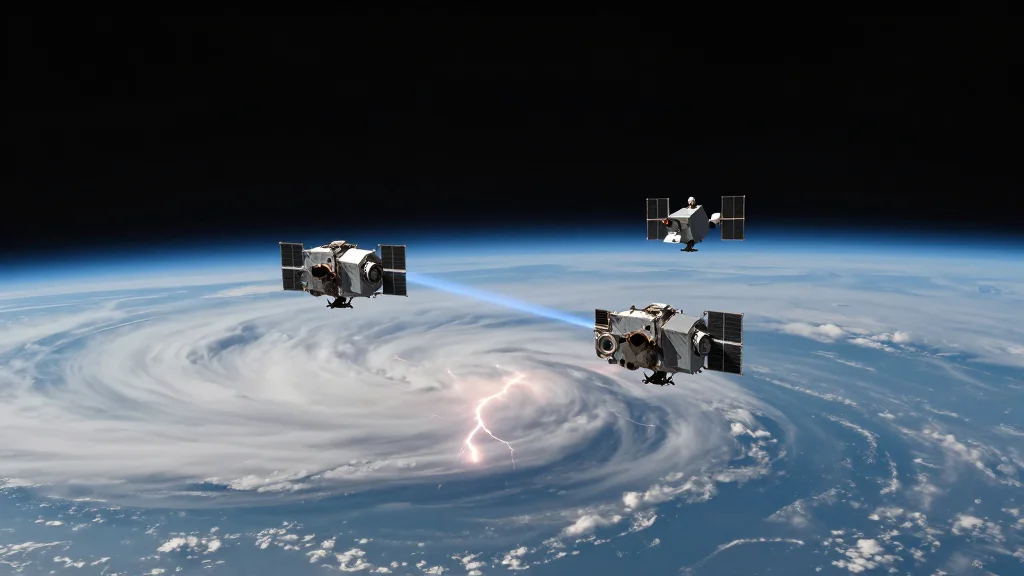
The INCUS architecture leverages three CubeSat‑class SmallSats, each equipped with a JPL‑engineered spaceborne radar and a deployable mesh reflector supplied by Tendeg. The middle satellite adds a microwave radiometer for contextual precipitation profiling. Launched in a staggered formation—30 seconds between the first two and 90 seconds to the third—the fleet will sample the same storm column at multiple vertical slices, delivering unprecedented three‑dimensional snapshots of updraft intensity and moisture transport. Rigorous vibration and thermal‑vacuum testing at Blue Canyon Technologies ensures the hardware can survive launch stresses and the harsh thermal environment of low Earth orbit.
Beyond scientific discovery, the mission’s data stream is poised to transform operational forecasting. Real‑time insights into storm genesis and evolution can refine numerical weather prediction models, leading to earlier warnings for hurricanes, flash floods, and tornado‑prone systems. Water managers will also benefit from more accurate precipitation forecasts, improving reservoir operations and drought mitigation strategies. As part of NASA’s Earth System Observatory and the FALCON initiative, INCUS exemplifies a collaborative model that blends agency expertise with university research and commercial innovation, setting a template for future climate‑focused satellite constellations.
NASA's INCUS mission on road to launch, study storms from space
Comments
Want to join the conversation?
Loading comments...