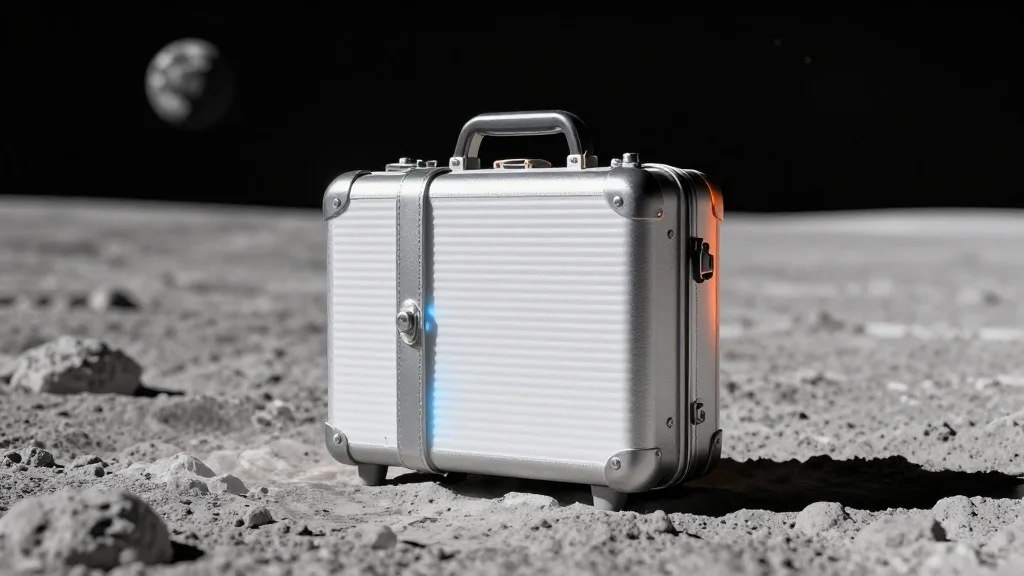
NASA's LEMS Passes Lunar Night Test, Paving Way for Longer Moon Missions

Companies Mentioned

NASA
Why It Matters
The LEMS breakthrough addresses a long‑standing engineering bottleneck: keeping hardware alive during the Moon’s two‑week night without resorting to nuclear power. By proving that solar‑charged batteries and advanced insulation can survive –330 °F, NASA reduces mission risk, cuts costs, and accelerates the timeline for a sustainable lunar presence. This capability is a prerequisite for the Artemis program’s goal of establishing a permanent outpost near the south pole, where night‑time conditions are most extreme. Commercial lunar ventures stand to benefit as well. Companies developing payloads for the growing lunar economy—whether for scientific, mining, or tourism purposes—can now design smaller, lighter packages that rely on the same thermal‑management approach. The ripple effect could lower entry barriers, increase launch cadence, and stimulate a new wave of innovation in surface‑hardware engineering.
Key Takeaways
- •LEMS survived thermal‑vacuum cycles from +300 °F to –330 °F, the first U.S. payload to endure a full lunar night
- •The 66‑pound, suitcase‑size unit will monitor moonquakes for up to two years
- •Successful test reduces reliance on nuclear heat sources for lunar surface missions
- •LEMS integration is slated for Artemis IV, targeting a 2027‑2028 south‑pole landing
- •The technology could lower cost and mass for future commercial lunar payloads
Pulse Analysis
NASA’s LEMS test marks a strategic shift from the legacy, nuclear‑centric approach to lunar surface power toward a more modular, solar‑driven architecture. Historically, the Apollo seismometers and most recent rover designs have depended on radio‑isotope generators to survive the night, a solution that, while reliable, imposes heavy mass penalties and regulatory hurdles. By demonstrating that a compact, battery‑powered system can stay operational through –330 °F, NASA not only solves a technical problem but also redefines the economics of lunar payloads.
The timing is crucial. Artemis III will focus on orbital docking tests, pushing the crewed landing window to Artemis IV. That mission’s success hinges on a robust surface infrastructure that can operate continuously, especially in the south‑pole’s permanently shadowed regions where water ice is expected. LEMS provides the first continuous seismic data set from that environment, enabling engineers to model regolith behavior, assess landing‑site stability, and design habitats that can tolerate thermal cycling. In effect, LEMS is a diagnostic tool that de‑riskes the very foundation of a lunar base.
From a commercial perspective, the LEMS architecture could become a template for a new class of lunar instruments. Companies like SpaceX and Blue Origin, already tied to Artemis through crew‑transport contracts, may adopt similar thermal‑management kits for their own payloads, accelerating the rollout of scientific, communications, and resource‑extraction hardware. The ripple effect could also stimulate a market for off‑the‑shelf lunar‑night‑survivable components, fostering competition and driving down costs. In sum, LEMS is more than a single instrument; it is a proof‑point that could catalyze a broader ecosystem of sustainable lunar operations.
NASA's LEMS Passes Lunar Night Test, Paving Way for Longer Moon Missions
Comments
Want to join the conversation?
Loading comments...