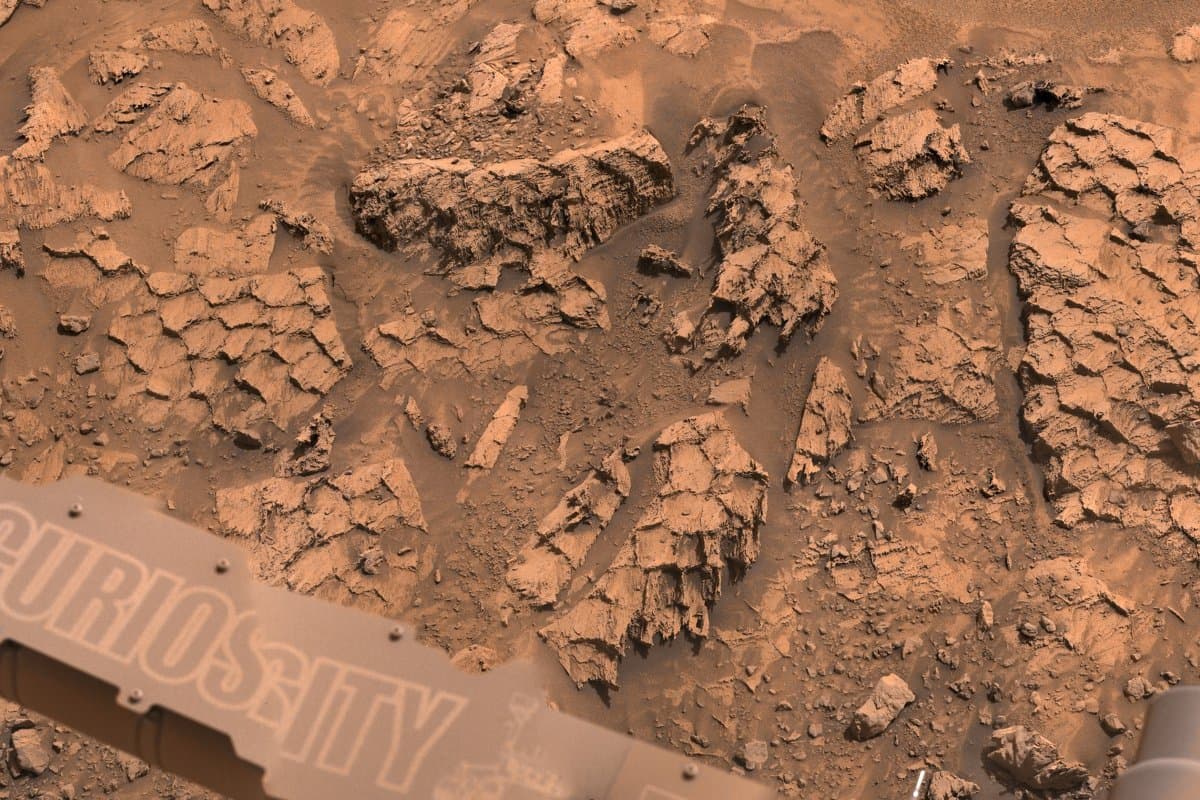
NASA’s Mars Rover Comes Across Formation That Looks Like the Scales of a Massive Cosmic Reptile

Why It Matters
Understanding the origin of these polygonal features could reveal details about Mars’ early climate and water activity, directly informing the search for ancient life. The proximity to a crater that may host organic compounds makes the site a high‑priority target for future analysis.
Key Takeaways
- •Curiosity captured extensive polygonal rock field spanning meters.
- •Patterns may be ancient mud cracks from 3.8‑3.6 billion‑year‑old wet periods.
- •Feature lies near 32‑foot Antofagasta crater, a potential organic hotspot.
- •Researchers will analyze chemical data to test formation hypotheses.
- •Similar polygonal textures observed before, but this instance is unusually abundant.
Pulse Analysis
The Curiosity rover, operating on Mars since 2012, continues to surprise scientists with unexpected geological formations. During a routine drive toward the Antofagasta crater, the rover’s Mastcam imaged a vast expanse of polygonal rocks that look like reptilian scales. Such honeycomb textures have been noted before, but the sheer scale and abundance observed this weekend are unprecedented, prompting a focused data‑gathering campaign that includes high‑resolution imaging and spectroscopic analysis. This discovery underscores Curiosity’s enduring value as a mobile laboratory, capable of identifying subtle surface clues that could reshape our understanding of Martian history.
Geologists are leaning toward a sedimentary origin, proposing that the polygons are fossilized mud cracks formed when wet, clay‑rich sediments repeatedly dried under a once‑thicker atmosphere. If confirmed, these structures would date back to the Noachian period, roughly 3.8 to 3.6 billion years ago, a time when liquid water was more abundant on the planet’s surface. Such evidence of ancient hydrologic cycles strengthens the case that Mars once possessed environments capable of supporting microbial life. Moreover, the proximity of the formation to the Antofagasta crater—identified as a potential repository of organic molecules—creates a compelling intersection of habitability indicators.
The find arrives amid a broader surge in Mars exploration, highlighted by Perseverance’s recent detection of possible biosignatures in Jezero Crater. By comparing Curiosity’s mineralogical data with Perseverance’s findings, scientists hope to build a more comprehensive picture of the planet’s geochemical evolution. Ongoing laboratory analysis of the newly acquired samples will aim to discriminate between volcanic, impact‑related, or sedimentary formation mechanisms, ultimately refining models of Mars’ climatic past and guiding future missions targeting the most promising sites for life detection.
NASA’s Mars Rover Comes Across Formation That Looks Like the Scales of a Massive Cosmic Reptile
Comments
Want to join the conversation?
Loading comments...