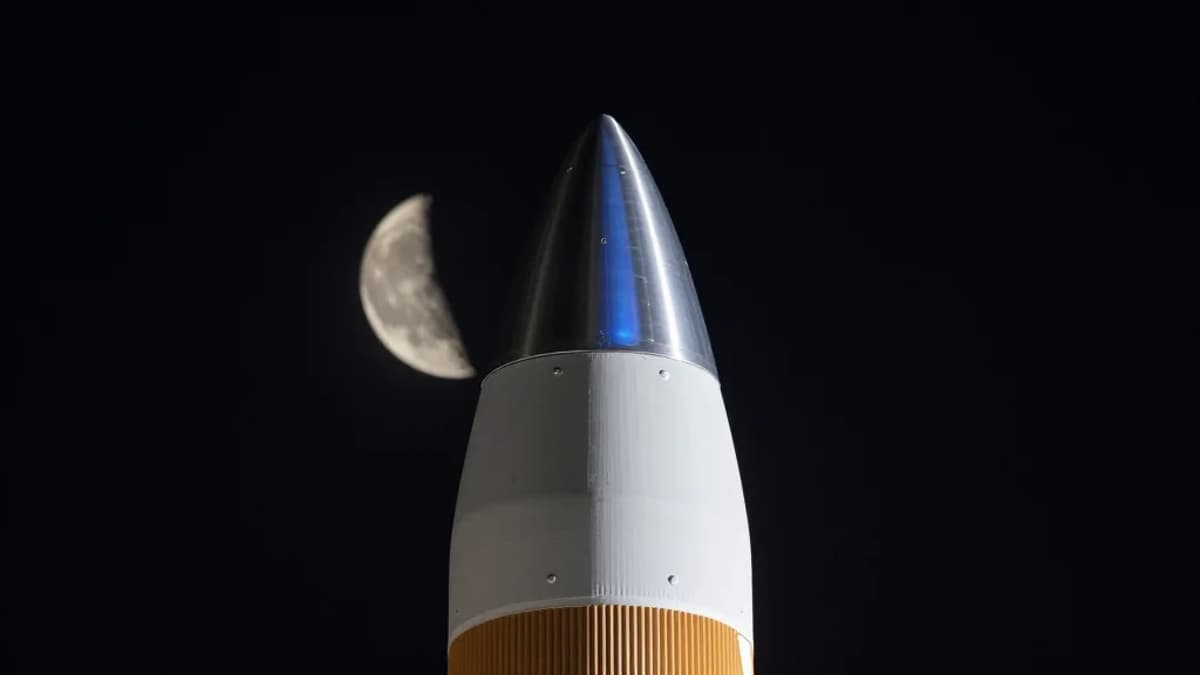
NASA's New Moon Rocket Heads to the Pad Ahead of Astronaut Launch as Early as February
•January 17, 2026
0
Companies Mentioned

NASA
Why It Matters
The mission revives crewed lunar exploration, validates the SLS for future Artemis flights, and fuels the emerging lunar economy. Its timing influences NASA’s schedule and commercial partners vying for a foothold on the Moon.
Key Takeaways
- •SLS rolled out to Pad 39B for Artemis II.
- •Crew includes Wiseman, Glover, Koch, and Canadian Hansen.
- •Launch window limited to early February 2026.
- •First crewed lunar flyby since Apollo 17, 1972.
- •Previous SLS test flight in 2022 was uncrewed.
Pulse Analysis
The Space Launch System’s rollout is more than a ceremonial move; it signals the culmination of a decade‑long development program that blends legacy Apollo infrastructure with modern engineering. By transporting the 322‑foot, 11‑million‑pound rocket at a crawl speed across a four‑mile path, NASA demonstrates the operational readiness of its most powerful launch vehicle since the Saturn V. This event also underscores the logistical challenges of handling such massive hardware, from upgraded mobile launchers to pad‑fueling procedures that must be validated before crew can board.
Artemis II’s crew composition reflects NASA’s emphasis on experience and international collaboration. Veteran astronauts Reid Wiseman, Victor Glover, and Christina Koch bring deep flight hours, while Canadian astronaut Jeremy Hansen expands the mission’s partnership footprint. The ten‑day lunar fly‑by will not include orbit insertion or a landing, but it serves as a critical test of the Orion capsule’s life‑support systems after the heat‑shield anomalies that delayed the program. The narrow February launch window adds pressure to complete a successful pad‑fueling test, as missing it pushes the mission into March, potentially affecting downstream Artemis III timelines.
Beyond the immediate flight, Artemis II re‑energizes the commercial lunar sector. Companies such as SpaceX, Blue Origin, and international agencies are aligning their lunar lander and habitat concepts with NASA’s schedule, hoping to secure contracts for the next phase of surface exploration. The mission also carries geopolitical weight, positioning the United States as the sole nation to return humans to the Moon in the 21st century. Successful execution will bolster confidence in the SLS‑Orion architecture, accelerate the Artemis roadmap, and catalyze investment in lunar infrastructure, mining, and scientific research.
NASA's new moon rocket heads to the pad ahead of astronaut launch as early as February
0
Comments
Want to join the conversation?
Loading comments...