NASA’s New Shock Detectives Project Invites Volunteers to Help Study Solar Wind
Why It Matters
Understanding bow‑shock dynamics directly improves space‑weather forecasting, reducing risks to satellite navigation, telecommunications and electrical infrastructure worldwide.
Key Takeaways
- •NASA invites public to classify MMS bow‑shock data as chaotic or peaceful
- •Bow‑shock transitions influence solar‑wind energy reaching Earth's magnetosphere
- •Findings could improve forecasts for GPS, communications, and power‑grid stability
- •Project aids understanding of stellar wind impacts on exoplanet habitability
- •Shock Detectives complements Space Umbrella, targeting a 10‑mile transition zone
Pulse Analysis
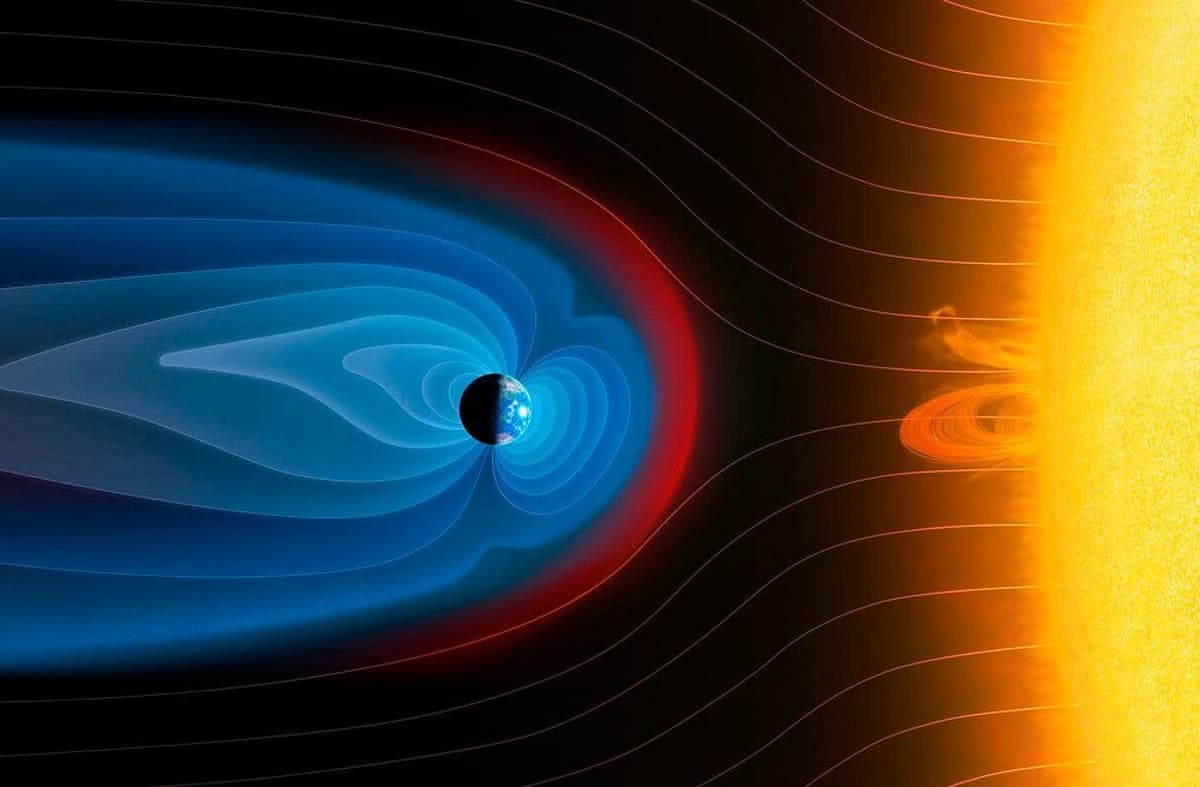
The Sun continuously emits a stream of charged particles known as the solar wind, which slams into Earth’s magnetic shield at a distance of roughly 56,000 miles. This collision creates a bow‑shock—a standing wave of plasma that can switch between calm and turbulent states. When turbulence dominates, more solar‑wind energy penetrates the magnetosphere, potentially disrupting GPS signals, radio communications, and even power‑grid stability. While space‑weather models have long accounted for the shock’s existence, the precise triggers that toggle its behavior remain poorly quantified, limiting forecast accuracy.
The Magnetospheric Multiscale (MMS) mission has amassed over ten years of high‑resolution measurements across the bow‑shock, producing a data set too massive for any single research team to parse manually. Shock Detectives turns this challenge into an opportunity by crowdsourcing the classification of “chaotic” versus “peaceful” plasma intervals. Volunteers’ labels create a training library for machine‑learning algorithms, accelerating the development of real‑time space‑weather alerts. More accurate forecasts can translate into billions of dollars saved by preventing satellite outages, navigation errors, and costly grid disturbances.
Beyond protecting Earth’s technological assets, the bow‑shock study has planetary science implications. By decoding how solar‑wind shocks interact with a magnetic shield, researchers can extrapolate the findings to exoplanets orbiting active stars, informing habitability assessments. The citizen‑science model also demonstrates how public participation can accelerate complex data analysis, a template NASA may replicate for future missions. As volunteers contribute to a deeper grasp of plasma physics, they help lay the groundwork for next‑generation forecasting tools that keep global infrastructure resilient against space‑weather threats.
NASA’s New Shock Detectives Project Invites Volunteers to Help Study Solar Wind
Comments
Want to join the conversation?
Loading comments...