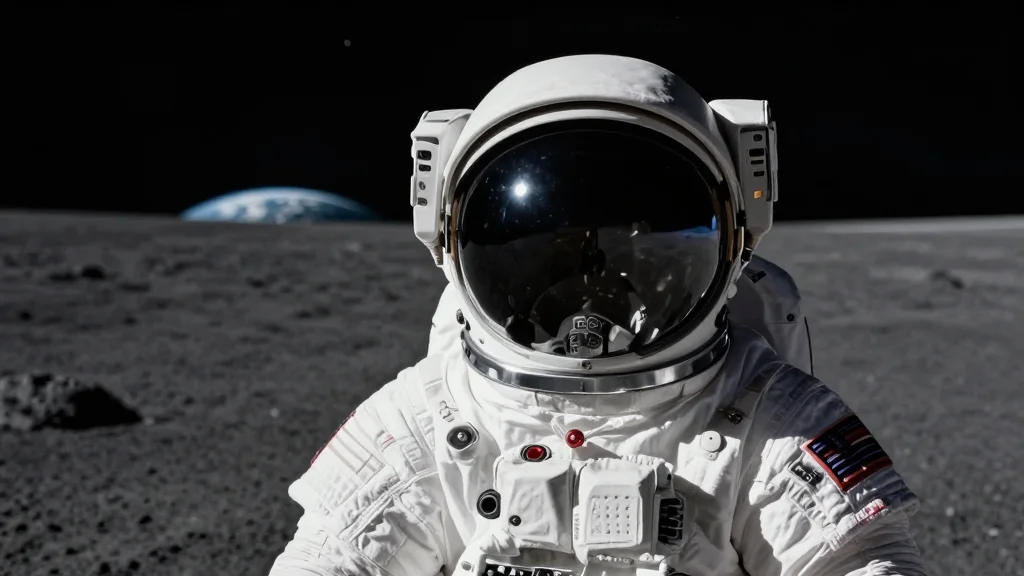
NASA’s Next‑Gen Lunar Spacesuit Delayed to 2031, Threatening Artemis 4

Companies Mentioned
Axiom Space

Collins Aerospace
Why It Matters
The spacesuit delay strikes at the heart of NASA’s Artemis program, where crew safety and mission cadence are intertwined. A functional, flight‑rated EVA system is essential for surface exploration, scientific sampling, and the construction of lunar infrastructure. Without it, the agency risks postponing the first crewed Moon landing in 50 years, eroding public and congressional support, and undermining the commercial partnerships that underpin the emerging lunar economy. Moreover, the OIG’s critique of the firm‑fixed‑price, service‑based contract model could reshape how NASA procures high‑risk, high‑technology hardware, influencing future deep‑space endeavors such as the Lunar Gateway and Mars missions. Beyond Artemis, the situation highlights a broader tension between NASA’s desire to leverage commercial innovation and the realities of developing complex life‑support hardware. If the agency cannot secure a reliable EVA solution, it may need to revisit its reliance on single‑source contracts, potentially reopening competition or adopting hybrid development models that blend NASA‑led engineering with commercial manufacturing. The outcome will set a precedent for how the United States approaches next‑generation space hardware procurement in the 2030s.
Key Takeaways
- •OIG report released April 22 warns Axiom’s lunar spacesuit won’t be ready until 2031.
- •NASA awarded two $3.1 billion firm‑fixed‑price contracts in 2022; Collins Aerospace withdrew, leaving Axiom as sole provider.
- •Original suit demonstration target of 2025‑2026 deemed “overly optimistic and unrealistic.”
- •Axiom claims a 2027 in‑flight test, but OIG estimates no realistic demo before 2031.
- •Delay threatens Artemis 4 launch in 2028 and could impact the nascent lunar commercial market.
Pulse Analysis
NASA’s spacesuit saga underscores a fundamental misalignment between procurement strategy and technology risk. The agency’s 2022 decision to treat next‑generation EVA hardware as a service—mirroring the success of commercial crew and cargo contracts—ignored the developmental nature of a suit that must protect human life in a hostile environment. Firm‑fixed‑price contracts shift cost risk to the contractor, but they also limit flexibility for iterative design, testing, and schedule adjustments. When Collins Aerospace exited, NASA lost the competitive pressure that could have forced cost and schedule efficiencies, leaving Axiom to shoulder the entire $3.1 billion burden without a backup.
Historically, NASA’s most reliable EVA systems (e.g., the EMU used on the Shuttle and ISS) were developed under cost‑plus contracts with extensive government oversight and incremental testing. The OIG’s critique suggests that a hybrid approach—combining NASA‑led engineering milestones with commercial manufacturing—might better balance risk and innovation. Such a model could preserve the cost‑saving incentives of commercial contracts while ensuring that critical safety‑critical hardware receives the rigorous oversight it demands.
Looking ahead, the delay could force NASA to either re‑schedule Artemis 4, potentially shifting the launch to the early 2030s, or to field an interim suit derived from legacy hardware—a move that would likely increase crew risk and diminish mission capabilities. Both options carry political and budgetary ramifications. Congress may demand tighter oversight or additional funding, while commercial partners eyeing lunar habitats and resource extraction could delay their own timelines, slowing the overall momentum of the lunar economy. The agency’s response to the OIG’s findings will therefore be a bellwether for how the United States balances commercial partnership with the uncompromising safety standards required for human deep‑space exploration.
NASA’s Next‑Gen Lunar Spacesuit Delayed to 2031, Threatening Artemis 4
Comments
Want to join the conversation?
Loading comments...