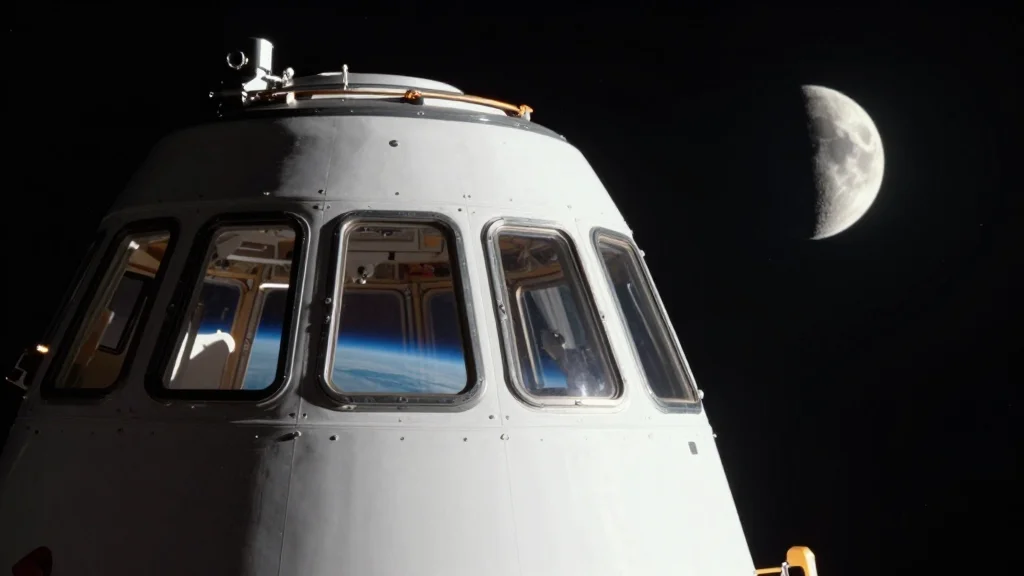
NASA’s Post-Artemis II Mission Assessment
Companies Mentioned


Why It Matters
The findings demonstrate that NASA’s deep‑space crewed architecture is ready to progress toward Artemis III, reducing technical risk and supporting the 2028 lunar landing timeline. Successful validation also strengthens the program’s budgetary and political standing as it moves to operational phases.
Key Takeaways
- •Artemis II met primary flight objectives, confirming crewed lunar flyby viability
- •Orion heat shield char loss significantly reduced versus Artemis I, confirming material fixes
- •Minor urine vent line anomaly identified, slated for correction before Artemis III
- •SLS delivered payload precisely, showing reliable performance for upcoming crew launches
- •Launch pad and mobile launcher sustained minimal damage, preserving mission cadence
Pulse Analysis
Artemis II served as the critical bridge between the uncrewed Artemis I demonstration and the upcoming crewed landing missions. By completing a nine‑day lunar flyby, the flight proved that Orion’s thermal protection system can survive re‑entry at 35 times the speed of sound with far less material loss than previously observed. This performance aligns with ground‑based arc‑jet testing, giving engineers confidence that the heat‑shield design is now within acceptable margins for future missions, including the 2028 lunar surface landing.
The post‑flight review also highlighted a modest but important waste‑system issue—a urine vent line malfunction—that underscores the complexity of life‑support hardware in deep‑space environments. NASA’s measured response, initiating a targeted investigation without labeling the mission a failure, reflects mature flight‑test practices. Addressing such human‑factor anomalies early ensures that habitability and crew health will not become bottlenecks as Artemis III ramps up its rendezvous and docking operations with commercial landers.
Beyond the spacecraft, the assessment confirmed that the Space Launch System and its ground infrastructure performed without incident, delivering Orion to the correct trajectory and returning with negligible pad damage. This operational reliability bolsters the political and budgetary case for SLS, even as commercial launch providers take on landing roles. Maintaining launch‑pad readiness preserves the program’s cadence, keeping the broader lunar exploration timeline on track and signaling to industry partners that NASA’s integrated system is moving steadily toward sustainable lunar presence.
NASA’s Post-Artemis II Mission Assessment
Comments
Want to join the conversation?
Loading comments...