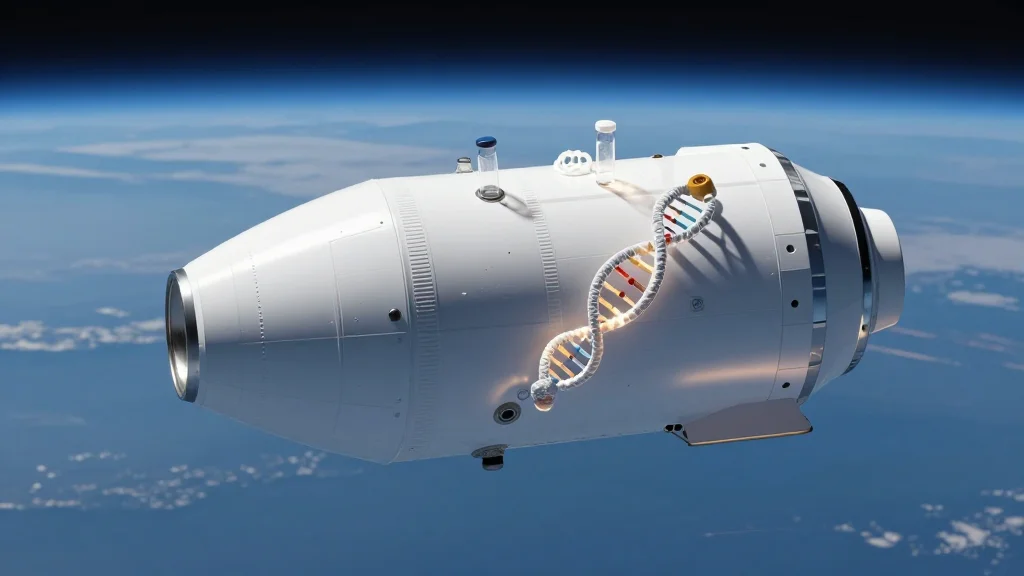
NASA's SpaceX CRS-34 Dragon Returns Packed with Space Station Science
Companies Mentioned
Why It Matters
The returned experiments provide critical data to mitigate health risks for astronauts on long‑duration missions while delivering breakthroughs—like enhanced stem cells and advanced materials—that can be commercialized for healthcare and technology sectors on Earth.
Key Takeaways
- •Stem cell expansion experiment aims to produce clinical‑grade cells in microgravity.
- •Megakaryocyte study examines blood clotting and immune changes during spaceflight.
- •Zero Boil‑Off Tank research could improve cryogenic fuel storage for deep‑space missions.
- •Space‑grown semiconductor crystals may enable higher‑performance sensors and lasers.
- •DNA nano‑therapeutics and nanoligomer drug tests could accelerate cancer and RNA therapies.
Pulse Analysis
The CRS‑34 Dragon’s splashdown marks one of the most science‑dense returns from low‑Earth orbit, underscoring NASA’s strategy of leveraging microgravity as a unique laboratory. By ferrying dozens of biological specimens—including stem cells, heart tissue infected with Streptococcus pneumoniae, and megakaryocyte samples—NASA aims to decode how weightlessness reshapes cellular behavior. These insights are pivotal for designing countermeasures against blood clotting, immune dysregulation, and tissue degeneration that astronauts will face on missions to the Moon and Mars.
Beyond human health, the mission’s engineering payload tackles two longstanding spaceflight challenges. The Zero Boil‑Off Tank investigation gathers data on non‑condensable gases that threaten cryogenic fuel efficiency, a hurdle for long‑duration propulsion systems. Simultaneously, the In‑Space Production of Semimetal‑Semiconductor Composite Bulk Crystals experiment demonstrates that microgravity can yield larger, defect‑free crystals, promising higher‑performance sensors, lasers and quantum devices. Such advancements could shorten development cycles and lower costs for both government and commercial aerospace programs.
Medical innovation also stands to benefit. DNA Nano Therapeutics‑3 and the InSPA‑Sachi Nanoligomer studies test novel drug delivery platforms and RNA‑based medicines in an environment that accelerates disease pathways, offering clearer efficacy signals before costly clinical trials. Meanwhile, 3D‑printed bone marrow analogs and cartilage tissues suggest that space‑fabricated bioprinting may produce more uniform, functional grafts for orthopedic and regenerative therapies on Earth. Collectively, CRS‑34’s return not only fuels NASA’s long‑term exploration roadmap but also seeds cross‑industry breakthroughs in biotech, materials science and aerospace engineering.
NASA's SpaceX CRS-34 Dragon returns packed with space station science
Comments
Want to join the conversation?
Loading comments...