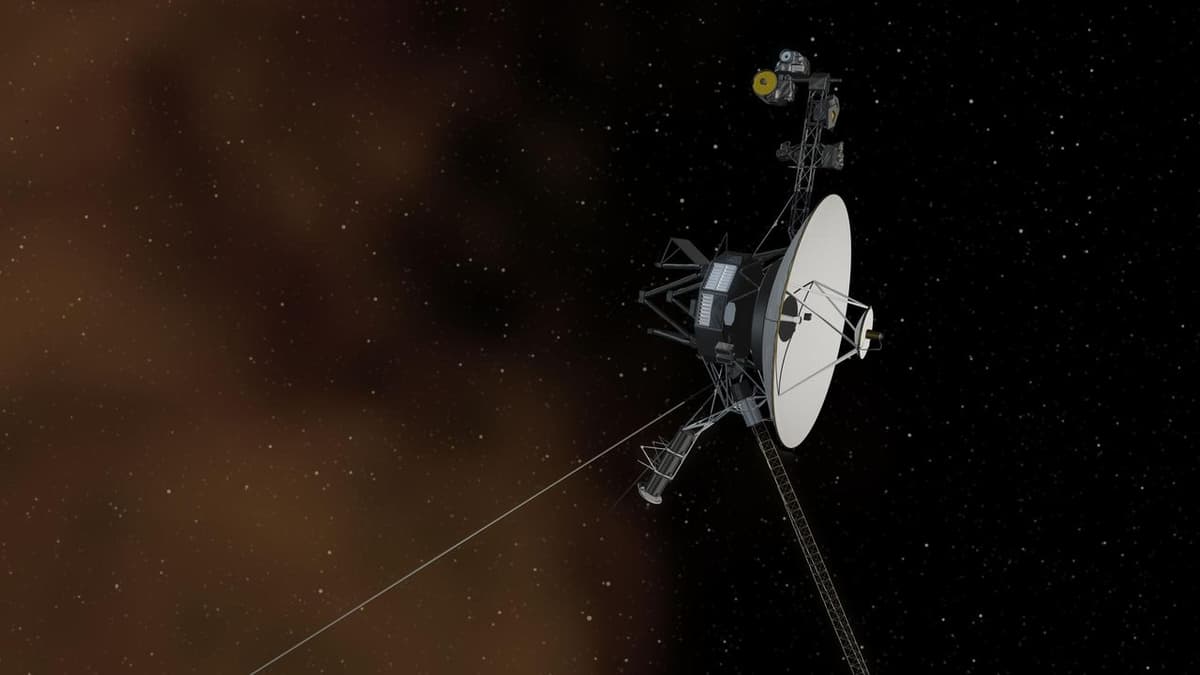
NASA's Twin Voyager Spacecraft Are Very Low on Power After Nearly 50 Years. How Long Can They Keep Going?
Companies Mentioned


Why It Matters
Extending Voyager’s life preserves a unique source of interstellar data and showcases long‑duration spacecraft engineering, informing future deep‑space missions. The outcome also influences budget and planning decisions for NASA’s outer‑planet and beyond programs.
Key Takeaways
- •Voyager power now ~230 watts, down from 470 watts at launch
- •"Big Bang" engineering swap saves ~10 watts, may add a year of science
- •Only two instruments run on Voyager 1, three on Voyager 2
- •Mission hopes to reach 200 AU by ~2035 if power endures
- •Transmitter consumes ~200 watts, leaving minimal margin for science
Pulse Analysis
The Voyager 1 and Voyager 2 probes have become icons of longevity, still beaming data from beyond the heliosphere after nearly five decades. Powered by radioisotope thermoelectric generators, their output has fallen from 470 watts at launch to roughly 230 watts today, forcing mission managers to shut down non‑essential subsystems. With only a magnetometer, plasma‑wave instrument, and a few particle detectors still online, the spacecraft’s scientific return now hinges on careful power budgeting, especially since the high‑gain antenna alone draws about 200 watts for transmission.
In response, NASA engineers have devised the "Big Bang" maneuver, a hardware swap that will deactivate three heater devices used to prevent thruster fuel line freezing and replace them with three lower‑consumption alternatives. The net savings of nearly 10 watts may delay the shutdown of another science instrument by at least a year, buying precious time for continued observations of cosmic rays, magnetic fields, and plasma waves in interstellar space. This operation, slated for Voyager 2 in May‑June 2026 and then Voyager 1 later that summer, exemplifies the agency’s willingness to take calculated risks to preserve a mission that far exceeds its original lifespan.
Looking ahead, the Voyagers could still achieve a "stretch goal" of reaching 200 astronomical units by the mid‑2030s, provided power remains sufficient for data transmission. Their unique measurements of the heliopause, interstellar medium, and galactic environment remain invaluable for astrophysics and space weather modeling. Moreover, the lessons learned from managing dwindling power on such distant platforms will shape the design of future deep‑space probes, influencing everything from power system redundancy to autonomous fault management. Extending Voyager’s operational window not only enriches scientific archives but also validates engineering strategies for the next generation of interstellar explorers.
NASA's twin Voyager spacecraft are very low on power after nearly 50 years. How long can they keep going?
Comments
Want to join the conversation?
Loading comments...