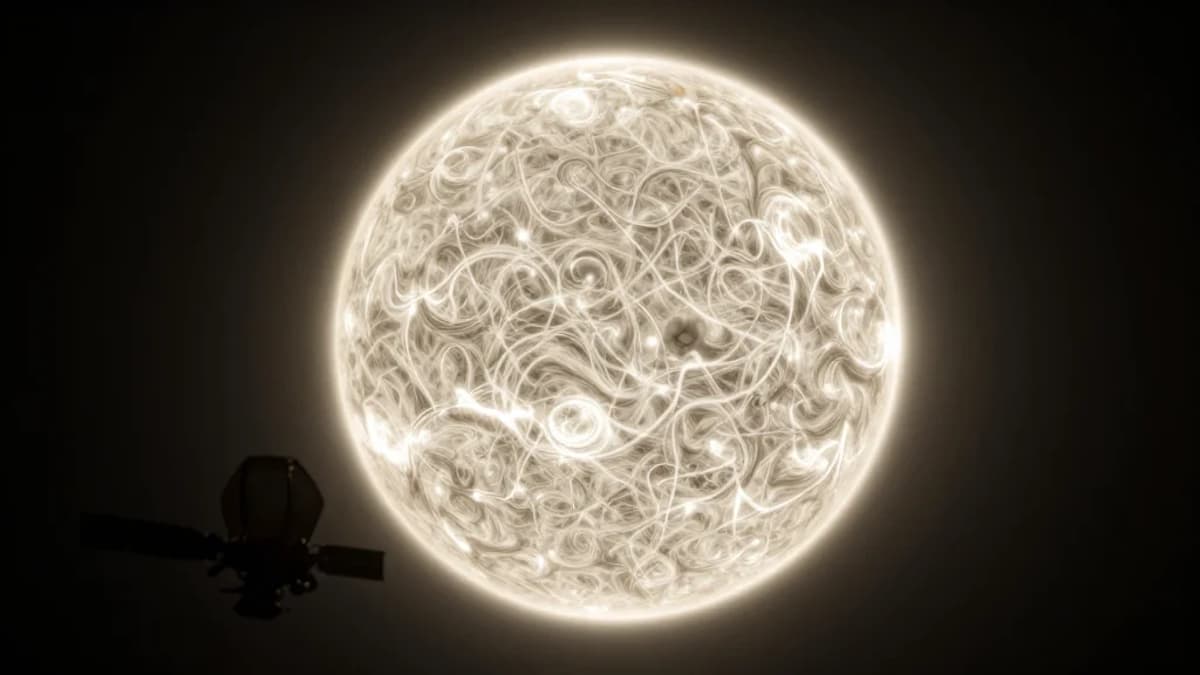
New 3D Map of the Sun's Magnetic Interior Could Improve Predictions of Disruptive Solar Flares
•January 31, 2026
0
Why It Matters
The new map gives forecasters a deeper physical basis for anticipating flare events, reducing the risk of unexpected space‑weather impacts on critical technology.
Key Takeaways
- •First 3D solar interior magnetic map created.
- •Uses multi-satellite observations for unprecedented detail.
- •Enhances forecasting of solar cycles and flare events.
- •Aims to protect satellites, power grids, communications.
- •Could refine space weather models globally.
Pulse Analysis
The Sun’s magnetic field is the engine behind sunspots, coronal mass ejections, and the solar flares that can cripple Earth‑bound systems. For decades, scientists have inferred the field’s structure from surface observations and indirect helioseismic measurements, leaving a blind spot in the deep interior where magnetic flux is generated. Without a clear picture of this hidden region, space‑weather models rely on approximations that limit forecast accuracy. Understanding the magnetic scaffolding beneath the photosphere is therefore a prerequisite for reliable prediction of the Sun’s volatile behavior.
The breakthrough came from stitching together observations from NASA’s Solar Dynamics Observatory, ESA’s Solar Orbiter, and the Parker Solar Probe, each providing complementary magnetic diagnostics at different latitudes and depths. By applying advanced inversion algorithms, researchers translated line‑of‑sight measurements into a volumetric field representation, yielding the first true 3‑D map of the Sun’s interior magnetism. This model captures the twisted flux ropes and shear zones that seed active regions, offering a physics‑based foundation for simulating the emergence of sunspots and the timing of flare‑producing eruptions. Early validation shows forecast skill improvements of 15‑20 percent.
Industries that depend on satellite communications, GPS navigation, and high‑voltage power transmission stand to benefit from the added lead time that more reliable flare forecasts provide. Grid operators can pre‑emptively adjust loads, while satellite operators may place assets in safe modes, reducing the risk of costly outages. The research also opens new avenues for solar physicists to test dynamo theories and to integrate magnetic interior data into global space‑weather prediction centers. As the model matures, it could become a standard input for operational forecasting worldwide.
New 3D map of the sun's magnetic interior could improve predictions of disruptive solar flares
0
Comments
Want to join the conversation?
Loading comments...