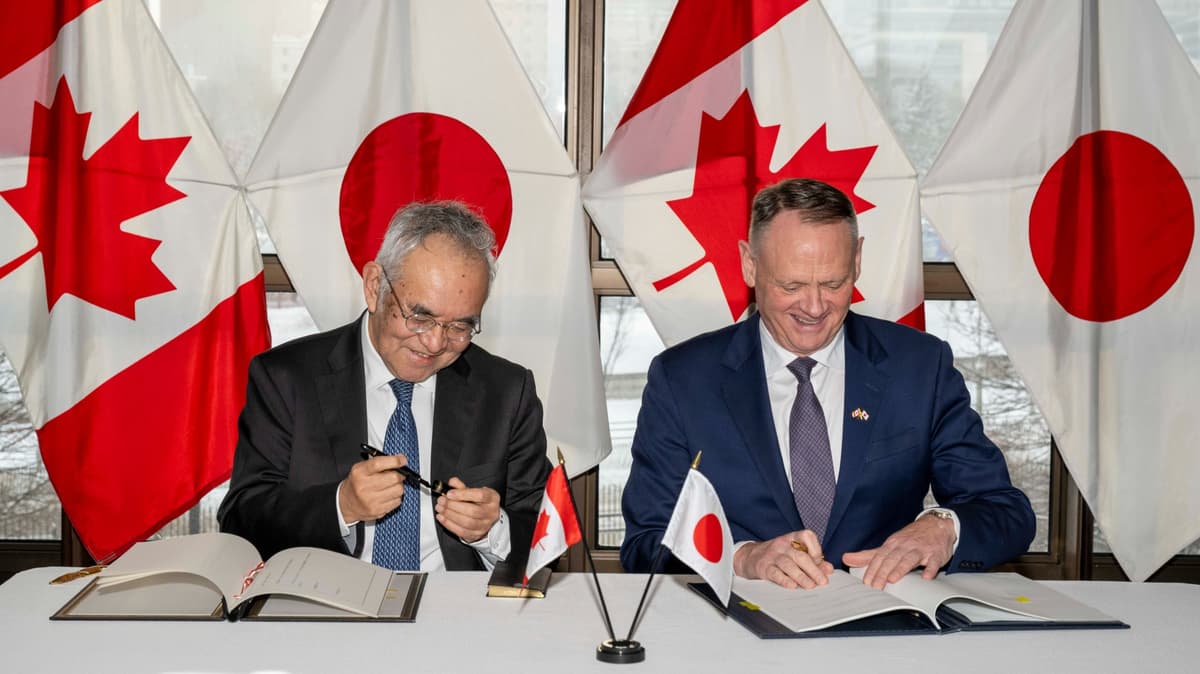
New Alliances: The Space Defence Implications of the Canada-Japan ETTA
•February 27, 2026
0
Why It Matters
The ETTA gives Canada access to Japanese space‑tech, reducing reliance on the United States, while supporting Japan’s ambition to project power in the contested Indo‑Pacific arena.
Key Takeaways
- •Canada aims to diversify defence supply beyond the United States
- •Japan relaxes export rules for co‑developed defence equipment
- •Agreement enables joint development of space surveillance and communications
- •Sovereign launch capability receives $182.6 million Canadian investment
- •Partnership strengthens rules‑based order in contested space domain
Pulse Analysis
The Canada‑Japan Equipment and Technology Transfer Agreement marks a strategic pivot for both nations as they recalibrate defence postures. Canada’s "buy Canadian" agenda seeks to lessen dependence on U.S. hardware, opening doors for Japanese aerospace firms to contribute to domestic projects. Simultaneously, Japan’s recent relaxation of export restrictions signals a broader intent to commercialise co‑developed defence systems, positioning its industry for deeper collaboration with allies beyond traditional partners.
In the space domain, the ETTA could accelerate joint initiatives in satellite surveillance, secure communications, and launch services. Canada’s $182.6 million investment in sovereign launch infrastructure dovetails with potential access to Japanese launch expertise and payload technologies, promising faster capability buildup for the 3 Canadian Space Division. For Japan, partnering on space‑focused projects supports its emerging force‑projection goals and counters the growing orbital activities of regional rivals such as China and North Korea.
Strategically, the agreement reinforces a rules‑based international order by expanding the network of reliable allies capable of defending shared space assets. Industry players stand to benefit from new procurement pipelines, technology sharing, and joint research opportunities. As details of the ETTA are operationalised, the partnership may set a template for future multilateral space‑defence collaborations, shaping market dynamics and geopolitical balances in the Indo‑Pacific and beyond.
New alliances: The space defence implications of the Canada-Japan ETTA
0
Comments
Want to join the conversation?
Loading comments...