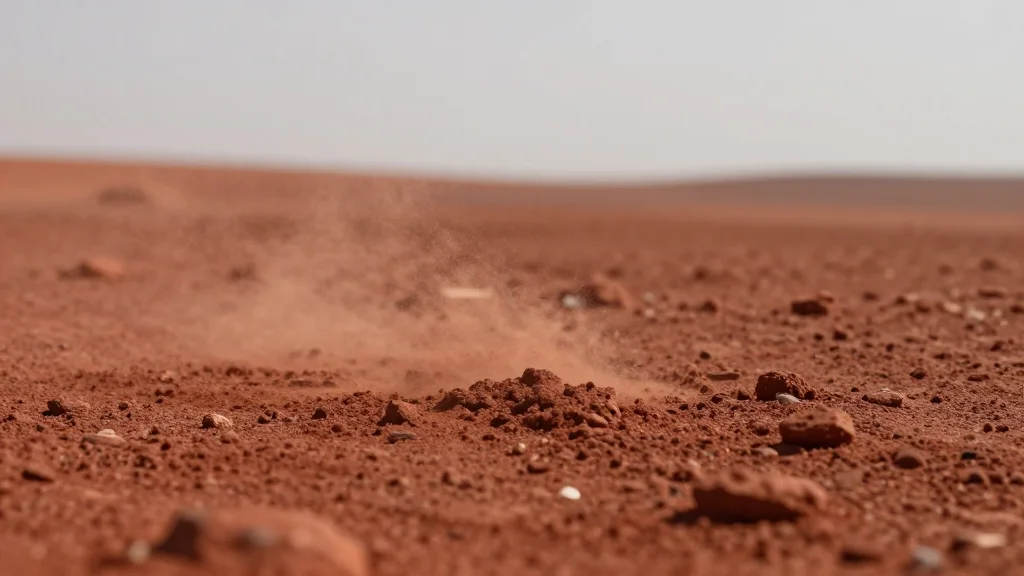
New Image Shows Ash Creeping Across Mars
Why It Matters
The discovery provides fresh evidence of active surface processes on Mars, reshaping risk assessments for future landers and informing the search for resources. It also refines our understanding of Martian climate dynamics, a key factor for commercial and scientific exploration.
Key Takeaways
- •ESA's Mars Express captured high-res image of ash moving across Martian terrain
- •Image suggests recent volcanic activity or wind-driven ash transport on Mars
- •Findings refine models of Martian atmospheric dynamics and surface erosion
- •Data may influence landing site selection for future exploration missions
- •Researchers plan follow‑up observations using orbiters and rovers
Pulse Analysis
The latest Mars Express snapshot offers a rare glimpse of ash deposits sliding across the Red Planet’s terrain, captured by the spacecraft’s High‑Resolution Stereo Camera. Unlike typical dust devil tracks, these dark streaks appear to originate from a localized source, hinting at a recent eruption or a wind‑laden plume that settled on the surface. By pinpointing the location and morphology of the ash, ESA scientists can better calibrate the planet’s thermal inertia maps and improve predictions of how surface materials respond to atmospheric forces.
From a scientific standpoint, the image reignites the debate over whether Mars still experiences volcanic activity. While the planet’s major volcanoes, such as Olympus Mons, have been considered extinct for millions of years, the presence of fresh ash suggests that smaller vents may still be active or that wind can mobilize fine volcanic particles over long distances. This insight feeds directly into atmospheric circulation models, which must account for particulate loading that influences temperature gradients and cloud formation. Moreover, understanding ash distribution helps assess erosion rates, a critical factor in reconstructing Mars’ geological history.
For the commercial and exploration community, the findings carry practical implications. Landing site planners for upcoming missions, including NASA’s Perseverance successor and private lunar‑Mars ventures, will weigh the risk of ash‑laden terrain that could affect rover mobility and solar panel efficiency. The data also informs resource prospecting, as ash may contain trace minerals useful for in‑situ resource utilization. As agencies and companies chart the next decade of Martian activity, this new visual evidence underscores the need for continuous orbital monitoring and adaptive mission design.
New Image Shows Ash Creeping Across Mars
Comments
Want to join the conversation?
Loading comments...