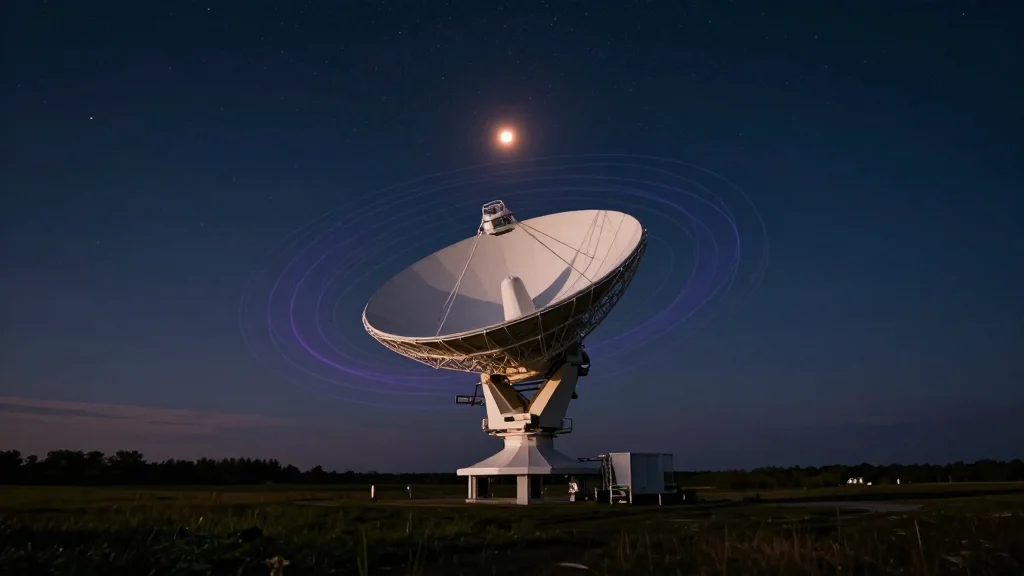
New Radio Method Uncovers Hidden Bursts From Dwarf Stars and Hints of Exoplanets
Why It Matters
The ability to detect exoplanet magnetic fields remotely opens a new diagnostic for planetary habitability and atmospheric protection, while the massive efficiency gain accelerates statistical studies of star‑planet interactions across the galaxy. This could reshape target selection for future space‑based radio missions and inform models of planetary evolution.
Key Takeaways
- •RIMS extracts minute‑scale radio signals from archival surveys
- •Detected bursts originate from dwarf stars and possible exoplanets
- •GJ 687 b magnetic field inferred from circularly polarized bursts
- •Technique reduces 180‑year observation effort to single survey
- •Future telescopes could discover thousands of star‑planet interactions
Pulse Analysis
Low‑frequency radio telescopes such as LOFAR have amassed petabytes of data aimed at distant galaxies and black holes, yet the time‑domain information on nearby stars remained untapped. Multiplexed Interferometric Radio Spectroscopy (RIMS) repurposes each observation into a simultaneous survey of hundreds of stellar sources, extracting dynamic spectra at sub‑second cadence. By converting archival sky surveys into a high‑resolution stellar monitoring network, RIMS eliminates the need for costly, dedicated pointings and unlocks a hidden reservoir of astrophysical variability.
The most compelling outcome of RIMS is its potential to probe exoplanet magnetic fields—a parameter previously accessible only through indirect modeling. The detection of circularly polarized bursts from the GJ 687 system matches theoretical expectations for star‑planet magnetic coupling, allowing researchers to place quantitative limits on the Neptune‑sized planet’s magnetosphere. Magnetic shielding is a key factor in atmospheric retention and surface radiation environments, making these measurements directly relevant to assessments of exoplanet habitability and the design of future biosignature missions.
Looking ahead, the method can be deployed on emerging arrays such as NenuFAR, the Square Kilometre Array, and even lunar‑based radio observatories. Scaling RIMS to these platforms could yield thousands of new detections, enabling statistical population studies of stellar radio flares and star‑planet interactions throughout the solar neighbourhood. For the broader space‑technology sector, this translates into richer target catalogs for mission planning, refined models for planetary evolution, and new commercial opportunities in data‑intensive astrophysics services.
New radio method uncovers hidden bursts from dwarf stars and hints of exoplanets
Comments
Want to join the conversation?
Loading comments...