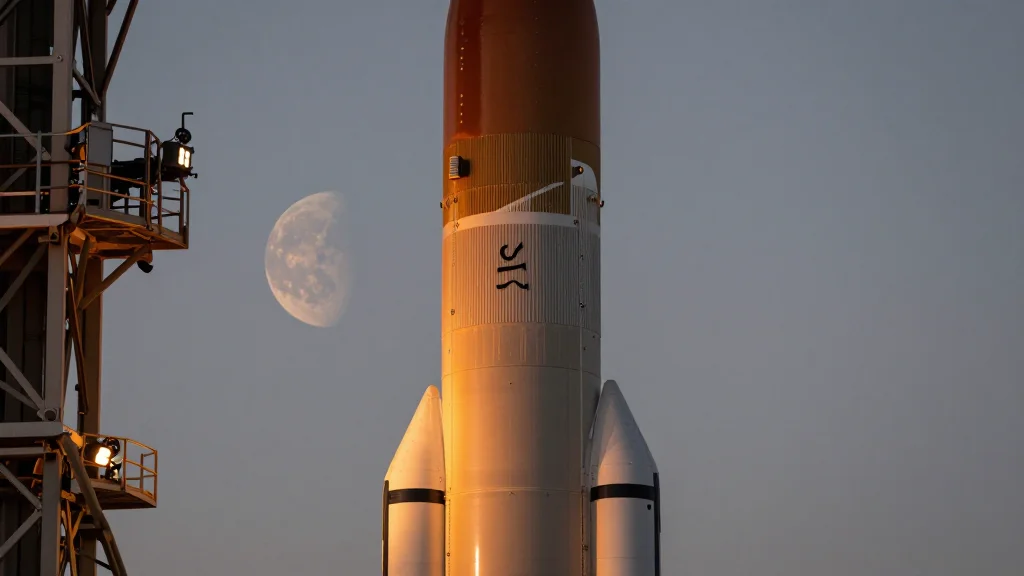
New Starship Completes First Successful Mission
Companies Mentioned
Why It Matters
The flight validates core Starship capabilities needed for SpaceX’s satellite, lunar and Mars ambitions while influencing investor sentiment ahead of a high‑profile IPO. Successful orbital performance, even with setbacks, moves the company closer to the economies of scale that underpin its AI‑driven data‑center vision.
Key Takeaways
- •Starship reached orbit and released 20 dummy Starlink satellites
- •Super Heavy booster lost control, broke up over Gulf of Mexico
- •SpaceX spent over $15 billion developing Starship to date
- •IPO filing seeks up to $75 billion raise at ~$2 trillion valuation
Pulse Analysis
SpaceX’s latest Starship test flight marked a turning point for the company’s next‑generation launch system. While the Super Heavy booster failed to perform its planned engine burn and disintegrated over the Gulf of Mexico, the Starship upper stage still achieved orbit, deploying 20 mock Starlink satellites and two experimental payloads. The mission also demonstrated the vehicle’s heat‑shield resilience during a high‑speed re‑entry, despite the planned water splash‑down and subsequent explosion. These outcomes prove that many of the system’s core functions—launch, payload deployment, and atmospheric braking—are now operational, even as engineers work to resolve booster reliability and engine redundancy issues.
The successful orbital segment arrives at a critical juncture for SpaceX’s financial strategy. The company’s recent S‑1 filing outlines a potential $75 billion capital raise, valuing the firm near $2 trillion, and highlights Starship as the linchpin of its growth narrative. Investors are watching closely, as the ability to launch massive satellite constellations underpins SpaceX’s plan to turn Starlink into a global AI data‑center network. Demonstrated progress on Starship reduces perceived technical risk, bolstering confidence that the firm can meet the ambitious timelines required to monetize its satellite fleet and secure lucrative NASA lunar contracts.
Looking ahead, SpaceX must still master several high‑risk technologies before Starship can fulfill its full promise. In‑orbit refueling, rapid turnaround for multiple consecutive flights, and crewed missions to the Moon and eventually Mars remain on the to‑do list. The recent test shows that the hardware can survive the harsh launch‑to‑re‑entry cycle, but the booster’s failure underscores the need for robust engine control and recovery systems. As the company pushes toward a full orbital mission, each incremental success will be weighed against the massive capital expectations set by the pending IPO, making Starship’s development a focal point for both aerospace progress and market valuation.
New Starship completes first successful mission
Comments
Want to join the conversation?
Loading comments...