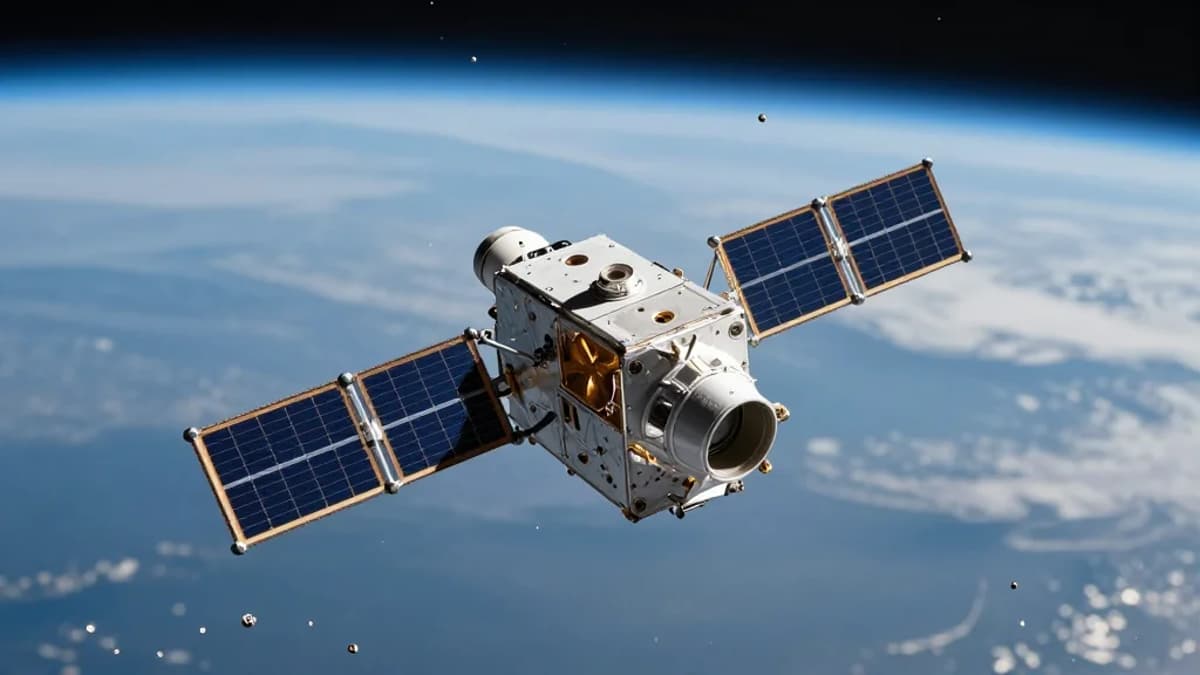
New Tool Could Reduce Collision Risk for Earth-Observation Satellites
•February 16, 2026
0
Why It Matters
Embedding collision risk early curtails future debris, safeguarding the orbital environment essential for climate‑monitoring and other SDG‑driven data streams. It also gives operators a quantitative basis for building safer, more sustainable satellite constellations.
Key Takeaways
- •Model couples mission performance with collision probability
- •Risk peaks at 850‑950 km for 0.5 m resolution satellites
- •Larger, higher‑orbit satellites face higher individual collision risk
- •Early risk integration supports sustainable, data‑rich satellite constellations
- •Tool adaptable to varied Earth‑observation systems and future debris metrics
Pulse Analysis
The rapid expansion of low‑Earth‑orbit assets has turned space into a crowded highway, prompting regulators and industry leaders to seek tools that balance scientific return with orbital safety. Traditional satellite design workflows treat debris risk as an after‑thought, often leading to retrofits or costly mitigation measures later in the development cycle. Manchester’s new framework flips that paradigm by embedding collision probability calculations at the concept‑stage, allowing engineers to simulate how resolution targets, sensor payloads and constellation geometry influence exposure to debris streams.
Analysis of the model shows that the altitude band of 850‑950 km—traditionally considered a sweet spot for moderate‑resolution imaging—actually harbors the greatest collision likelihood for 0.5 m sensors. This counter‑intuitive result stems from the larger platform masses required at higher orbits, which increase cross‑sectional area and kinetic energy in potential impacts. Consequently, mission planners face a nuanced trade‑off: lower orbits demand more satellites for global coverage but each unit is smaller and less hazardous, whereas higher orbits reduce constellation size at the expense of heightened individual risk. The framework quantifies these dynamics, enabling data‑driven decisions that align with both performance goals and sustainability metrics.
Beyond immediate design benefits, the tool offers a strategic lever for policymakers crafting debris‑mitigation guidelines and licensing regimes. By providing a transparent, quantitative link between mission specifications and orbital risk, it supports evidence‑based standards that can evolve with the burgeoning megaconstellation era. Future extensions—such as modeling fragment lifetime, re‑entry environmental impact, and cross‑system interference—promise a comprehensive sustainability dashboard, positioning the aerospace sector to meet the United Nations’ Sustainable Development Goals without compromising the long‑term usability of space.
New tool could reduce collision risk for Earth-observation satellites
0
Comments
Want to join the conversation?
Loading comments...