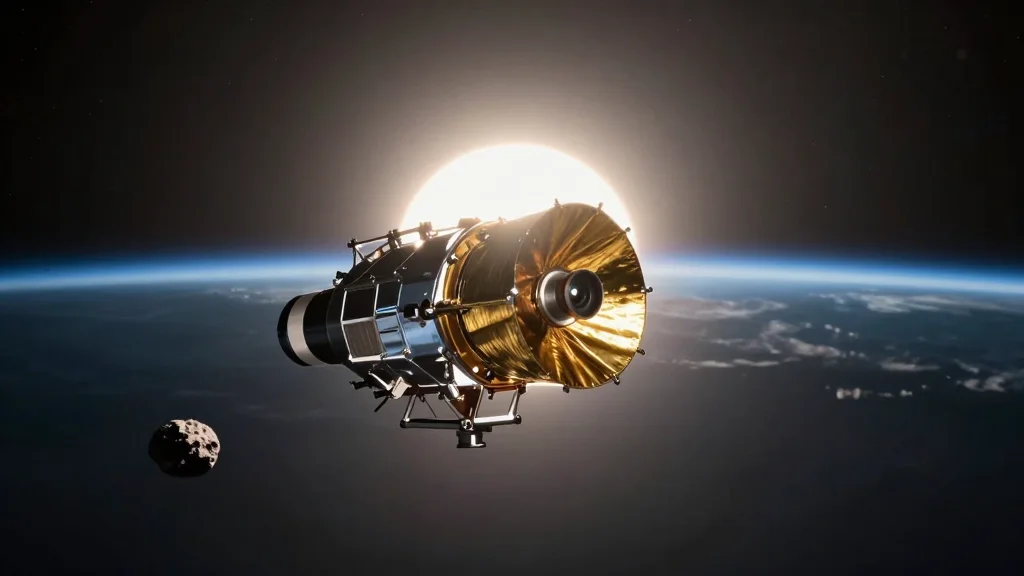
Next-Gen Near-Earth Asteroid Space Telescope Takes Shape
Why It Matters
Detecting the majority of hazardous near‑Earth asteroids strengthens planetary defense and opens new opportunities for commercial asteroid utilization while advancing infrared astronomy.
Key Takeaways
- •Final integration completed at JPL, marking critical milestone
- •50 cm infrared telescope will detect 90 % of >140 m NEOs
- •Launch scheduled for early 2027 on Atlas V rocket
- •Program budget totals roughly $500 million, funded by NASA
- •Real‑time data pipeline will issue alerts within 24 hours
Pulse Analysis
The hunt for near‑Earth objects has long been hampered by the limitations of ground‑based surveys, which struggle with weather, daylight and the faint infrared signatures of small asteroids. Earlier space missions such as NEOWISE provided valuable data but lacked the dedicated focus and sensitivity needed to meet the 90 % detection goal set by the U.S. Congress in 2005. As the volume of orbital debris grows and commercial interest in asteroid resources intensifies, the need for a purpose‑built, space‑borne observatory has become increasingly urgent.
NASA’s next‑gen NEA Space Telescope addresses those gaps with a 50 cm primary mirror optimized for the 6–10 µm infrared band, where most rocky asteroids emit their peak thermal radiation. Stationed at the Sun‑Earth L1 libration point, the spacecraft enjoys a continuous, unobstructed view of the inner solar system, enabling it to scan the sky faster than any ground‑based system. The cryogenic detector, cooled to under 40 K, can discern objects as small as 140 m at distances of several lunar radii, fulfilling the congressional mandate to identify 90 % of potentially hazardous asteroids larger than that size. Integration of the telescope’s optics and electronics is now complete, and a launch on an Atlas V is targeted for early 2027.
Beyond planetary defense, the telescope’s rapid‑turnaround data pipeline will broadcast discovery alerts within 24 hours, giving both government agencies and private firms a timely window to assess impact risk or evaluate resource potential. The mission also promises a trove of scientific data on asteroid composition, aiding research into solar system formation and informing future mining ventures. International partners have pledged to share the data, reinforcing a collaborative approach to safeguarding Earth while unlocking the economic promise of near‑Earth space.
Next-Gen Near-Earth Asteroid Space Telescope Takes Shape
Comments
Want to join the conversation?
Loading comments...