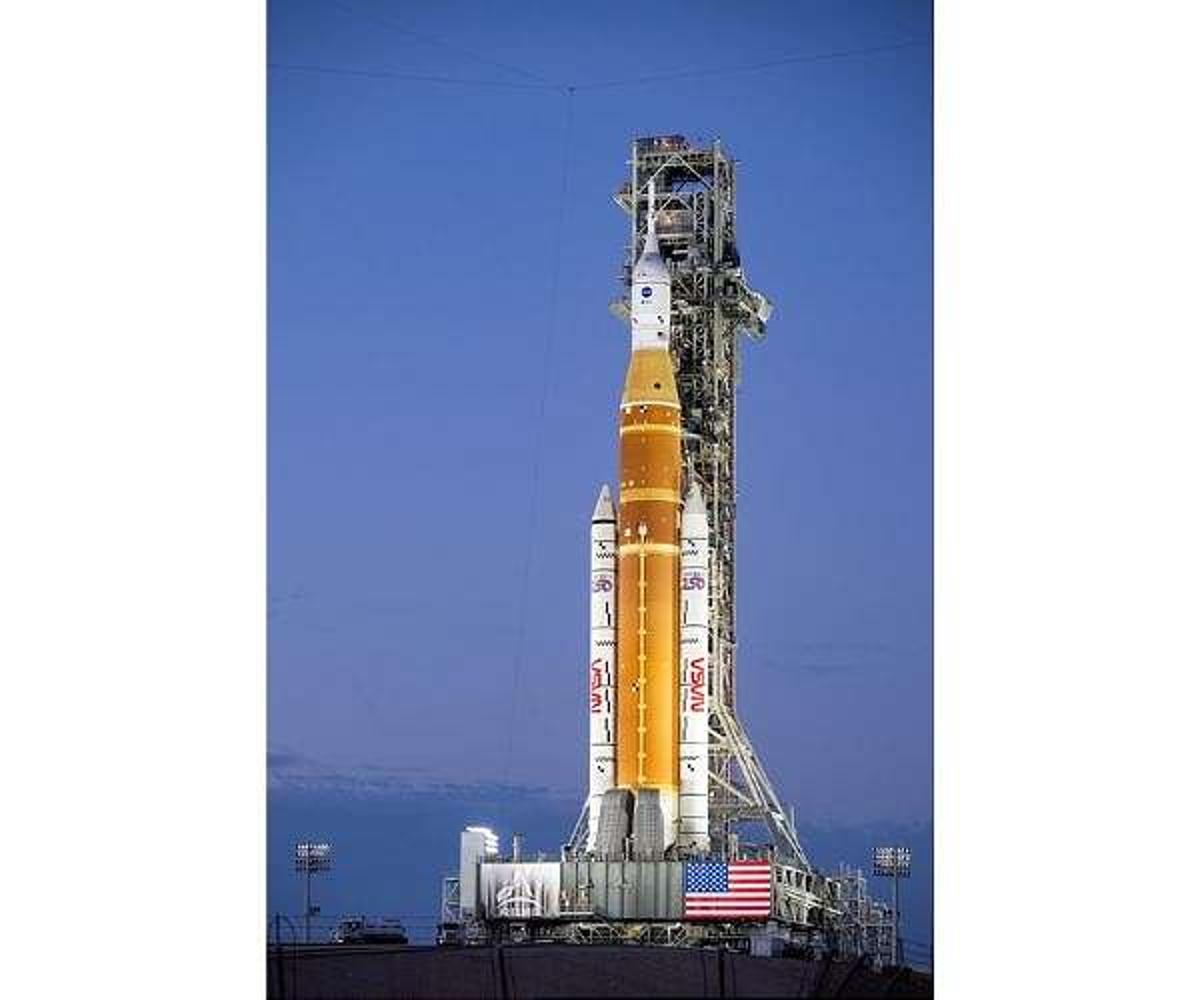
Northrop Grumman Boosters Set For First Crewed Lunar Voyage Of Artemis Era
•March 5, 2026
0
Why It Matters
The boosters are critical to achieving the thrust needed for Artemis II, directly influencing the United States’ timeline for sustainable lunar exploration and eventual Mars missions.
Key Takeaways
- •Five‑segment boosters generate 3.6 M lb thrust each.
- •Provide 7.2 M lb of SLS’s total thrust.
- •First human flight using solid boosters since shuttle era.
- •Northrop also builds Orion abort system and HALO module.
- •Next‑gen booster development targets future heavy‑lift missions.
Pulse Analysis
The Artemis II mission marks a pivotal step in NASA’s return to deep‑space crewed flight, and the propulsion backbone rests on Northrop Grumman’s newly‑qualified five‑segment solid rocket boosters. Standing 177 feet tall, each booster delivers roughly 3.6 million pounds of thrust, together accounting for about 82 percent of the Space Launch System’s total lift‑off force. This unprecedented thrust level for a human‑rated solid motor not only shortens the countdown to the February 2026 launch but also validates the engineering upgrades made since the shuttle era, reinforcing confidence in the SLS architecture.
Beyond raw power, Northrop’s contribution extends to crew safety through the Launch Abort System motors that will pull Orion away from the vehicle if an anomaly occurs during ascent. The integrated attitude‑control and abort motors are built to the same rigorous standards as the boosters, creating a cohesive propulsion suite. Simultaneously, the company is fabricating the Habitat and Logistics Outpost (HALO) for the lunar Gateway, a critical habitation node that will support extended lunar operations and serve as a staging point for Mars‑bound missions, further embedding Northrop in the Artemis ecosystem.
Looking ahead, Northrop Grumman is already engineering a next‑generation solid rocket booster designed to exceed the current model’s lift capability, positioning the firm to supply propulsion for future heavy‑lift missions such as lunar lander launches or deep‑space cargo transports. This forward‑looking development aligns with the broader industry push toward sustainable, reusable launch systems and underscores the strategic importance of solid‑motor technology in America’s long‑term exploration roadmap. As Artemis transitions from test flights to regular lunar sorties, Northrop’s hardware portfolio will likely become a cornerstone of U.S. deep‑space transportation infrastructure.
Northrop Grumman Boosters Set For First Crewed Lunar Voyage Of Artemis Era
0
Comments
Want to join the conversation?
Loading comments...