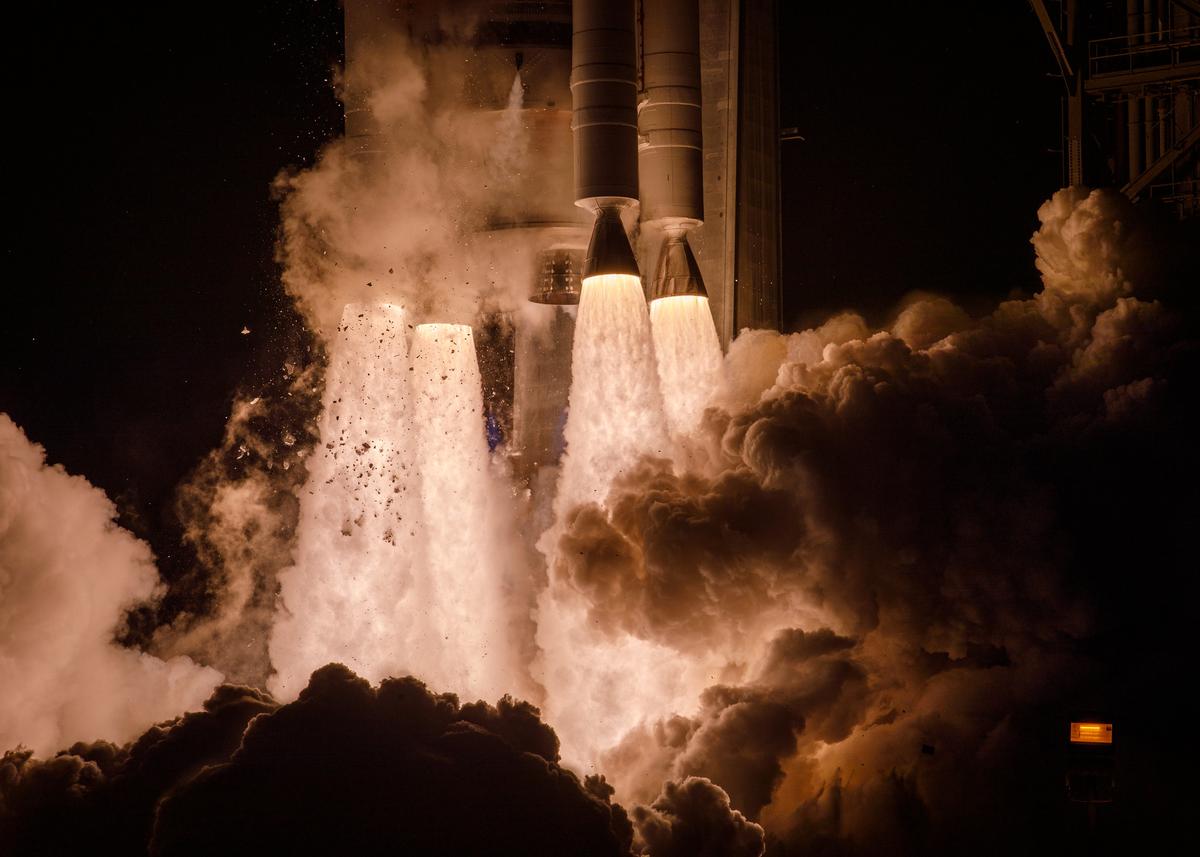
Northrop Grumman Takes $71 Million Charge on Vulcan Booster Issue
Companies Mentioned
Why It Matters
The charge highlights the financial exposure of launch‑vehicle anomalies and could postpone critical national‑security payloads, while a shift away from solid boosters may alter Vulcan’s competitive positioning in the commercial and defense markets.
Key Takeaways
- •Northrop Grumman recorded a $71 million charge for GEM 63XL anomaly.
- •Vulcan Centaur has been grounded since February debris incident.
- •ULA may fly Vulcan without solid boosters for low‑energy missions.
- •This is the second GEM 63XL failure in four launches.
- •Corrective actions and redesigns are underway, but timeline remains unclear.
Pulse Analysis
The $71 million adjustment in Northrop Grumman’s first‑quarter earnings reflects the high stakes of modern launch‑vehicle development. As a key supplier of the GEM 63XL solid‑rocket booster, Northrop bears the cost of investigating and rectifying the February anomaly that forced United Launch Alliance to halt Vulcan Centaur flights. Such charges not only affect quarterly profit margins but also signal to investors the volatility inherent in aerospace programs that depend on emerging propulsion technologies.
Technical scrutiny of the GEM 63XL has intensified after two failures in just four Vulcan missions. The February incident, where a booster shed debris 65 seconds after liftoff, followed an October 2024 nozzle‑detachment problem traced to an insulator defect. ULA responded with design revisions, yet the recurrence suggests deeper manufacturing or quality‑control challenges. For the U.S. Space Force, the reliability of Vulcan is critical for deploying satellite constellations that underpin missile‑tracking and communications networks, prompting a cautious approach to resuming flights.
Looking ahead, the Space Force is considering operating Vulcan without any solid boosters, a configuration that could still serve low‑energy payloads while sidestepping the current reliability hurdle. This potential shift may reshape market dynamics, as customers weigh the trade‑off between thrust capability and risk exposure. Meanwhile, Northrop and ULA must demonstrate effective corrective actions to restore confidence among defense agencies and commercial launch customers, whose schedules and budgets are increasingly sensitive to delays in the crowded launch ecosystem.
Northrop Grumman takes $71 million charge on Vulcan booster issue
Comments
Want to join the conversation?
Loading comments...