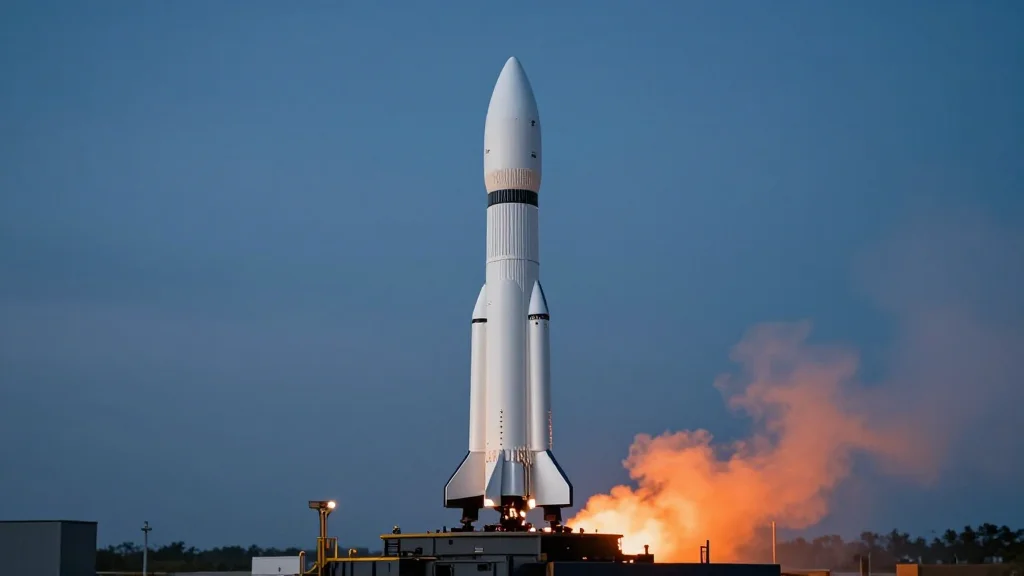
Northrop Grumman’s Minotaur-4 Rocket Launches Three Payloads for War Department
Companies Mentioned
Why It Matters
The mission strengthens U.S. military space capabilities, improving debris monitoring and secure navigation. It also highlights the continued relevance of dedicated launch providers amid SpaceX’s market lead.
Key Takeaways
- •Minotaur-4 placed three NRL experimental payloads in orbit
- •LARADO aims to improve space debris tracking capabilities
- •GOSAS enhances GPS-like navigation for military operations
- •GARI-1C tests gamma‑ray detection for nuclear test monitoring
- •Northrop’s first 2026 launch keeps SpaceX launch lead unchanged
Pulse Analysis
The Minotaur-4 launch represents a strategic milestone for the Department of Defense’s Naval Research Laboratory, which relies on dedicated launch vehicles to field cutting‑edge experiments without competing for commercial ride‑share slots. By using a proven, government‑owned launch system, Northrop Grumman ensures mission‑specific timelines and security protocols, reinforcing the value of a diversified launch ecosystem even as commercial players dominate launch frequency.
Each of the three payloads addresses a distinct gap in U.S. space capabilities. LARADO’s laser‑sheet sensor seeks to refine algorithms for detecting and cataloguing orbital debris, a growing threat to both civilian and military satellites. GOSAS, a Global Navigation Satellite System sensor, promises higher‑precision positioning for troops operating in contested environments, reducing reliance on civilian GPS signals that can be jammed. Meanwhile, GARI-1C’s gadolinium‑aluminum‑gallium‑garnet detector offers a novel method for identifying gamma‑ray signatures from clandestine nuclear tests, bolstering treaty verification efforts.
Beyond the technical achievements, the launch signals broader trends in the defense space sector. While SpaceX maintains a commanding lead—42 launches in 2026 compared with Northrop’s single mission—the continued investment in bespoke launch services reflects a strategic hedge against commercial bottlenecks and geopolitical risks. As the U.S. prioritizes resilient space infrastructure, partnerships between defense agencies and legacy aerospace firms are likely to expand, ensuring that critical national security payloads receive the dedicated attention they require.
Northrop Grumman’s Minotaur-4 rocket launches three payloads for War Department
Comments
Want to join the conversation?
Loading comments...