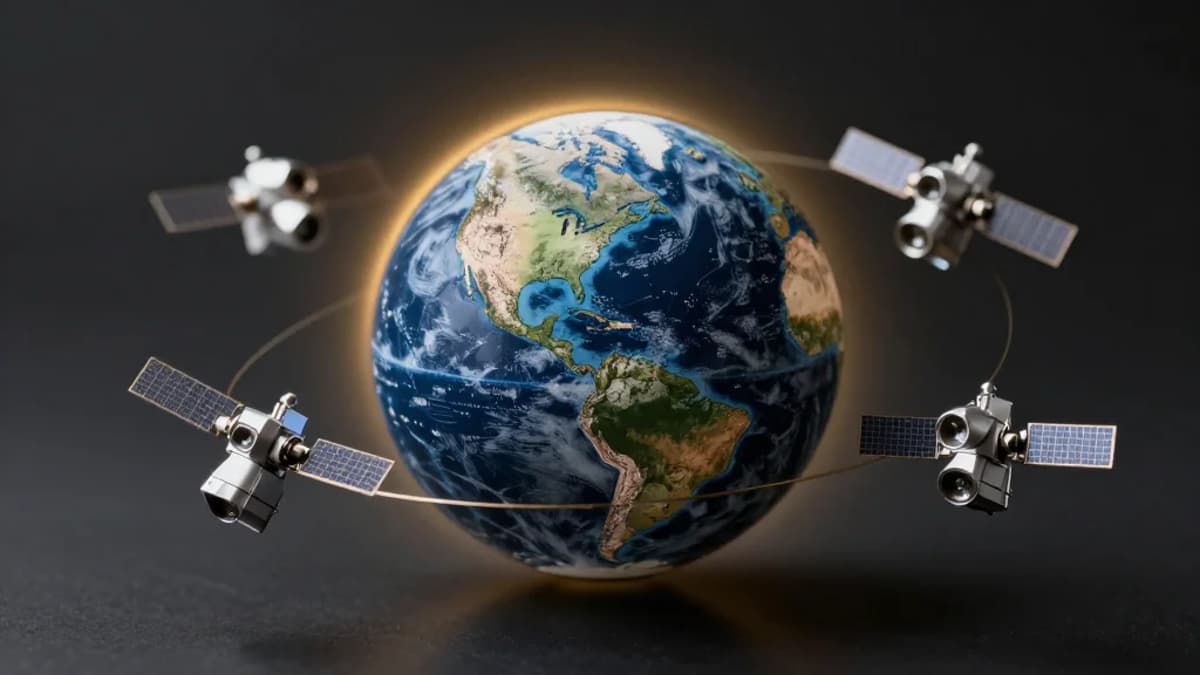
Novaspace Report Predicts Global Space Economy Market Could Top $1 Trillion by 2034
•January 30, 2026
0
Companies Mentioned

Why It Matters
The trillion‑dollar outlook signals a transformative shift, positioning space as a core driver of future economic growth and attracting both public and private capital.
Key Takeaways
- •Space economy projected >$1 trillion by 2034
- •Government spending $138 billion in 2025
- •Defense and sovereignty drive market growth
- •Softwarization accelerates commercial space services
- •Space‑enabled solutions forecast $323 billion by 2034
Pulse Analysis
The space sector is moving from a niche industry to a mainstream economic pillar, with Novaspace estimating a market size surpassing $1 trillion by 2034. This surge reflects not only the traditional satellite and launch services but also a rapid expansion of software‑driven capabilities, such as data analytics, AI‑enhanced mission planning, and on‑orbit servicing. Investors are taking note as capital flows intensify, driven by lower launch costs, reusable rockets, and a growing appetite for space‑derived data across agriculture, logistics, and climate monitoring.
Government priorities are reshaping the landscape. In 2025, national space budgets reached $138 billion, heavily weighted toward security, sovereignty, and deep‑space exploration. These allocations are prompting new procurement models that favor commercial partnerships, fostering a more resilient and strategically aligned ecosystem. Defense and sovereign applications, from secure communications to Earth observation, are emerging as the dominant revenue streams, reinforcing the sector’s stability and attracting long‑term funding.
Commercial actors stand to benefit from the projected $323 billion valuation of space‑enabled solutions by 2034. Services such as precise positioning, navigation, and timing (PNT) are becoming integral to industries ranging from autonomous vehicles to financial trading. As the market matures, firms that can integrate hardware with scalable software platforms will capture the most value. The convergence of robust financing, policy support, and technological innovation suggests that the space economy will not only grow in size but also in its influence on global economic dynamics.
Novaspace Report Predicts Global Space Economy Market Could Top $1 Trillion by 2034
0
Comments
Want to join the conversation?
Loading comments...