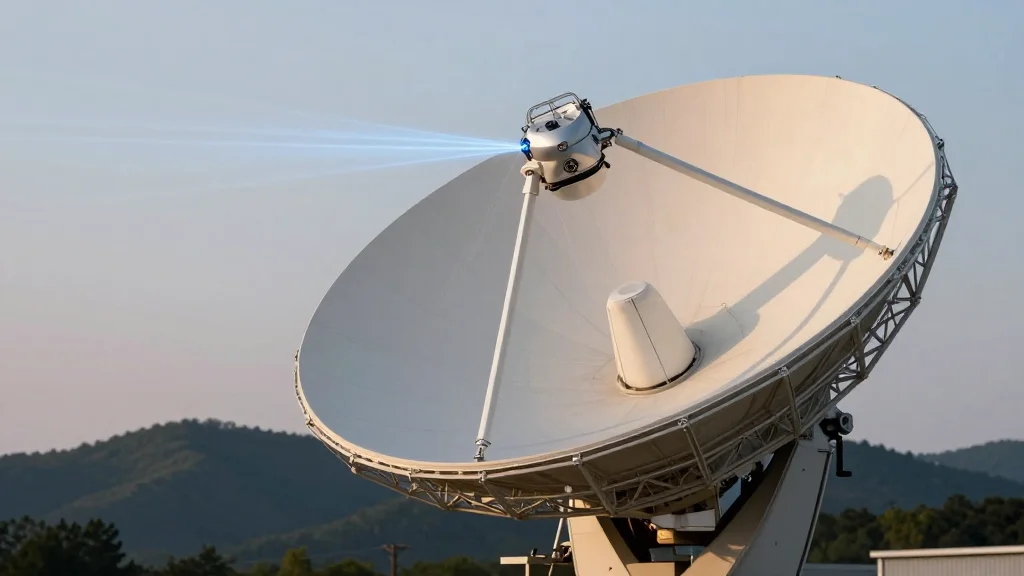
NSF Green Bank Observatory Shares Images, Data From Artemis II Mission
Why It Matters
Open access to Artemis II radio data enables engineers and scientists to evaluate spacecraft communications performance and showcases how radio astronomy can support human spaceflight, strengthening cross‑disciplinary collaboration.
Key Takeaways
- •Green Bank Observatory released Artemis II radio images to the public
- •Data captures spacecraft’s S‑band telemetry during lunar flyby
- •Public access enables researchers to study communication link performance
- •Outreach highlights radio astronomy’s role in supporting human spaceflight
Pulse Analysis
The Artemis II mission, NASA’s first crewed flight of the Artemis program, lifted off in late 2024 and performed a lunar‑orbit flyby before returning to Earth. While the mission’s primary focus is on deep‑space crew operations, it also offered a rare opportunity for ground‑based radio facilities to track a human‑rated spacecraft in real time. The National Science Foundation’s Green Bank Observatory, operating the world‑class 100‑meter Robert C. Byrd telescope, captured high‑resolution radio images and telemetry data as Artemis II passed through the S‑band spectrum. By publishing these datasets, the observatory bridges the gap between astronomical research and aerospace engineering.
The released data set includes calibrated S‑band spectra, signal‑to‑noise maps, and time‑stamped imaging frames that reveal the spacecraft’s antenna orientation and transmission power throughout its trajectory. Researchers can now analyze link‑budget performance, ionospheric scintillation effects, and antenna pointing accuracy without waiting for proprietary mission archives. Moreover, the radio images provide a novel visual record of a crewed vehicle against the backdrop of the Milky Way, illustrating how radio astronomy techniques can complement optical tracking. Open access accelerates peer‑reviewed studies and supports curriculum development in university radio‑engineering programs.
Making Artemis II radio data publicly available underscores a growing trend of collaborative data sharing between NASA and civilian observatories. This transparency not only fuels scientific discovery but also enhances public engagement, allowing enthusiasts to explore the same signals that guided astronauts around the Moon. As Artemis III and subsequent lunar missions prepare for surface landings, the Green Bank model demonstrates how existing radio infrastructure can provide continuous monitoring, risk mitigation, and performance validation for deep‑space communications. The partnership signals a future where astronomical facilities play an integral role in the commercial and governmental spaceflight ecosystem.
NSF Green Bank Observatory Shares Images, Data From Artemis II Mission
Comments
Want to join the conversation?
Loading comments...