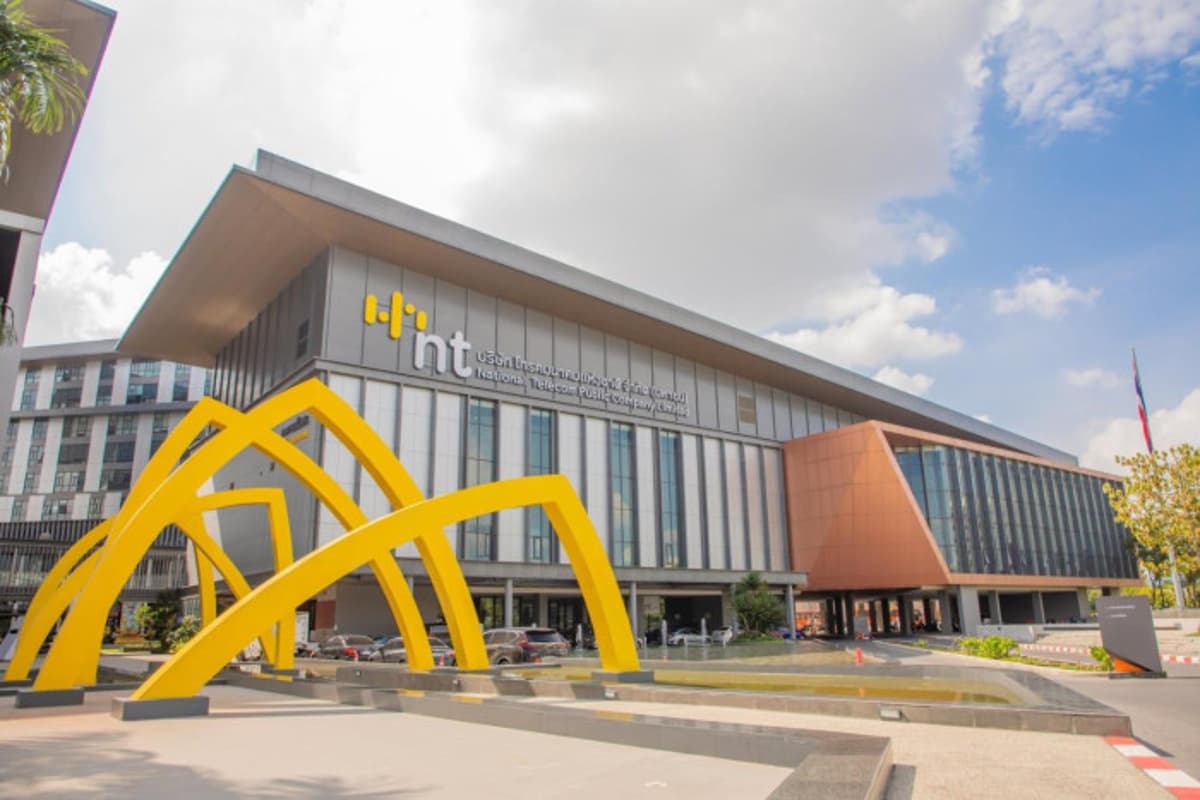
NT to Review Feasibility of Satellite Slot
Why It Matters
The decision will determine whether Thailand commits billions to a GEO asset amid a market shift toward cheaper LEO constellations, impacting national security, telecom competition, and regional satellite positioning.
Key Takeaways
- •NT must decide on 126°E slot by year‑end ITU deadline.
- •Satellite build cost exceeds $84 million, far above $224k slot bid.
- •LEO constellations pressure GEO projects, prompting partnership strategy.
- •Security mandate may force costly investment despite market shift.
- •NT explores Chinese and British partners to mitigate GEO launch risk.
Pulse Analysis
Thailand’s state‑owned National Telecom faces a pivotal crossroads as it evaluates the commercial viability of a geostationary satellite for the 126°E orbital slot. The slot, secured for about 8 million baht (≈$224,000), now demands a capital outlay exceeding 3 billion baht (≈$84 million) to launch a GEO satellite. Beyond the raw numbers, the project carries a national‑security directive from the National Space Policy Commission, meaning the decision is not purely financial but also strategic, with implications for Thailand’s sovereign communications infrastructure and its ability to meet International Telecommunication Union coordination deadlines.
The broader satellite industry is rapidly gravitating toward low‑Earth‑orbit (LEO) constellations, which promise lower deployment costs, faster rollout, and higher broadband capacity. This trend places pressure on traditional GEO investments, especially in markets where demand is shifting to flexible, high‑throughput services. NT’s response—forming alliances with Shanghai Spacecom’s Spacesail, China Satcom’s ChinaSat‑26, and Eutelsat OneWeb—reflects a pragmatic attempt to leverage existing platforms while sidestepping the full financial risk of a solo GEO launch. These partnerships span both GEO and LEO technologies, allowing NT to offer a hybrid service portfolio and stay competitive against regional players like Starlink.
The final verdict, expected by the end of 2026, will signal Thailand’s stance on satellite strategy amid evolving security and commercial pressures. A green light for the GEO project could cement a state‑backed presence in the geostationary belt, reinforcing national‑security communications and emergency resilience. Conversely, a pivot toward partnership‑driven LEO services would align NT with global cost‑efficient trends, potentially reshaping the Southeast Asian satellite broadband landscape. Stakeholders across telecom, defense, and investment circles are watching closely, as the outcome will influence capital allocation, regulatory posture, and Thailand’s role in the regional space economy.
NT to review feasibility of satellite slot
Comments
Want to join the conversation?
Loading comments...