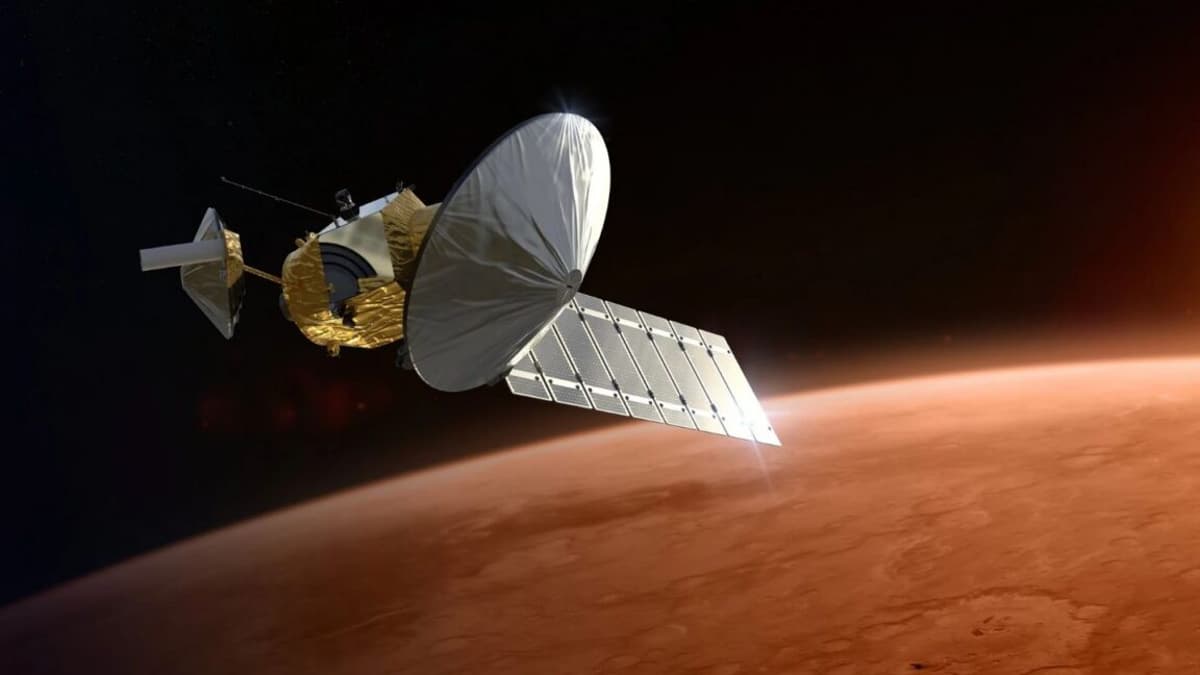
One Mars Spacecraft, Two Senators, and a Cloud of Questions

Why It Matters
The MTN contract will secure the communications backbone for future Mars exploration and could reignite the costly MSR program, influencing the commercial space market and U.S. strategic presence on the Red Planet.
Key Takeaways
- •NASA allocated $700 million for a new Mars communications orbiter.
- •Eligibility requires prior funding for Mars Sample Return design studies.
- •Rocket Lab highlighted its unique proposal during a Q2 investor update.
- •Senators Wicker and Cruz influence the competition and potential MSR revival.
Pulse Analysis
The Mars Telecommunications Network (MTN) represents NASA’s latest effort to modernize its deep‑space communications infrastructure. The current relay, the Mars Reconnaissance Orbiter, has been operational for two decades and is approaching the end of its service life. By earmarking $700 million—already appropriated by Congress—NASA aims to field a dedicated orbiter that can support not only routine data transmission but also the ambitious Mars Sample Return (MSR) architecture, which has been stalled by budget overruns. The solicitation’s tight timeline, with proposals due in mid‑June and a contract award slated for early October, underscores the agency’s urgency to meet the 2028 launch window.
Political dynamics are shaping the procurement in unprecedented ways. The legislation that funded the MTN includes a clause that only companies with prior 2024‑25 design‑study funding for an end‑to‑end MSR mission may bid, effectively narrowing the competition to firms like Rocket Lab, Blue Origin, SpaceX, and legacy aerospace contractors. A May letter from Sen. Roger Wicker, reportedly favoring Rocket Lab, has raised concerns about fairness, while Sen. Ted Cruz’s push to revive MSR adds another layer of legislative influence. These factors could tilt the award toward a company with strong congressional ties, potentially reshaping the commercial space landscape.
If awarded, the MTN contract could become a springboard for a broader MSR revival, which Congress has capped at $8 billion—far less than the $10 billion original estimate. Rocket Lab’s planned engine testing at Mississippi’s Stennis Space Center positions it to leverage existing infrastructure for both the communications orbiter and future ascent vehicles. Success would not only secure a critical communications link for Mars missions but also cement a U.S. commercial foothold in planetary exploration, driving down costs and accelerating scientific returns. The outcome will be a bellwether for how government funding, congressional advocacy, and private innovation intersect in the next era of deep‑space endeavors.
One Mars spacecraft, two senators, and a cloud of questions
Comments
Want to join the conversation?
Loading comments...