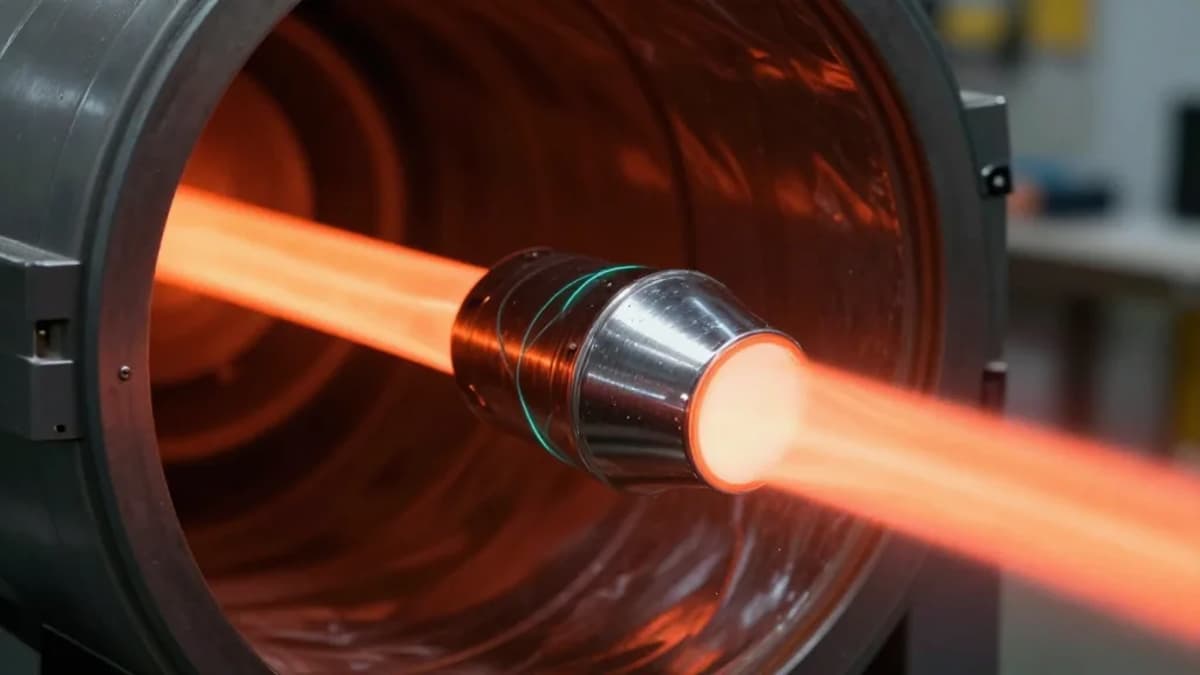
One-of-a-Kind 'Plasma Tunnel' Recreates Extreme Conditions Spacecraft Face upon Reentry
•February 3, 2026
0
Why It Matters
The tunnel provides a rare, controllable environment to improve spacecraft safety, supporting the growing demand for crewed hypersonic flights and space‑tourism missions. Its capabilities accelerate material innovation and novel navigation approaches, directly impacting future aerospace programs.
Key Takeaways
- •CU Boulder built unique inductively coupled plasma tunnel
- •Generates plasma up to 9,000 °F, 20,000 m³/h flow
- •Enables testing heat‑shield materials under hypersonic conditions
- •Researchers explore magnetic steering of plasma‑surrounded vehicles
- •Facility can simulate Martian CO₂ atmosphere for entry studies
Pulse Analysis
Re‑entry remains one of the most unforgiving phases of any space mission, as the Columbia tragedy starkly demonstrated. Traditional wind tunnels cannot replicate the combined thermal and kinetic extremes that a vehicle encounters at Mach 5‑10, leaving engineers to rely on costly flight tests or simplified models. By creating a ground‑based plasma environment that reaches temperatures hotter than the sun’s surface and flows at hypersonic speeds, CU Boulder fills a critical gap, offering precise, repeatable data for designers seeking to harden spacecraft against plasma‑induced erosion.
The inductively coupled plasma tunnel distinguishes itself through three technical advantages. First, a 40‑kilowatt radio‑frequency system ionizes argon, then air, producing a luminous plasma that can be heated to roughly 9,000 °F. Second, a high‑capacity vacuum system draws more than 20,000 cubic meters of gas per hour, delivering flow velocities comparable to orbital re‑entry. Third, the modular chamber allows rapid swapping of test articles, from heat‑shield tiles to sensor prototypes, while real‑time diagnostics capture shock‑wave formation and material degradation. No other U.S. university currently offers this blend of temperature, speed, and flexibility.
Beyond material validation, the tunnel opens a research frontier in plasma‑based propulsion and control. By introducing powerful electromagnets, the team hopes to manipulate charged particles in the shock layer, generating modest thrust vectors that could aid attitude control during the brief, high‑energy re‑entry window. Early collaborations with aerospace firms already focus on next‑generation thermal composites, and the ability to inject CO₂ enables realistic Mars entry simulations. As commercial spaceflight scales up, such laboratory capabilities will be essential for certifying safety, reducing development cycles, and ultimately expanding humanity’s reach beyond Earth.
One-of-a-kind 'plasma tunnel' recreates extreme conditions spacecraft face upon reentry
0
Comments
Want to join the conversation?
Loading comments...