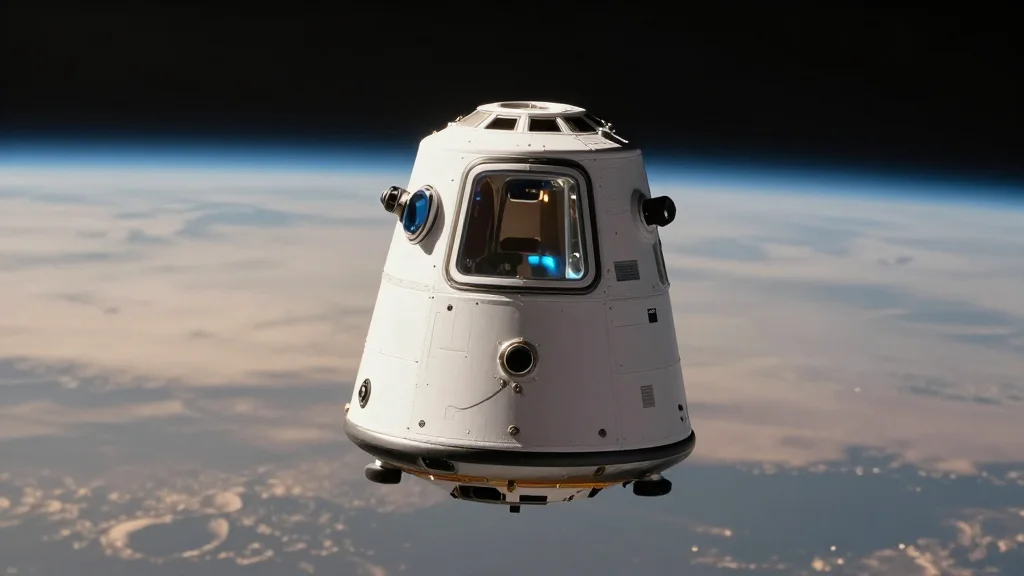
One of the Three Chinese Astronauts to Launch This Weekend Will Do a Yearlong Mission
Companies Mentioned
Why It Matters
A year‑long Chinese mission will generate unprecedented biomedical data, accelerating readiness for deep‑space travel and reinforcing China’s strategic position in low‑Earth orbit. It signals a shift from six‑month rotations to multi‑year habitation, a prerequisite for lunar and Mars ambitions.
Key Takeaways
- •Shenzhou-23 will launch three astronauts; one stays a year.
- •Year-long stay enables China’s first space‑based human‑body research.
- •Mission could surpass 14.5‑month record set on Mir.
- •Tiangong‑3 slated for size expansion to support longer missions.
Pulse Analysis
China’s upcoming Shenzhou‑23 launch underscores a decisive move toward extended human presence in space. By keeping one astronaut aboard Tiangong‑3 for a full year, the Chinese Manned Space Agency will conduct its inaugural space‑based human‑body research, gathering vital physiological data that short‑duration missions cannot provide. This effort not only fills a critical knowledge gap but also positions China to lead in long‑duration crew health management, a cornerstone for future lunar and Martian expeditions.
The planned year‑long stay directly challenges the long‑standing record set by Valeri Polyakov’s 14.5‑month mission on Russia’s Mir station in the mid‑1990s. Surpassing that benchmark would demonstrate China’s confidence in life‑support systems, radiation shielding, and psychological support for crews. The data harvested will inform spacecraft design, countermeasure development, and mission planning for deep‑space habitats, where crew health risks multiply over months and years.
Beyond the immediate scientific payoff, the mission aligns with China’s broader strategy to expand Tiangong‑3’s volume and capabilities. Plans to double the station’s size will accommodate larger crews and more complex experiments, laying groundwork for a permanent orbital outpost. This expansion, coupled with longer missions, strengthens China’s commercial launch market, attracts international research partnerships, and reinforces its geopolitical standing in the increasingly competitive arena of space exploration.
One of the three Chinese astronauts to launch this weekend will do a yearlong mission
Comments
Want to join the conversation?
Loading comments...